Time-Aware Systems and Distributed Infrastructure
Physical transport latency undermines consensus algorithms when control models ignore timing dynamics across enterprise backbones.
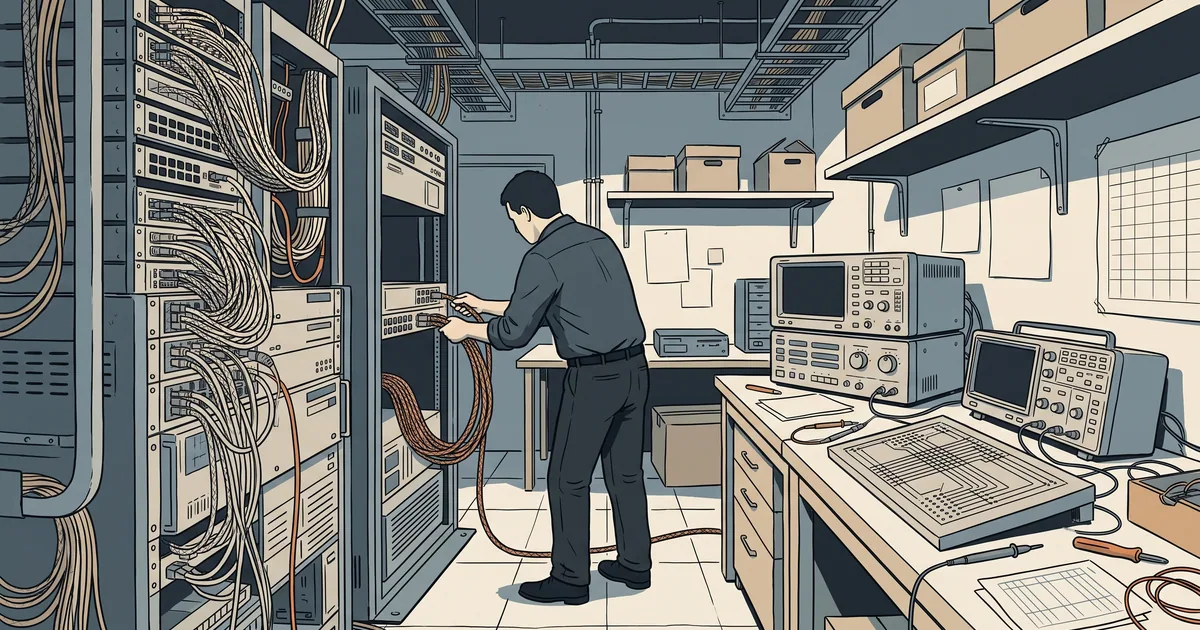
As of February 28, 2015, distributed infrastructure risks systemic breakdown when control planes treat timing and transport latency as negligible abstractions while physical transport latencies diverge from ideal assumptions.
During February 2015, distributed software architectures increasingly exhibit fragile failure modes when engineering models divorce control plane logic from the physical dynamics of underlying communication fabrics. Theoretical assumptions regarding uniform execution rates and instantaneous message propagation frequently collapse against real network behavior, as highlighted in physical transmission studies published in KSII Transactions on Internet and Information Systems. System designers confront an essential dilemma at the boundary between consensus algorithms and actual packet routing. (KSII Transactions on Internet and Information Systems).
Why Do Distributed Infrastructure Systems Experience Breakdown Under Latency?
The publication of the Time-Aware Applications, Computers, and Communication Systems documentation by NIST in February 2015 marks a critical recognition that distributed infrastructure risks systemic breakdown when control planes treat timing and transport latency as negligible abstractions (KSII Transactions on Internet and Information Systems). Characterizing feedback delays and transport connection availability in early 2015 is vital for contemporary distributed networks, as unresolved latency and link variability directly undermine real-time control and data transmission reliability (DOI Registry). The NIST TAACCS research establishes that distributed systems require explicit temporal models in system architecture because synchronization mechanisms break down when real physical transport latencies diverge from ideal assumptions (Journal of Computer Science). Performance evaluations of multi-antenna systems indicate that delays in feedback delivery combined with channel estimation errors significantly impair receiver combining efficiency and heighten signal outage probabilities (IEEE Transactions on Vehicular Technology). Empirical methodology for Internet Protocol connection assessment demonstrates that verifying path availability and connection feasibility is essential to avoid service interruptions across content delivery networks (KSII Transactions on Internet and Information Systems). Time switching protocols in two-way relaying networks require precise slot duration optimization because misalignment between energy harvesting intervals and data transmission slots directly increases relay outage rates (DOI Registry). In practice, architectural boundary failures develop when distributed state machines rely on heartbeat mechanisms, leader elections, or coordinated checkpoints that presuppose bounded propagation delay. When physical packets experience bufferbloat, jitter, or variable routing paths, the temporal ordering of events becomes distorted across separate operational domains. Without strict time-awareness embedded directly into the communication semantics, control planes mistake transit delays for remote node crashes, initiating cascading split-brain recoveries and uncoordinated failovers. Operational protocols that manage replication or cluster membership operate under the mathematical convenience of synchronous or partially synchronous models. However, actual transit paths in enterprise backbones and wide area networks introduce variable queueing times and packet losses. When control nodes broadcast state modifications, lagging acknowledgments trigger aggressive retransmissions. These duplicate frames further saturate congested transport pipes, degrading the very feedback channels needed to stabilize cluster state. The resulting degradation creates an oscillatory pattern where control messages contend directly against operational workloads, compounding the original latency discrepancy and driving the system into sustained thrashing.
How Can Engineers Enforce Separation Between Control and Payloads?
To prevent catastrophic coordination collapses, system architects must enforce rigorous physical and logical separation between control-plane signalling and payload data pipelines. Analogous degradation occurs across distributed compute clusters when state-sharing mechanisms receive delayed feedback regarding peer status. If control traffic shares unthrottled physical interfaces with high-volume data payloads, transient bursts in application input saturate network queues. Control plane updates then arrive out of phase with physical reality, producing stale routing tables, incorrect load allocations, and invalid lease expirations. Architectures that isolate control paths onto dedicated out-of-band channels or enforce strict quality-of-service reservation boundaries can bound the propagation delay of synchronization primitives, ensuring that consensus engines make decisions based on valid channel state. Interface contracts between distributed components must incorporate dynamic transport health telemetry rather than relying on binary up-or-down reachability metrics. In high-throughput distribution environments, simple socket timeouts fail to distinguish between slow transport links, intermediate router congestion, and genuine server failure. Telemetry pipelines must therefore continuously quantify round-trip delays, packet dispersion, and jitter profiles. When edge routers and coordination daemons exchange state, admission control policies must evaluate transport feasibility before dispatching streaming payloads or heavy computational tasks. Omitting this validation step causes routing engines to funnel traffic toward topologically eligible but practically saturated routes, precipitating packet drops and subscriber service blackouts. Structural resilience requires physical time budgets to govern transaction lifecycles and recovery operations across intermediate forwarding points. Within distributed software topologies, intermediate relay nodes, proxies, and coordination brokers operate under analogous slot and buffer constraints. If an orchestration layer initiates failover routines without accounting for queue drainage times and physical handoff latency, downstream nodes process obsolete commands while new leaders concurrently accept writes. By parameterizing lease timeouts and retry exponential backoffs to match measured transport parameters, engineers prevent cascading re-election storms. Systems must treat latency not as an unfortunate environmental anomaly, but as a primary bounded variable within formal control loops.
Can Distributed Design Overcome Stochastic Transport Latency Spikes?
What happens when transport latency diverges from synchronization models remains an urgent challenge: how can architects construct verifiable distributed invariants when transport delays are fundamentally stochastic? As of February 28, 2015, contemporary infrastructure proves that abstracting away physical transport dynamics induces severe stability regressions. When control planes assume instantaneous propagation, transient latency spikes masquerade as permanent node failures, triggering devastating repartitioning storms. Future distributed design must abandon zero-latency illusions, embedding physical timing parameters and dynamic link validation directly into core consensus and routing protocols.
Sources
- KSII Transactions on Internet and Information Systems: Outage Analysis and Optimization for Time Switching-based Two-Way Relaying with Energy Harvesting Relay Node, 2015-02-28
- DOI Registry: Time-Aware Applications, Computers, and Communication Systems (TAACCS), 2015-02-01
- Journal of Computer Science: Methodology to Asses Internet Protocol Connection Availability: A Prerequisite For Feasible Video Stream Through Content Delivery Networks, 2015-02-01
- IEEE Transactions on Vehicular Technology: Performance Analysis of MIMO MRC Systems With Feedback Delay and Channel Estimation Error, 2015-02-19