Robustness Limits in Botnet Attacks and Power Grids
July 2012 findings detail transport saturation risks across web infrastructure and regional power networks.
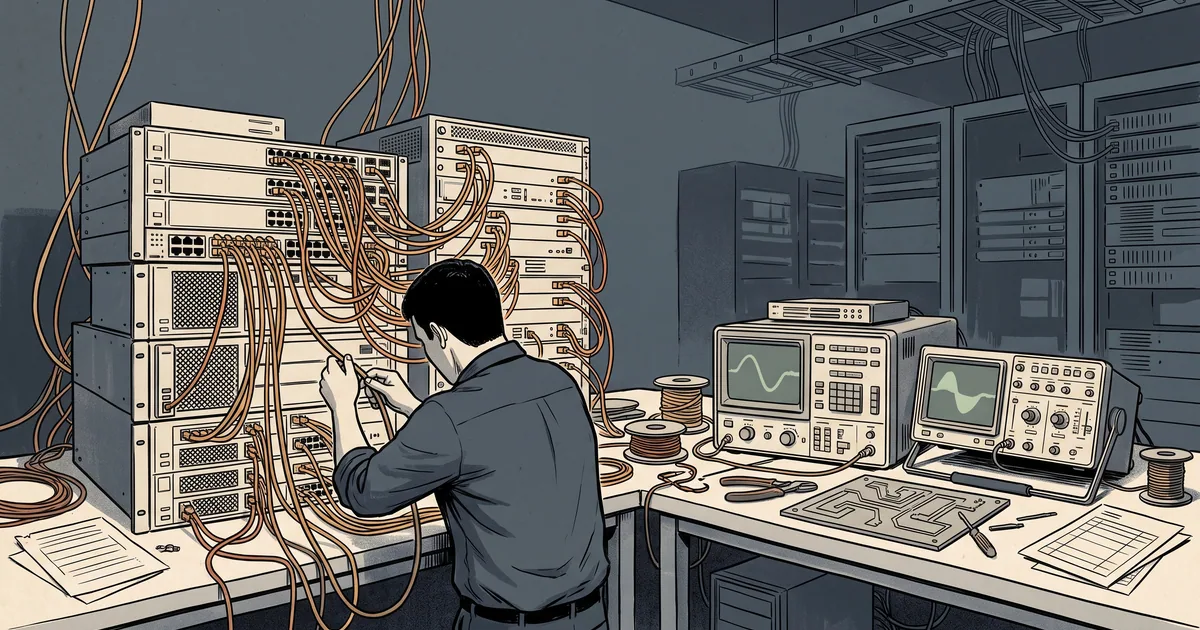
As of July 31, 2012, infrastructure studies demonstrate how transport saturation and queue delays disrupt decentralized control in power transmission grids and 3-tier cloud computing architectures.
During July 2012, infrastructure engineers confronted severe vulnerabilities caused by communication saturation across interdependent network fabrics. An extensive survey in the International Journal of Computer Applications demonstrated how botnet-driven distributed denial of service attacks flood web server ingress routes, incapacitating vital control mechanisms and service availability across public interfaces. When high-volume packet streams monopolize available interface queues, control messages fail to reach server nodes in a timely manner, triggering false timeout detections and destabilizing cluster memberships. These dynamics reveal that distributed topologies remain exceptionally fragile when system software presumes deterministic transport responsiveness under duress. Saturated transmission paths break algorithmic convergence, causing distributed nodes to misread transit delays as permanent peer crashes. Consequently, unexpected operational stress on edge routes propagates inward, creating widespread administrative isolation throughout enterprise web estates. Such systemic risks indicate that network software requires rigorous architectural boundary enforcement to prevent external volumetric assaults from degrading internal cluster state management.
How Do Traffic Floods Disrupt Multi-Tier Cloud Deployments?
Network saturation creates cascading outages that extend far beyond edge web tiers into internal infrastructure. Assessments of 3-tier cloud computing architectures published in the International Journal of Information Engineering and Electro showed that operational disruptions propagate across interconnected data center tiers during intensive processing spikes. In standard multi-tier enterprise configurations, internal synchronization traffic, database replication streams, and external client requests often traverse the same underlying switching backbones. When sudden payload surges congest transit queues, internal watchdog packets experience severe latency. Monitoring daemons misinterpret these transport bottlenecks as physical node outages, thereby initiating uncoordinated failovers and duplicate state elections. This uncoordinated recovery behavior multiplies transmission volume across internal links, generating secondary congestion waves that impair database and application tiers. By analyzing server traffic, researchers established that saturated transport pipelines directly undermine status reporting across remote computation nodes, transforming localized component failures into broader cloud service disruptions.
Why Do Power Grids Require Dynamic Decentralized Robustness Models?
The physical consequence of unmodeled communication latency also poses severe threats to utility infrastructures. Investigations released through the Research Repository (Delft University of Technology) proved that decentralized power transmission grids require dynamic robustness interventions to counter distributed failure states across regional networks. In decentralized electrical grids, local generation nodes and substations exchange telemetry over packet-based channels to balance phase angles and prevent overload conditions. If network congestion or hardware faults introduce unexpected transit delays into control loops, decentralized actuators react to stale state data. This temporal mismatch introduces phase shifts that induce dynamic instability, leading to runaway line tripping and localized grid collapse. The Delft University of Technology research highlighted the critical necessity of modeling dynamic robustness under decentralized environments to ensure that protection relays do not trigger cascading power failures during intermittent communication disruptions.
Can Constrained Topologies Maintain Stable Decentralized Telemetry Coordination?
Similar transport constraints govern sensory topologies deployed within restrictive environments. A July 2012 evaluation in InTech eBooks examined the deployment constraints of wireless sensor networks when monitoring vessel machinery within enclosed compartments. In these harsh environments, dense metallic barriers and continuous radio-frequency interference cause unpredictable packet losses and significant transmission delays. Polling routines that rely on regular heartbeat confirmations quickly fail as RF attenuation creates packet queue backlogs. To prevent sensor networks from dropping off operational displays, monitoring frameworks must isolate high-priority telemetry from bulk monitoring data and utilize decentralized polling thresholds. These vessel findings emphasize that physical environments impose hard limits on transport throughput. Whether managing industrial ships, regional utility grids, or virtualized cloud tiers, distributed control implementations cannot rely on ideal low-latency conduits, necessitating fault-tolerant boundaries that decouple immediate node health assessments from volatile transport conditions.
Sources
- International Journal of Computer Applications: Botnet-based Distributed Denial of Service (DDoS) Attacks on Web Servers: Classification and Art, 2012-07-28
- Research Repository (Delft University of Technology): Dynamic improvement of robustness of power transmission grids in decentralized and distributed environments, 2012-07-12
- International Journal of Information Engineering and Electro: Failures in Cloud Computing Data Centers in 3-tier Cloud Architecture, 2012-07-01
- InTech eBooks: Application of Wireless Sensor Network for the Monitoring Systems of Vessels, 2012-07-18