Automated Demand Response in Smart Grid Networks
Transport delay and packet loss in decentralized routing fabrics disrupt automated demand response across power distribution networks.
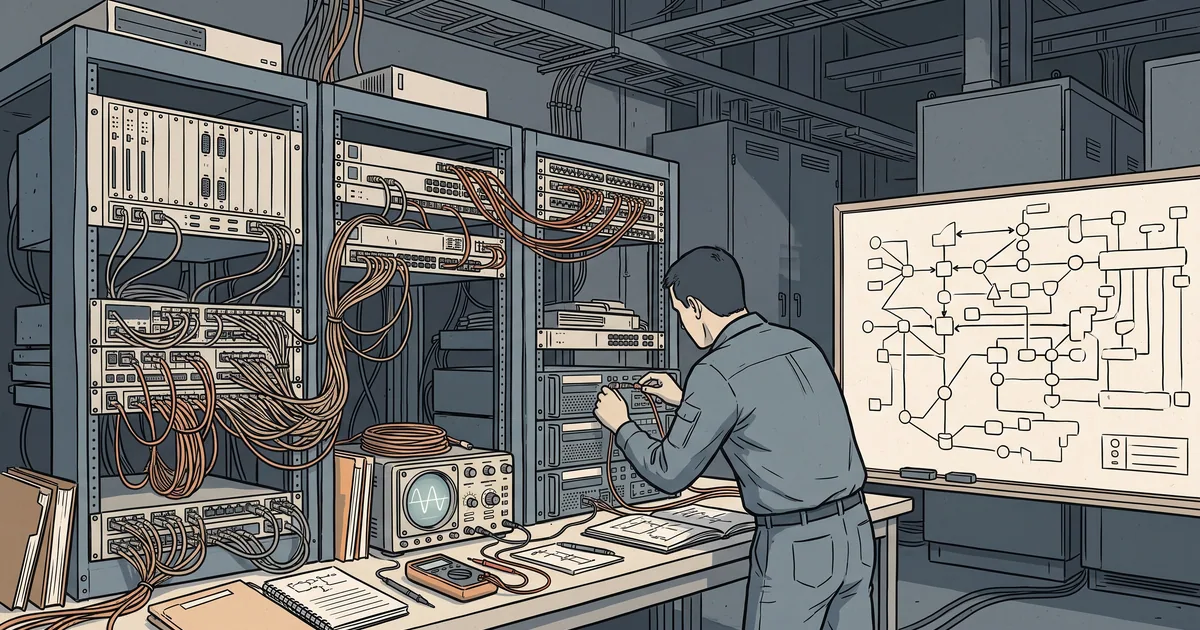
As of December 31, 2011, packet loss and transport delay in decentralized routing fabrics destabilize automated demand response signaling, impairing voltage regulation across smart grid distribution networks.
During December 2011, the deployment of automated demand response across distributed power systems collided with fundamental physical constraints in packet networks. Engineering analyses in the (International Journal of Computer Applications) exposed how unhandled packet loss in decentralized routing fabrics fractures distributed control. Electrical utilities increasingly treat telecommunications as a transparent bus, assuming that dispatched control signals arrive simultaneously at thousands of edge meters. This operational illusion unravels under real-world transport jitter, route rediscoveries, and asymmetric link contention.
How does packet loss disrupt automated demand response systems?
The operational integration of demand-side resources into smart grid distribution networks makes automated demand response highly vulnerable to communication transport delays and state desynchronization across endpoints (International Journal of Computer Applications). Rapid local link repair mechanisms in decentralized data routing fabrics are critical to preventing catastrophic signaling failure in distributed automated control systems (DOI Registry). Simulations of demand response integration in distribution systems demonstrate that delayed or uncoordinated control signaling impairs voltage regulation and substation-level power balancing (IEEE Global Telecommunications Conference (GLOBECOM)). On-demand local link repair algorithms for ad-hoc routing protocols mitigate packet drop rates and re-routing latency by re-establishing broken paths at intermediate relay nodes (Wireless Communications and Mobile Computing). Multi-hop wireless relay architectures suffer progressive throughput degradation and transport delay accumulation as hop count increases under synchronized data transfer demands (International Journal of Computer Applications). Centralized cellular transport architectures such as LTE impose distinct latency and coordination overhead limits when managing dense clusters of communicating nodes (DOI Registry). When grid control centers evaluate feeder load imbalances, supervisory algorithms calculate instantaneous shedding or curtailment setpoints for municipal, commercial, and residential assets. These algorithms rely upon the premise that current measurements reflect the actual contemporaneous reality of distant physical circuits. However, field telemetry packets traverse multi-tiered communication fabrics composed of serial links, substation aggregators, and radio frequency transceivers. If an actuation command experiences transit delay while adjacent loads shed immediately, the resulting phase angle shifts and voltage transients destabilize tap changers, capacitor banks, and sensitive industrial equipment along the distribution line. The underlying bottleneck resides in the physical and medium access control layers that bridge local collectors with centralized control dispatchers. In neighborhood area networks utilizing mesh topologies, each additional forwarding hop introduces half-duplex contention, buffer queuing, and packet retries. As hundreds of smart meters attempt simultaneous reporting during dynamic pricing updates, packet collisions saturate relay nodes. Even when utilities turn toward cellular infrastructure to bypass localized mesh bottlenecks, new queuing boundaries emerge. Uplink scheduling grants, random access channel congestion, and core network packet processing introduce nondeterministic jitter that directly degrades time-sensitive automated response loops.
Why must edge controllers isolate distribution control plane traffic?
Architectural resilience requires clear separation between time-critical telemetry payloads and non-urgent administrative data across the distribution control plane. In legacy supervisory control and data acquisition architectures, static polling routines masked transient network anomalies at the cost of slow update rates. Conversely, contemporary event-driven automated demand response floods routing fabrics with bursty traffic during grid stress events. When a primary communication path drops due to interference or node failure, classical routing protocols initiate path rediscoveries back at the origin node, inflating packet drop rates and latency beyond acceptable electrical safety margins. This repair capability establishes a vital validation boundary between communication reliability and electrical stability. System operators face an inevitable operational trade-off between signaling freshness and state verification. If an interface contract demands strict confirmation handshakes before executing load reductions, round-trip transport delays accumulate, preventing fast sub-second voltage stabilization. Conversely, if control algorithms execute unverified open-loop commands, outdated telemetry causes actuators to react to expired feeder conditions, inducing mechanical hunting in voltage regulators. Network architects must formalize telemetry life cycles using bounded time-to-live attributes and explicit sequence numbering. When control payloads arrive outside a deterministic temporal window, edge controllers must reject stale dispatches and revert to autonomous droop control curves. Such defensive boundary checks prevent the accumulation of uncoordinated actuation commands across neighboring transformer zones. To contain synchronization failures, distribution system designs must decentralize local decision authority rather than forcing all control state through remote central supervisory engines. Hybrid systems that combine statistical machine learning algorithms with deterministic logic controllers can evaluate local substation metrics independently, where machine learning, a statistical subset of AI, differs from broader symbolic AI systems by inferring operational states from empirical sensor observations without hardcoded expert rule sets. When upstream wide-area communications fail or experience severe bufferbloat, local substation controllers must isolate their local feeder automation clusters. By maintaining regional micro-synchronization using substation-level precision timing, localized clusters can continue balancing generation and load without relying on fragile multi-hop backhaul networks. Once backhaul routes stabilize, graceful state re-convergence protocols reconcile local telemetry with the master supervisory ledger without triggering aggregate load shockwaves.
Can localized substation clusters maintain autonomous voltage regulation stability?
Sources
- International Journal of Computer Applications: On demand Local Link Repair Algorithm for AODV Protocol, 2011-12-30
- DOI Registry: Modeling and Integration of Demand Response and Demand Side Resources for Smart Grid Application in Distribution Systems, 2011-12-01
- IEEE Global Telecommunications Conference (GLOBECOM): LTE4V2X: LTE for a Centralized VANET Organization, 2011-12-01
- Wireless Communications and Mobile Computing: On the performance of multi‐hop wireless relay networks, 2011-12-22