Multi-Tenant Systems and Control Architectures
During November 2023, multi-cloud topologies exposed control architectures to physical transport volatility and transit bottlenecks.
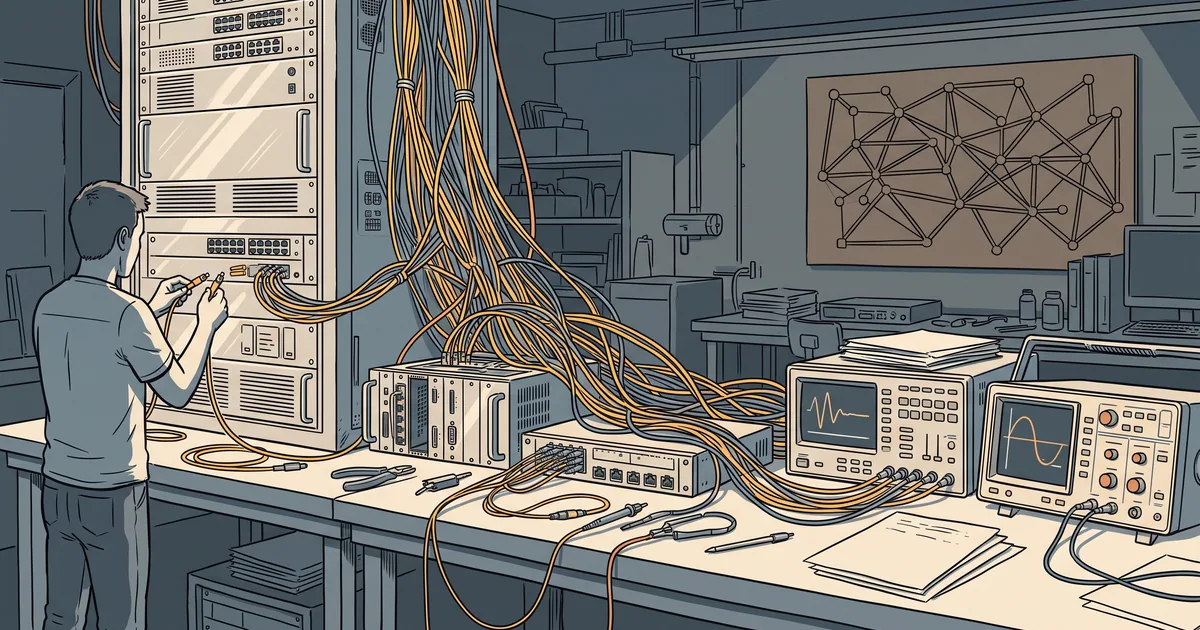
As of November 30, 2023, multi-provider transit dependencies introduce non-deterministic queueing delay that corrupts quorum validation loops, drops link-state advertisements, and triggers uncoordinated leader churn.
During November 2023, infrastructure engineering reached a critical inflection point as distributed platforms expanded across multi-cloud topologies while relying on control architectures originally conceived for homogeneous, low-latency local fabrics. Research published in (DOI Registry) revealed the operational peril when contemporary multi-tenant systems obscure their underlying network dependencies. Orchestration layers frequently mandate immediate consensus among state machines, neglecting physical transport volatility across regional demarcations. This operational disparity introduces a fundamental question for contemporary systems architects:
How Do Transit Dependencies Induce Cascading Re-Elections?
November 2023 studies on entangled hosting infrastructures underscore that large-scale cloud applications increasingly depend on intricate multi-provider transit dependencies, turning previously hidden transit bottlenecks into systemic risks for distributed platforms (DOI Registry). Formalizing the life cycle of key performance indicators in cloud networks is critical as control planes expand across distributed regions, where untracked transport deviations directly induce service instability (Journal Of Advanced Zoology). Empirical analyses of cloud hosting topologies and performance metrics demonstrate that inter-cloud cross-traffic encounters transit variability that undermines uniform latency assumptions in distributed orchestration (WSEAS Transactions on Information Science and Applications a). Underlying routing protocols such as OSPF experience packet delivery disruptions and routing anomalies when distrustful or degraded forwarding nodes alter expected path transit characteristics (International Journal of Science and Research (IJSR)). Cloud-based reliability engineering frameworks require explicit strategies to manage distributed failure domains and maintain high availability when transport layers experience variable network performance (DOI Registry). Decoupling control plane state replication from actual physical routing paths exposes distributed infrastructure to routing misalignments and transit bottlenecks across multi-hop networks (Journal Of Advanced Zoology). At the same time, formalizing the life cycle of key performance indicators in cloud networks is critical as control planes expand across distributed regions, where untracked transport deviations directly induce service instability (Journal Of Advanced Zoology). When a control plane issues synchronous write barriers across distributed cluster members, it presupposes that message propagation times remain bounded and symmetric. However, when data traverses disparate intermediary networks, non-deterministic queueing delay corrupts the heartbeat intervals and quorum validation loops that consensus algorithms depend upon. In distributed state stores running Raft or Paxos, even modest packet delivery disruptions precipitate false leader failure detections. When a degraded or untrusted transit node drops link-state advertisements or introduces sporadic packet jitter, election timers expire asynchronously across the quorum. The resulting cascading re-elections consume network bandwidth, which further congests the underlying transit links and creates an escalating cycle of uncoordinated leader churn.
Why Must Control Fabrics Separate Consensus State Propagation?
contemporary control fabrics must deliberately separate consensus state propagation from client data payloads. If management traffic and bulk data transmission share the same physical routes without deterministic isolation, a surge in end-user workload saturates egress gateways, immediately strangling the control plane. Architectural isolation requires distinct quality-of-service queues, backpressure propagation channels, and strict circuit-breaking policies that isolate routing failure domains before jitter spills into metadata synchronization. Without structural firewalls between control-plane metadata and application data paths, transient cross-provider anomalies compromise the entire orchestration layer. Operators must negotiate strict trade-offs between consistency guarantees and availability constraints across wide-area boundaries. Continuous telemetry monitoring across the complete life cycle of key performance indicators enables orchestrators to observe transport degradation before it forces cluster partitioning (Journal Of Advanced Zoology). When state replication spans multi-provider networks, interface contracts cannot treat network sockets as transparent, failure-free conduits. Instead, control planes need adaptive timeout mechanisms that dynamically loosen replication constraints during known periods of transit volatility. Applying rigid zero-latency assumptions to geographically dispersed nodes degrades throughput, increases tail latencies, and guarantees frequent availability breaches during common transit disruptions. Structural resilience fundamentally demands that distributed control systems embrace asynchronous convergence models rather than clinging to synchronous illusions. As empirical analyses of hosting topologies reveal dense multi-cloud interdependencies (DOI Registry), recovery procedures must establish fallback routing topologies and decoupled transaction queues. Systems engineering principles dictate that when physical forwarding anomalies emerge in interior gateway routing (WSEAS Transactions on Information Science and Applications a), the control plane should degrade gracefully to read-only operation or regional partitioning rather than collapsing under endless state re-synchronization. Designing distributed fabrics around network unreliability preserves control plane integrity even when underlying transport links experience systemic degradation.
What Structural Resilience Demands Enable Graceful Degradation?
Sources
- DOI Registry: Entangled Clouds: Measuring the Hosting Infrastructure of the Free Contents Web, 2023-11-23
- Journal Of Advanced Zoology: Life cycle of KPIs in Cloud Networks, 2023-11-30
- WSEAS Transactions on Information Science and Applications a: An Approach Toward Packet Routing in the OSPF-based Network with a Distrustful Router, 2023-11-03
- International Journal of Science and Research (IJSR): Cloud-Based Reliability Engineering: Strategies for Ensuring High Availability and Performance, 2023-11-05