Decoupled Cloud Architectures Confront Physical Routing
Decoupled cloud architectures reveal friction between consensus logic and physical data center routing across platform engineering.
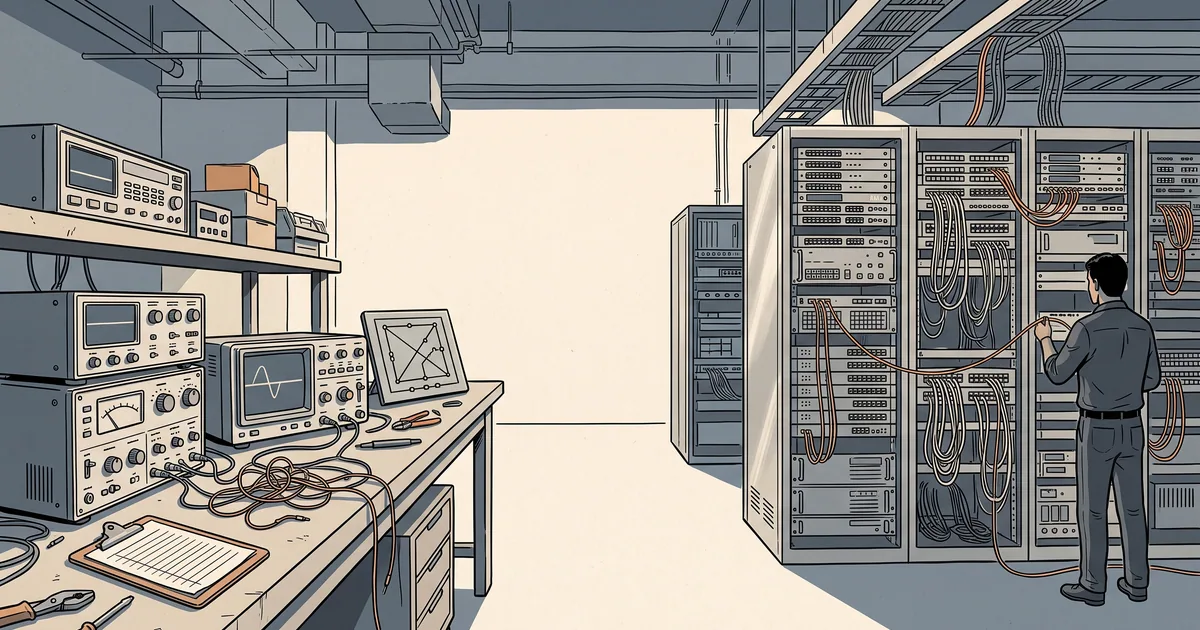
As of June 30, 2025, virtualized network latency and transit lag produce split-brain anomalies and phantom leader elections when control layers issue updates under unverified assumptions.
During June 2025, the proliferation of decoupled cloud architectures exposed significant friction between abstract consensus logic and physical data center routing. As documented by the (Global Journal of Multidisciplinary and Applied Sciences), network virtualization had become central to cloud infrastructure management, heightening the structural risks of abstraction layers obscuring underlying transport dynamics. When orchestration systems treat packet transit as an instantaneous, frictionless medium, distributed consensus engines progressively diverge from physical link conditions. This mismatch prompts a critical inquiry across platform engineering:
Why do virtualized network functions trigger consensus engine failures?
By June 2025, network virtualization had become central to cloud infrastructure management, heightening the structural risks of abstraction layers obscuring underlying transport dynamics (Global Journal of Multidisciplinary and Applied Sciences). The operational security and stability of virtualized network functions in cloud systems increasingly depended on automated optimization to prevent failures across distributed boundaries (International Journal of Humanities and Information Technolo). Cloud infrastructure architectures in mid-2025 coupled network virtualization techniques with automated function security to manage state propagation and transport isolation (Journal of Computer Science and Technology Studies). Production platform engineering practices in financial cloud services mandated strict operational handling of virtualized network latency and control plane boundaries (World Journal of Advanced Engineering Technology and Science). Infrastructure decision intelligence systems implemented automated neural network pathway visualizations to monitor complex routing and failure states in contemporary cloud deployments (Global Journal of Multidisciplinary and Applied Sciences). Scalable enterprise cloud systems integrated network virtualization controls with rigorous platform engineering protocols to manage latency variance across shared infrastructure (International Journal of Humanities and Information Technolo). The operational security and stability of virtualized network functions in cloud systems increasingly depended on automated optimization to prevent failures across distributed boundaries, as analyzed in the (International Journal of Humanities and Information Technolo). When control layers issue membership updates under the implicit presumption of immediate quorum convergence, transit lag produces split-brain anomalies and phantom leader elections. Without this coordination, soft partitions arise where overlay meshes report healthy links despite lower-tier buffer bloat delaying physical ingress queues. Under these conditions, consensus algorithms encounter cascading heartbeat timeouts that trigger unnecessary re-election cycles. The control layer attempts to heal non-existent node crashes by broadcasting state churn across the already congested fabric, magnifying head-of-line blocking. Machine learning, a statistical subset of AI, differs from broader symbolic AI systems by predicting transient queue spikes through empirical loss vectors rather than deterministic rule sets. As telemetry streams desynchronize, replication engines commit diverging transaction histories. The overlay fabric assumes symmetrical round-trip times, but physical packet paths traverse asymmetric hops, leading distributed commit logs to stall waiting for acknowledgments that have silently expired in transit queues.
How can production platform engineering isolate critical control signaling?
Architectural isolation requires strict operational boundaries between control signaling and client payload processing. Production platform engineering practices in financial cloud services mandated strict operational handling of virtualized network latency and control plane boundaries, as shown in the (Journal of Computer Science and Technology Studies). Engineers enforced isolated control domains using dedicated virtual circuits to insulate coordination traffic from bursty tenant operations, ensuring that state transactions never compete with high-volume payload flows for physical interface buffers. To diagnose dynamic propagation anomalies, operators shifted from static metric dashboards to active link evaluation frameworks. Infrastructure decision intelligence systems implemented automated neural network pathway visualizations to monitor complex routing and failure states in contemporary cloud deployments, as documented by the (World Journal of Advanced Engineering Technology and Science). These diagnostic graphs expose latent transport anomalies, such as tail-latency inflation across multi-tenant switches, before coordination nodes misinterpret delivery delays as catastrophic host terminations. By mapping virtual network dependencies directly against physical topology vectors, operators distinguish transient packet delays from genuine system outages, maintaining strict partition boundaries across high-throughput clusters. Containment frameworks further require backpressure mechanisms directly embedded within consensus engines. When packet transit intervals exceed baseline thresholds, the coordination plane must automatically throttle state mutation requests rather than attempting aggressive retransmission sweeps. contemporary deployment patterns mandate explicit time-to-live boundaries and circuit breakers on state gossip protocols. By rejecting the illusion of infinite network bandwidth and zero-millisecond propagation, systems maintain operational safety during periods of degraded physical transit. Resilient control architectures acknowledge hardware boundaries, ensuring that virtualized abstractions never bypass the deterministic constraints of physical optical switching and intermediate router buffering.
Will future control protocols successfully incorporate physical transit limits?
By late June 2025, infrastructure architects recognized that virtualization does not eliminate physical transit limits. Coordination engines that presuppose instantaneous consensus inevitably amplify systemic instability when deployed over shared fabric. While automated diagnostics and strict boundary enforcement mitigate immediate cascading collapses, systems still rely on fallible physical mediums. As virtualization layers grow increasingly layered, how can future control protocols natively encode non-zero physical latency without degrading the operational velocity demanded by distributed cloud infrastructure?
Sources
- Global Journal of Multidisciplinary and Applied Sciences: Network Virtualization and Its Role in Cloud Infrastructure Management, 2025-06-30
- International Journal of Humanities and Information Technolo: AI-Optimized Network Function Virtualization Security in Cloud Infrastructure, 2025-06-14
- Journal of Computer Science and Technology Studies: Building a Career in FinTech Cloud and Platform Engineering, 2025-06-10
- World Journal of Advanced Engineering Technology and Science: Neural network pathways: Visualizing iRaaS decision intelligence in modern infrastructure, 2025-06-19