Decoupling Consistency Requirements From Network Latency
Decoupling localized coordination from physical transport prevents synchronization anomalies across constrained wireless sensor networks.
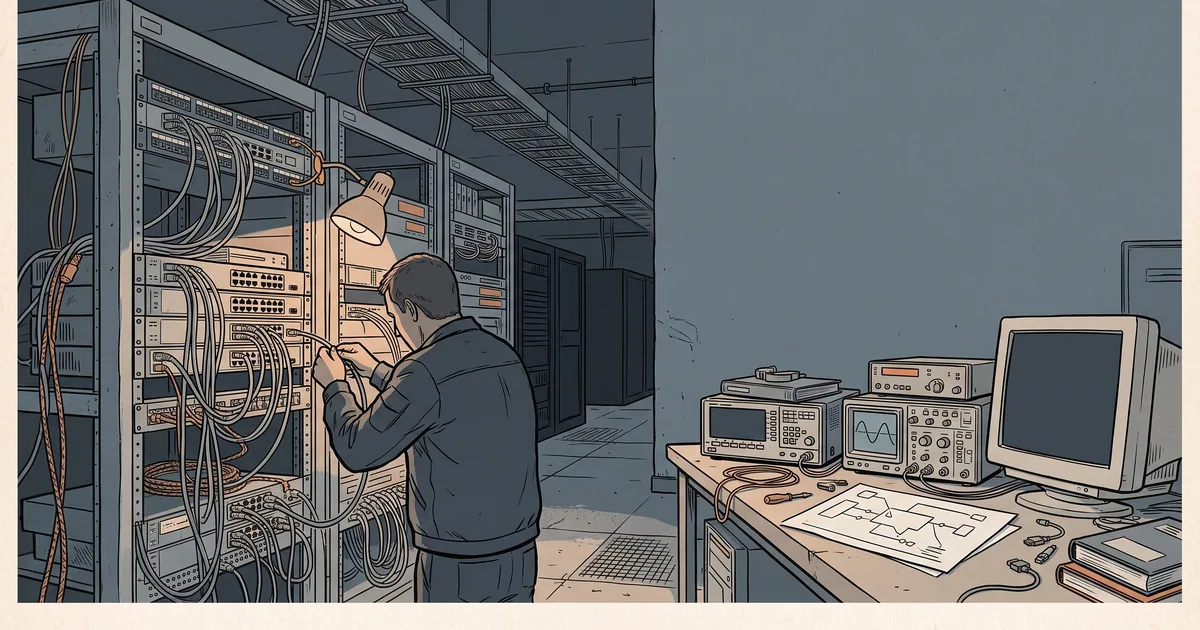
As of December 31, 2008, coordination layers fail across degraded links when software layers treat distributed nodes as transparent endpoints without spatial partitioning, causing transit delays to trigger redundant discovery.
During December 2008, distributed computing architectures are facing severe synchronization anomalies as software control planes expand across physically constrained wireless sensor networks and high-density fabrics. When system engineers design distributed consensus layers, they frequently rely on assumptions of uniform message propagation that falter under real-world physical constraints, as highlighted in new research on area-based routing published by (IEEE). This friction brings forward a fundamental architectural dilemma: Rather than preserving deterministic global state, these optimistic systems suffer cascading transaction rollbacks, routing churn, and localized message exhaustion across intermediate nodes.
Why Do Coordination Layers Fail Across Degraded Links?
Area-based guiding navigation protocols established critical decentralization techniques for wireless sensor networks, proving that localized spatial partitioning could alleviate distributed control failures in degraded environments (IEEE). Purpose-based synchronization protocols demonstrated how semantic transaction scoping avoids systemic gridlock when distributed data stores encounter unbounded transport delays (IEEE). Distributed coordination frameworks integrated localized area guidance with purpose-specific transaction locking to decouple application-level consistency requirements from raw network latency (IEEE). Exact outage probability analysis revealed that distributed cooperative transmission performance degrades sharply under specific relay geometries and fading constraints (IEEE). The Quarc network-on-chip architecture introduced an alternative routing topology to handle high-concurrency message transfers without saturating chip-level interconnects (IEEE). Wireless sensor network routing and cooperative multi-node links established empirical limits on how much physical transmission variance can be absorbed before cooperative routing fails (IEEE). The failure boundary typically emerges when high-level coordination layers treat distributed nodes as transparent endpoints rather than delay-prone, resource-limited participants. Without spatial partitioning, distributed coordination assumes every node maintains an identical snapshot of the global topology. When physical links experience packet loss or queuing delays, control messages queue up faster than they can be processed. System components misinterpret transit delays as complete node failures, triggering redundant failover elections and flood-fill discovery broadcasts. Consequently, transit latency increases exponentially, transforming minor physical packet retransmissions into catastrophic control plane partition events that stall application execution. Data transaction layers experience analogous breakdown patterns when locking mechanisms disregard underlying transport dynamics. Conventional distributed transactions depend on strict two-phase commit primitives that lock remote resources until every participant signals readiness. In multi-hop sensor deployments and geographically dispersed networks, transit jitter inflates lock hold times, blocking concurrent read and write operations across unassociated application modules. By contrast, distributed coordination frameworks integrated localized area guidance with purpose-specific transaction locking to decouple application-level consistency requirements from raw network latency (IEEE, IEEE). This separation confines synchronization penalties to localized topological boundaries instead of propagating delays globally.
How Can Architectural Contracts Isolate Physical Channel Noise?
Managing the boundary between logical coordination and physical transport requires strict architectural contracts governing message handoffs. When higher-level software layers treat physical cooperative relays as static virtual circuits, unexpected channel fading causes sudden throughput collapses. Packet queues rapidly overflow, corrupting heartbeats and causing state machines to de-synchronize. Architectural isolation demands that control plane protocols decouple state health checks from data packet delivery paths. Enforcing explicit buffer quotas, rate-limiting control telemetry, and rejecting transactions that span high-outage transmission corridors prevents transport decay from incapacitating global node supervisors. At hardware interfaces, similar concurrency bottlenecks manifest between on-chip interconnects and concurrent processor transactions. In high-density multi-core systems, traditional shared bus models and rigid mesh networks trigger head-of-line blocking when diverse processing elements exchange memory synchronization transactions simultaneously. Quarc resolved these conflicts by structuring message deflection and localized routing decisions into the underlying fabric, eliminating single-point arbitration bottlenecks. This hardware lesson mirrors larger distributed networks: transport layers must supply inherent path diversity and localized flow control to shield higher-level state synchronizers from structural transport congestion. Maintaining structural resilience across distributed networks ultimately requires recognizing fundamental physical barriers. When distributed systems ignore these physical thresholds, control planes enter unrecoverable oscillatory recovery cycles. Resilient architectures avoid this trap by establishing hierarchical validation domains, where local clusters resolve environmental noise autonomously without invalidating wider system consensus. By bounding transaction scopes to localized communication neighborhoods, distributed systems maintain overall operational integrity even when underlying wireless links experience severe signal fading or intermittent node blackouts.
Can Distributed Control Planes Adapt Consistency Requirements Dynamically?
By late December 2008, experimental validation demonstrates that treating distributed infrastructure as an instantaneous, uniformly connected plane is structurally unsustainable. Systems that decouple semantic coordination from raw physical transport achieve far greater operational durability under adverse link conditions. As engineering teams design larger distributed clusters, sensor deployments, and multicore silicon architectures, the paramount question remains: Can distributed control planes dynamically adapt their consistency requirements to fluctuating physical transport realities without sacrificing global transactional correctness?
Sources
- IEEE: A Distributed Area-Based Guiding Navigation Protocol for Wireless Sensor Networks, 2008-12-08
- IEEE: A Purpose-Based Synchronization Protocol of Multiple Transactions, 2008-12-11
- IEEE: Exact outage probability analysis of distributed cooperative transmission, 2008-12-14
- IEEE: Quarc: A Novel Network-On-Chip Architecture, 2008-12-17