Decentralized Coordination Across Physical Networking
Decoupling storage versioning logic from server coordination exposes client runtimes to severe transport jitter and false split-brain alarms.
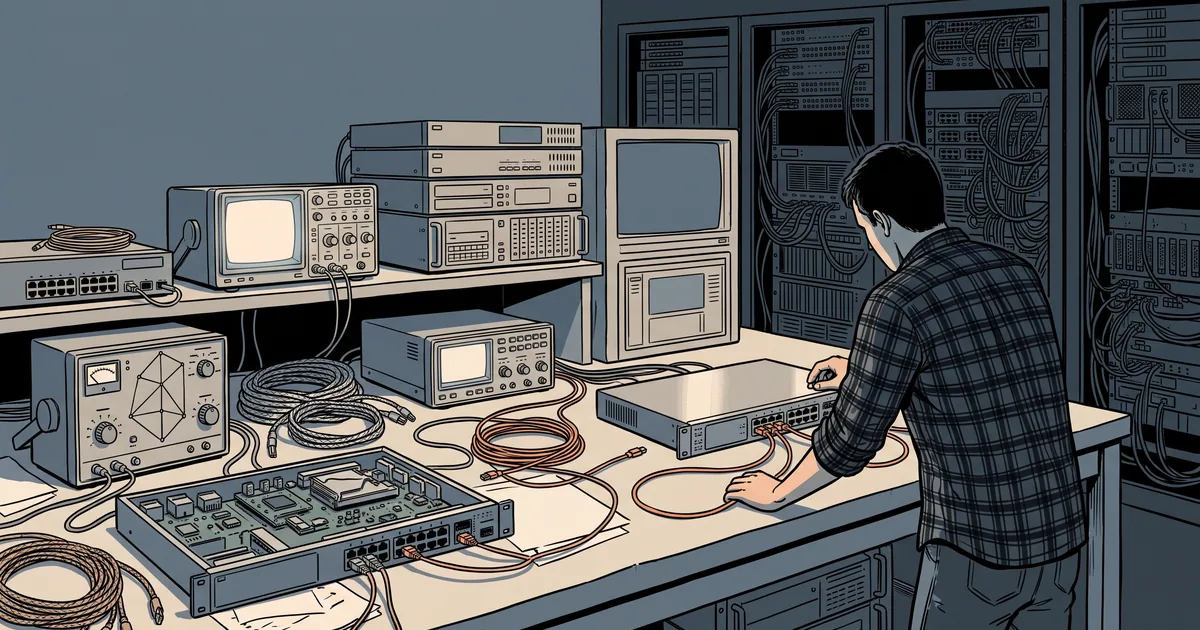
As of September 30, 2015, client-based replication protocols shift conflict resolution to client runtimes, exposing execution threads to routing delays and queue drops.
During September 2015, distributed infrastructure engineers encountered severe operational friction as decentralized control layers collided with underlying physical networking boundaries. Innovations in edge-directed coordination, exemplified in studies such as (IEEE), sought to alleviate central coordination bottlenecks by distributing state resolution across clients and disparate service backends. However, these emerging topologies frequently collapsed when their algorithmic abstractions presumed negligible packet transit delays and reliable transmission fabrics. This widening divergence forces distributed systems architects to confront a fundamental question:
Why Do Client-Based Replication Protocols Suffer Tail Latency?
The emergence of client-driven replication architectures highlighted critical scalability boundaries where decentralized coordination across heterogeneous storage nodes incurred severe tail latency without transport-level awareness (IEEE). Self-managing distributed frameworks faced operational fragility when autonomous decision loops assumed predictable transport delays, necessitating formal architectural re-evaluations across distributed systems (ACM). Client-based replication protocols for multiversion cloud storage shifted state resolution and conflict management to client runtimes, exposing underlying network round-trip variations directly to end-user request pipelines (ACM). High assurance protocols in distributed cyber physical systems demonstrated that strict safety constraints degrade rapidly when consensus mechanisms encounter unmodeled transport jitter (IEEE). Distributed monitoring architectures for private cloud deployments required decoupled telemetry pipelines to prevent telemetry traffic from competing with control plane synchronization paths (IEEE). Decoupling storage versioning logic from server-side coordination exposed version divergence whenever transport partitions or asymmetric network paths delayed replica acknowledgments (ACM). In traditional storage designs, centralized coordinator nodes serialised write operations and absorbed communication jitter within tightly coupled, local server clusters. By contrast, client-based replication protocols for multiversion cloud storage shifted state resolution and conflict management to client runtimes, exposing underlying network round-trip variations directly to end-user request pipelines (IEEE; ACM). When individual client threads bear the responsibility for branch reconciliation across wide-area links, every asymmetric routing delay or dropped packet directly stalls user-facing execution threads. Furthermore, self-managing distributed frameworks faced operational fragility when autonomous decision loops assumed predictable transport delays, necessitating formal architectural re-evaluations across distributed systems (ACM). Because these autonomous frameworks conflated unexpected transport latency with permanent node failures, automatic reconfiguration loops repeatedly executed spurious failovers, magnifying cluster-wide operational instability. This breakdown becomes particularly acute when data consistency contracts depend upon synchronous quorum consensus across variable interconnects. If client runtimes register acknowledgments from only a subset of replicas because of transient buffer bloat or router queue drops, divergent object branches proliferate silently across the cluster. When the control plane treats the transport layer as an ideal, deterministic channel, ordinary network fluctuations trigger false split-brain alarms, rapid election cycles, state rollbacks, and unstable node evictions that compromise the integrity of real-time actuation.
How Can Architectural Boundaries Isolate Synchronization Metadata Queues?
Architectural boundaries must formally isolate synchronization metadata from high-volume operational payloads to preserve coordination stability under saturated network conditions. When health heartbeats, distributed trace collections, and consensus votes share a single physical transmission queue, sudden bursts of operational monitoring metrics rapidly monopolize available network interface buffers. This resource starvation induces artificial packet loss across the coordination layer, misleading cluster membership protocols into declaring healthy nodes dead. Enforcing separate, dedicated out-of-band telemetry channels or rigorous packet priority queues ensures that control traffic retains strictly bounded latency, containing transient link saturation before it mutates into widespread control plane degradation across infrastructure domains. Mitigating these transport hazards requires distributed systems architects to re-examine the implicit contractual assumptions embedded in client-side libraries. Offloading reconciliation logic to edge clients reduces central compute overhead, yet it dramatically expands the blast radius of network anomalies into client application execution contexts. Distributed software designs must incorporate transport-aware backoff algorithms, multi-version timestamping vectors, and asymmetric failure detection mechanisms. If client runtimes do not account for variable packet transit times across distributed backends, concurrent writers will generate mutually inconsistent object branches that overwhelm conflict-resolution subroutines. Engineers face difficult trade-offs between local execution speed and global state coherence, as optimistic writes without strict transport bounds invariably require expensive recovery paths when network partitions isolate replicas. Structural resilience ultimately depends on reconciling algorithmic control expectations with non-ideal network realities. Distributed control planes cannot assume instantaneous propagation of state transitions across geographically separated failure domains. Instead, consensus algorithms must implement adaptive leases, dynamic heartbeat intervals calibrated to continuous measurements of transport variance, and explicit degradation modes. By embedding transport telemetry directly into state transition engines, systems can differentiate between genuine node crashes and transient path degradation. This design discipline prevents premature leadership transitions, dampens route flapping, and protects distributed quorum protocols from compounding the network impairments they seek to survive. In doing so, architects establish a fault domain where transport anomalies degrade throughput gracefully rather than corrupting cluster topology.
Can Distributed Control Planes Achieve Deterministic Safety Guarantees?
The persistent vulnerabilities observed across distributed control planes in 2015 demonstrate that mathematical coordination models cannot remain abstracted from physical packet transit dynamics. When architectures offload consensus and versioning to decentralized runtimes while ignoring network jitter, system reliability degrades into cascading timeouts, phantom failovers, and divergent state trees. This operational reality leaves open a crucial question: Can distributed control planes achieve deterministic safety guarantees without embedding explicit, real-time physical transport metrics directly into their state machine protocols?
Sources
- IEEE: A Client-Based Replication Protocol for Multiversion Cloud File Storage, 2015-09-08
- ACM: Workshop on Architecting Self-Managing Distributed Systems, 2015-09-07
- ACM: High Assurance for Distributed Cyber Physical Systems, 2015-09-07
- IEEE: A Distributed Architecture for Monitoring Private Clouds, 2015-09-17