Formal Security Protocols and Data Acquisition Systems
Engineering rigorous distributed network security and scalable data acquisition architectures.
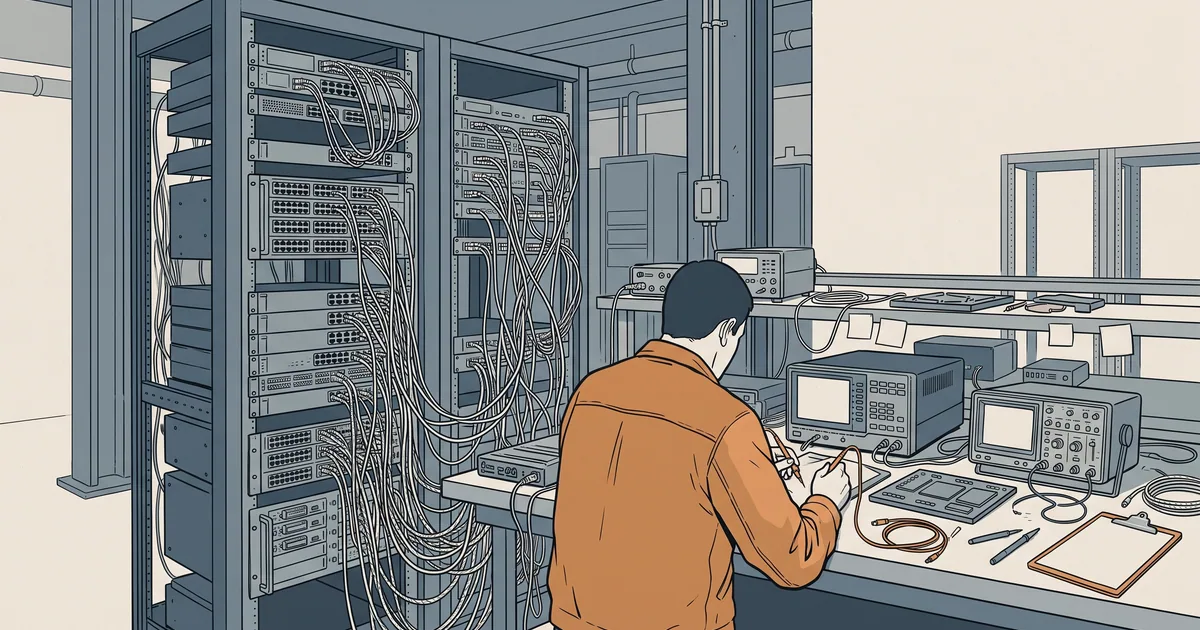
As of January 31, 2016, formal verification methods and modular blackboard architectures provide provable safety and resilient telemetry handling across distributed networks.
Engineering robust network infrastructure requires mathematically verified communication guarantees alongside efficient telemetry ingestion across heterogeneous nodes. Relying on intuitive assumptions regarding concurrent transport routinely introduces race conditions, state desynchronization, and authentication vulnerabilities when topologies experience variable latency. Research published in January 2016 addresses these systemic risks by applying formal method specification to verify network security protocols before deploying distributed coordination logic (IEEE). Through rigorous state exploration and mathematical modeling, engineers can confirm that cryptographic handshakes and authorization sequences remain immune to replay attacks and protocol interception, even under non-deterministic packet reordering. Establishing formal verification as a foundational design phase prevents critical runtime exploits across interconnected endpoints. Concurrently, high-throughput measurement frameworks must translate these verified guarantees into practical throughput strategies, ensuring that distributed sensing pipelines maintain data integrity without overwhelming node interfaces or saturating transit channels during burst traffic periods.
How Do Data Acquisition Systems Balance Distributed Node Pipelines?
Managing continuous telemetry ingestion requires modular software structures capable of decoupling sensor input collection from downstream processing. Research from the University of Szeged details the design and implementation of distributed architectures tailored for data acquisition systems, demonstrating that localized buffering prevents channel exhaustion (University of Szeged). When intermediate collection nodes process high-rate telemetry without rigid backpressure boundaries, socket queues overflow and drop measurements unexpectedly. Resolving these bottlenecks demands structured pipeline segmentation, wherein client interfaces offload raw packet streams into independent worker queues managed by explicit coordination boundaries. This partition isolates bursty measurement phases from storage serialization routines, ensuring that telemetry feeds sustain constant capture throughput. By enforcing rigorous component boundaries, distributed data collection designs maintain operational predictability across wide instrumentation setups, permitting engineering teams to scale concurrent sampling nodes without destabilizing centralized processing facilities.
Can Blackboard Architecture Improve Component Robot Failure Detection?
Robotic platforms relying on distributed component interactions often struggle to detect subsystem crashes before silent state corruption propagates across actuator controllers. Research published by Springer Japan introduces an asynchronous failure detection and notification mechanism employing a blackboard architecture for component-based robot applications (Springer Japan). Rather than depending on direct peer-to-peer heartbeat messages that risk saturating shared buses, distributed robotic modules publish diagnostic health states to a centralized, shared blackboard data structure. Decoupled supervisor components continuously monitor these published tokens, isolating anomalous module timeouts and flagging inconsistent state configurations without blocking critical control loops. When a sensor or kinematic solver fails, the diagnostic observer broadcasts immediate notifications to dependent components, allowing the system to enact safe fallback policies. This centralized repository model minimizes telemetry overhead, prevents cascading component deadlocks, and ensures reliable self-healing routines in autonomous machines.
Why Are Virtual Machines Essential on Hybrid Compute Clusters?
Executing parallel numerical workloads across heterogeneous environments introduces acute compilation and scheduling friction between divergent processor designs. Research from Elsevier BV details the implementation of a distributed PTX virtual machine engineered to run across hybrid CPU and GPU clusters (Elsevier BV). Parallel Thread Execution, or PTX, defines an intermediate assembly representation that traditionally targets specific graphics accelerators directly. By virtualizing PTX instructions across a distributed execution fabric, the architecture abstracts heterogeneous physical devices into a unified computational tier. The virtual machine schedules parallel kernel blocks across both central processors and discrete graphics accelerators, orchestrating memory transfers across non-uniform interconnects while load-balancing workload segments dynamically. This virtualization strategy mitigates the need for manual device-specific recompilation, enabling distributed scientific simulations to extract maximum floating-point performance from mixed hardware topologies while safeguarding task isolation across shared cluster nodes.
Sources
- IEEE: Security protocol for distributed networks using formal method specification, 2016-01-17
- University of Szeged: Design and Implementation of a distributed software architecture for data acquistion systems, 2016-01-15
- Springer Japan: Detection and Notification of Failures in Distributed Component-Based Robot Applications Using Blackboard Architecture, 2016-01-15
- Elsevier BV: A Distributed PTX Virtual Machine on Hybrid CPU/GPU Clusters, 2016-01-26