Parallel GCA Models and Multi-Agent Fuzzy Systems
analysis of parallel GCA execution, multi-agent fuzzy traffic controls, and stream processors in August 2009.
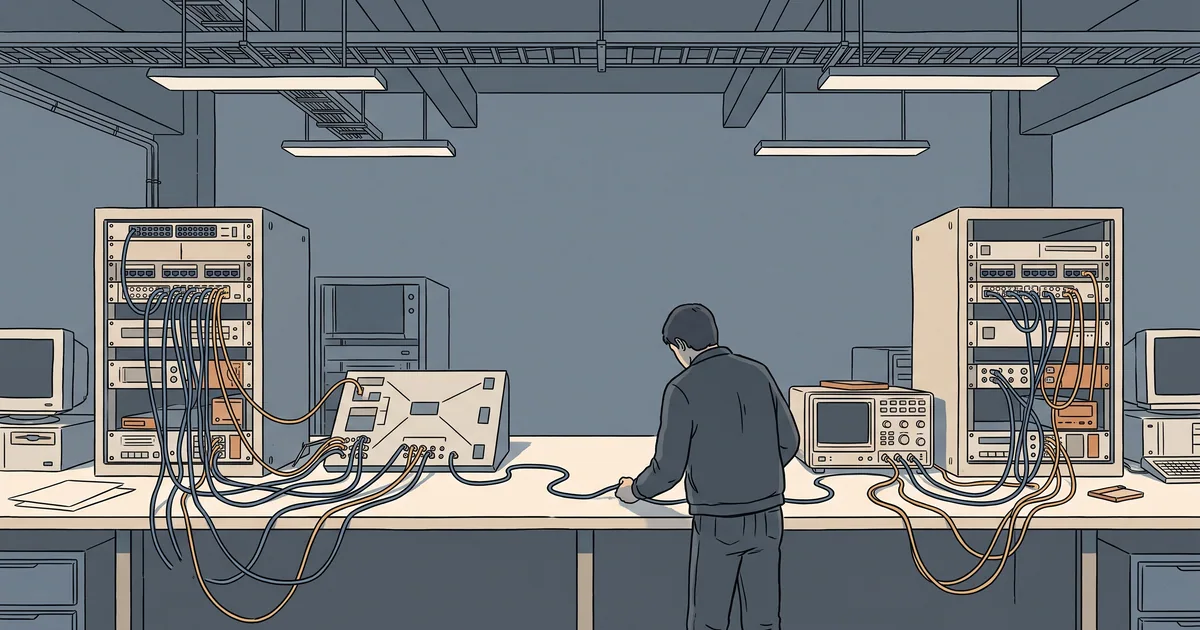
As of August 31, 2009, configurable parallel architectures and multi-agent fuzzy systems isolated interconnect latency through hardware co-design and localized decision rules.
During August 2009, computational engineers confronted severe scaling penalties when mapping decentralized algorithms onto physical interconnects. As investigations into configurable parallel architectures demonstrated, high-density topologies suffered severe throughput collapses whenever routing logic failed to mirror local processing dependencies. Designers developing the massively parallel Global Cellular Automata model revealed that uniform communication fabrics created routing contention across dense cellular grids, necessitating specialized hardware topologies to preserve execution fidelity (Informa UK Limited). When processing nodes assumed negligible packet delays, queuing latencies accumulated across adjacent switching boundaries, ultimately decoupling logical step intervals from physical clock periods. These scaling limits exposed the danger of separating algorithmic design from interconnect topologies. Consequently, engineering groups began abandoning monolithic interconnect frameworks in favor of configurable, localized transport schemes capable of constraining message transit overhead within strict physical bounds. This design transition proved vital across both high-performance computing clusters and spatially distributed automation fabrics seeking deterministic behavior.
How Did Decentralized Agents Handle Traffic Control Uncertainty?
Similar synchronization constraints challenged municipal infrastructure engineers attempting to orchestrate street traffic across multi-intersection corridors without central server dependence. Deploying decentralized type-2 fuzzy controllers allowed individual signal agents to calculate dynamic phase timings despite noisy sensor readings and delayed inter-agent telemetry (IEEE). Because physical vehicle flows introduce severe stochastic perturbations, conventional binary control logic frequently induced artificial oscillatory gridlock when adjacent controllers exchanged out-of-date boundary states. The implementation of interval type-2 membership functions enabled controllers to capture operational uncertainties directly within their localized inference engines. Rather than halting operations to await explicit state confirmations over unreliable metropolitan backhauls, each autonomous agent adjusted phase durations based on fuzzy bounds of upstream vehicle queues. This localized handling of uncertain inputs decoupled intersection throughput from communication link latency, demonstrating that resilient real-time coordination across physical infrastructure depends upon algorithmic tolerance for delayed and approximate peer telemetry.
Can Dynamic Video Adaptation Prevent Sensor Network Congestion?
Distributed visual sensor arrays encountered identical transport bottlenecks when transferring continuous environmental telemetry across constrained bandwidth channels. Research into distributed camera fabrics established that unrestricted visual streaming rapidly overwhelmed intermediate routing nodes, creating severe head-of-line blocking that ruined real-time frame delivery. To mitigate this data explosion, systems integrated video adaptation mechanisms directly onto edge camera nodes, enabling dynamic adjustments of encoding parameters and compression ratios based on available link capacity (IEEE). By incorporating local feature extraction alongside adaptive transrating, sensor units discarded redundant spatial data before injecting packets into the multi-hop transmission fabric. Rather than relying on centralized processing nodes to sort through uncompressed visual floods, distributed camera topologies balanced node-level computation against transport capacity. This adaptive partition maintained continuous object tracking and surveillance fidelity across shared radio links without triggering catastrophic buffer overflow across intermediate switching nodes.
How Did Stream Architectures Overcome Dedicated Compute Bottlenecks?
Within high-throughput computing silicon, scaling computational density encountered parallel limits where execution pipelines consistently outpaced internal memory access channels. The Fei Teng 64 stream processing system resolved these memory wall bottlenecks by co-designing an explicit stream instruction set architecture, compiler scheduling algorithms, and specialized streaming hardware units (Institute of Electrical and Electronics Engineers (IEEE)). By structuring data access patterns as deterministic mathematical streams, the compiler orchestrated DMA transfers into local register files well ahead of arithmetic execution phases. This holistic co-design prevented computational cores from stalling during high-latency off-chip memory fetches. By matching compiler-level dependency graphs directly to physical stream execution pathways, the Fei Teng 64 system sustained sustained arithmetic throughput across demanding computational benchmarks. The architecture proved that mitigating transport delays within microprocessors demands compiler-directed data staging rather than continuous reliance on speculative cache hierarchies that fail under dense streaming workloads.
Sources
- Informa UK Limited: A scalable configurable architecture for the massively parallel GCA model, 2009-08-08
- IEEE: Distributed multi-agent type-2 fuzzy architecture for urban traffic signal control, 2009-08-11
- IEEE: A distributed camera network architecture supporting video adaptation, 2009-08-17
- Institute of Electrical and Electronics Engineers (IEEE): Fei Teng 64 Stream Processing System: Architecture, Compiler, and Programming, 2009-08-23