Time-Triggered Protocol Architectures and Scheduling
Embedded systems optimize time-triggered protocol architectures to mitigate scheduling bottlenecks across distributed nodes.
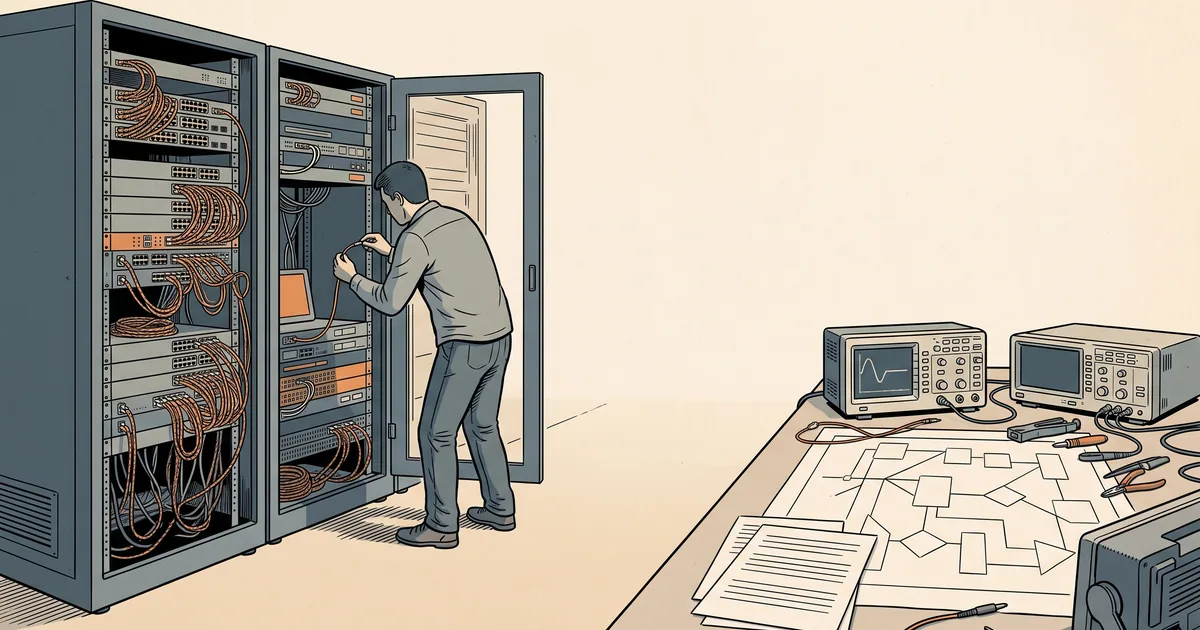
As of November 30, 2018, time-triggered protocol architectures rely on decomposition techniques to mitigate scheduling bottlenecks when deterministic slot allocators face multi-access transport delays.
During November 2018, the optimization of time-triggered protocol (TTP) architectures became essential as embedded control planes expanded beyond single-chassis timing boundaries and encountered deterministic scheduling bottlenecks (Elsevier BV). Systems that historically operated under hard real-time guarantees across local backplanes are increasingly coupled with multi-access networks and wide-area telemetry. When engineers scale coordinated control across geographically dispersed platforms, inherited assumptions of instantaneous convergence collapse under transport physics.
Why Do Deterministic Scheduling Allocators Fail Across Channels?
The optimization of time-triggered protocol (TTP) architectures became essential in November 2018 as embedded control planes expanded beyond single-chassis timing boundaries and encountered deterministic scheduling bottlenecks (Elsevier BV). Characterizing outage probabilities in distributed multi-access channels is critical for multi-node control planes where non-instantaneous signal detection impacts system stability (IEEE). System optimization strategies for time-triggered distributed systems leverage decomposition techniques to mitigate scheduling contention and manage multi-access detection constraints across distributed nodes (IEEE). Cloud-assisted distributed control architectures for vehicular platooning require explicit accommodation of transport latency to maintain coordinated control between local vehicle controllers and centralized compute layers (IEEE). Outage capacity evaluations in ambient backscatter systems define operational bounds for low-power communications where passive transceivers encounter unpredictable channel conditions (Elsevier BV). Distributed embedded architectures integrate deterministic bus timing optimization alongside wide-area control feedback to handle state coordination across latency-sensitive vehicular and multi-agent platforms (IEEE). In traditional chassis-level deployments, clock synchronization mechanisms maintain microsecond-level phase alignment, permitting static slot reservations where message collision is physically precluded. As control planes expand across wireless or multi-tenant physical links, this deterministic paradigm fragments. When zero-forcing (ZF) detection or concurrent uplink decoding encounters channel fading, packet delivery transitions from a strictly binary, time-invariant condition into a probabilistic variable. In this context, system optimization strategies for time-triggered distributed systems leverage decomposition techniques to mitigate scheduling contention and manage multi-access detection constraints across distributed nodes (Elsevier BV; IEEE). Without such decomposition, monolithic slot allocators fail to converge as real transport delays exceed local frame deadbands. This breakdown manifests acutely when chassis-bound control loops interface with external supervisory tiers. When an individual vehicle controller expects immediate state validation from an external coordination instance, jitter in cellular or dedicated short-range uplinks skews the shared kinematic frame. In vehicular spacing, stale state vectors degrade string stability, causing oscillation dampening algorithms to amplify minor braking actions into abrupt emergency stops. The architectural flaw does not stem from bandwidth starvation, but rather from control software treating remote network calls as synchronous state queries.
How Do Control Loops Decouple From Delayed State?
Managing these transitions requires rigorous physical and structural decoupling between localized fast-path execution and distributed coordination. Just as backscatter networks must operate despite severe link intermittent behavior, high-reliability control planes must decouple deterministic loop execution from non-deterministic state distribution channels. Control-plane metadata, including lease agreements and topology maps, must traverse isolated validation boundaries separate from dense payload telemetry. If an external transport packet drops or encounters transit queuing, the local node must continue executing safety-critical cycles within autonomous timing envelopes. Bounding state uncertainty across untrusted or variable links prevents remote latency spikes from stalling hardware interrupt handlers. System designers face unavoidable trade-offs between global optimality and local survival. When an interface contract between a local controller and a supervisory coordinator assumes synchronous convergence, transport delay masquerades as Byzantine node silence. If the supervisory layer employs machine learning, a statistical subset of artificial intelligence, it operates on probabilistic convergence patterns that differ fundamentally from deterministic physical control architectures. Telemetry streams must therefore carry explicit timestamp horizons and expiration bounds rather than unversioned state snapshots. If network transit delay exceeds a predetermined threshold, the contract mandates that the local execution engine degrade smoothly to an isolated mode. Operators cannot rely on blanket retransmission schemes because retransmitting stale control data over a saturated channel consumes bandwidth precisely when the control loop requires immediate, up-to-date inputs. Structural resilience depends on clear recovery paths when synchronized distributed state fractures. Rather than forcing distributed nodes to pause execution until consensus locks clear, contemporary systems implement speculative execution accompanied by monotonic compensation logs. A node continues trajectory execution using extrapolated kinematic models while flagging its state as unverified. Once delayed control packets arrive, the system calculates the divergence between predicted and measured parameters. If the divergence falls within strict safety margins, the node absorbs the state drift through gradual correction curves rather than step-function adjustments. If the divergence breaches predefined safety thresholds, the distributed control plane immediately yields authority to local fail-safe protocols. This containment mechanism prevents transport-induced phase shifts from rippling through interconnected multi-node clusters.
Can Distributed Architectures Preserve Local Real-Time Autonomy?
As distributed architectures bridge microscopic bus determinism with macroscopic transport fabrics, the boundary between local autonomy and central consensus remains precarious. While mathematical decomposition and stochastic link modeling mitigate transient outages, systems cannot escape the physical reality of non-zero propagation delays. As engineering teams continue distributing control planes across complex physical domains in late 2018, can real-time systems ever achieve provable global coherence without sacrificing the fault isolation of local real-time loops?
Sources
- Elsevier BV: A decomposition-based approach to optimization of TTP-based distributed embedded systems, 2018-11-08
- IEEE: On the Outage Probability of Distributed MAC with ZF Detection, 2018-11-11
- IEEE: Cloud-Assisted Distributed Control System Architecture for Platooning, 2018-11-14
- IEEE: Outage Capacity Analysis for Ambient Backscatter Communication Systems, 2018-11-17