Decentralized Energy Systems Redefine Control Architectures
Decentralized energy systems demand formal consensus mechanisms to reconcile latency variations and maintain operational stability.
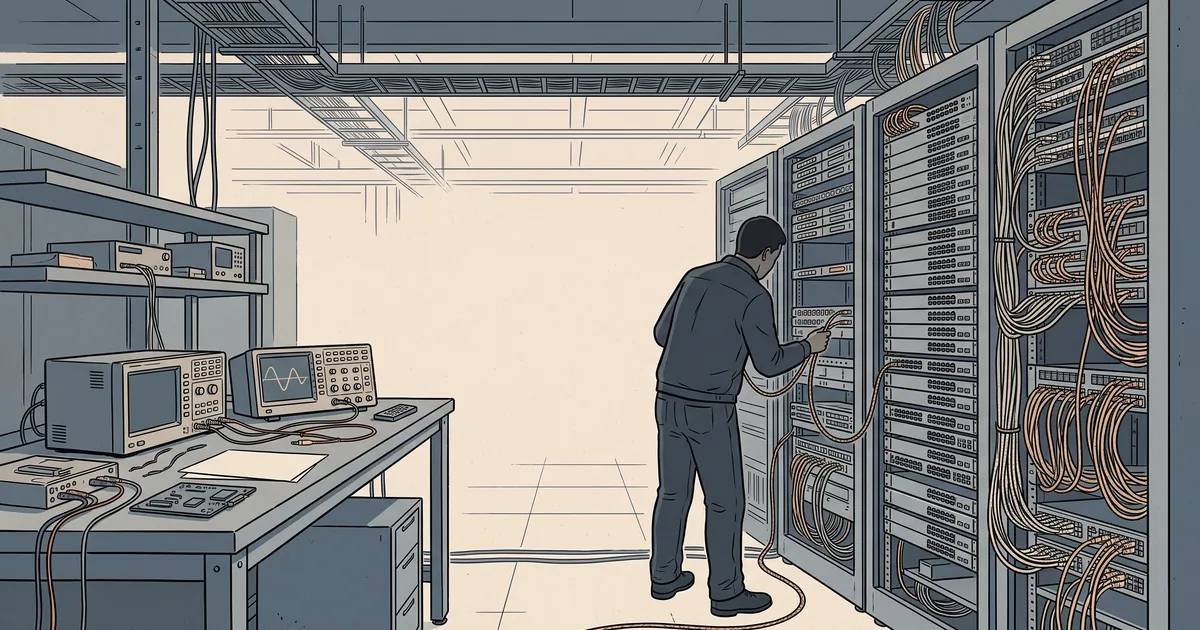
As of November 30, 2022, latency variations degrade distributed control operations because delayed synchronization signals cause local adjustments to diverge, producing harmonic distortions and unintended line trips.
During November 2022, infrastructure architects increasingly recognized that the expansion of decentralized operational networks exposed deep fractures between distributed control logic and underlying physical transports. As highlighted in research published in (Proceedings of the IEEE), the evolution toward decentralized energy systems underscored an urgent need to redefine control and information architectures, as legacy assumptions regarding communication latency and centralized visibility were no longer viable for contemporary electric grids. This rupture forces an examination of the foundational mechanics of coordination:
Why Do Latency Variations Degrade Distributed Control Operations?
The evolution toward decentralized energy systems underscored an urgent need to redefine control and information architectures, as legacy assumptions regarding communication latency and centralized visibility were no longer viable for contemporary electric grids (Proceedings of the IEEE). Adopting structured consensus-oriented decision-making became critical in distributed software architecture to prevent systemic coordination breakdowns when distributed components outpace underlying communication fabric capabilities (International Journal of Scientific Research in Science Engi). Distributed control architectures require formal consensus mechanisms to reconcile trade-offs between transport latency, data consistency, and operational autonomy across heterogeneous nodes (ETRI Journal). Threat modeling using STRIDE and DREAD frameworks in industrial distributed control systems identified communication spoofing, tampering, and denial-of-service transport vulnerabilities as critical risks to process stability (Frontiers in Energy Research). Distributed generation infrastructures experience operational disturbances and power quality degradation when real-time monitoring and mitigation loops encounter unmitigated network delay and signal distortion (Proceedings of the IEEE). Cyber-physical industrial infrastructures rely on deterministic transport performance, where latency variations and transport security exposures directly degrade the reliability of distributed control operations (International Journal of Scientific Research in Science Engi). When engineering teams build distributed software planes, they frequently design control loops around synchronous invariants that presume instantaneous message propagation. In reality, physical networks introduce non-deterministic packet transit, queuing delays, and jitter that continuously erode these abstractions. Adopting structured consensus-oriented decision-making became critical in distributed software architecture to prevent systemic coordination breakdowns when distributed components outpace underlying communication fabric capabilities, as documented in the (International Journal of Scientific Research in Science Engi). Without deliberate protocol boundaries, nodes execute state transitions based on stale telemetry, propagating divergent perspectives across the cluster. Contemporary analyses from (Proceedings of the IEEE) and (International Journal of Scientific Research in Science Engi) affirm that distributed control architectures require formal consensus mechanisms to reconcile trade-offs between transport latency, data consistency, and operational autonomy across heterogeneous nodes. When these consensus protocols lack explicit transport awareness, nodes stall awaiting quorum acknowledgments, leading to cascading timeouts and false split-brain detections. The practical consequences of these transport violations become acutely visible in cyber-physical environments where computational state directly controls real-world actuators. As demonstrated in (Frontiers in Energy Research), distributed generation infrastructures experience operational disturbances and power quality degradation when real-time monitoring and mitigation loops encounter unmitigated network delay and signal distortion. When high-frequency inverter controls or protective relays receive delayed synchronization signals, their local phase adjustments diverge from the broader electrical bus, causing harmonic distortions, voltage sags, and unintended line trips. The control plane interprets these physical disturbances as localized mechanical faults rather than artifacts of delayed packet transit, issuing aggressive corrective commands that compound the instability. This negative feedback loop illustrates how the naive decoupling of high-level control algorithms from physical transport realities transforms minor network latency spikes into widespread system failures.
How Can Engineers Enforce Robust Protocol Boundaries?
To prevent such systemic unraveling, system architects must enforce strict structural constraints at the handoff boundary between distributed control software and transport fabrics. A fundamental requirement is the absolute architectural separation of control-plane signaling from operational data payloads, ensuring that telemetry congestion cannot throttle administrative heartbeats. Concurrently, cyber-physical industrial infrastructures rely on deterministic transport performance, where latency variations and transport security exposures directly degrade the reliability of distributed control operations, as shown in (Proceedings of the IEEE) and (ETRI Journal). Rigorous threat modeling using STRIDE and DREAD frameworks in industrial distributed control systems identified communication spoofing, tampering, and denial-of-service transport vulnerabilities as critical risks to process stability, according to findings in (ETRI Journal). Consequently, every ingress boundary must validate incoming state updates cryptographically and semantically before control logic ingests them, isolating faulty or malicious transport streams before they poison distributed state machines. Designing these boundaries requires engineers to balance rigid safety margins against operational throughput. When transport layers encounter degradation, interface contracts cannot simply block execution while waiting for consistency proofs. Instead, control planes must maintain explicit service degradation profiles that grant autonomous local action based on bounded uncertainty models. Rather than relying on monolithic remote state estimations, nodes should compute safe operating envelopes locally using recent validated history. Telemetry collection must also adapt dynamically, throttling non-essential reporting during transport constriction to preserve link bandwidth for vital status vectors. In contemporary telemetry systems, data-driven machine learning models (which calculate statistical inferences from sensor streams, unlike traditional rule-based expert artificial intelligence systems that apply static logic trees) can predict impending transit bottlenecks, allowing control logic to gracefully degrade coordination fidelity before network buffers overflow. Establishing durable recovery paths demands that distributed control systems abandon unverified assumptions of synchronous convergence.
Can Decentralized Topologies Overcome Physical Communication Limits?
As contemporary utility grids and complex industrial systems accelerate their migration toward decentralized topologies, the fiction of transparent, zero-latency network transport has permanently dissolved. Coordinated distributed control is fundamentally constrained by the speed, security, and determinism of physical communication links. While asynchronous consensus models and adaptive isolation boundaries mitigate immediate vulnerabilities, an essential architectural challenge remains unsettled: How can distributed control planes dynamically verify the physical validity of remote state updates when transport latencies exceed the physical reaction times of the physical processes they govern?
Sources
- Proceedings of the IEEE: On an Information and Control Architecture for Future Electric Energy Systems, 2022-11-15
- International Journal of Scientific Research in Science Engi: Consensus-Oriented Technical Decision-Making in Distributed Software Architecture Design, 2022-11-16
- ETRI Journal: STRIDE‐based threat modeling and DREAD evaluation for the distributed control system in the oil refinery, 2022-11-07
- Frontiers in Energy Research: Analysis, monitoring, and mitigation of power quality disturbances in a distributed generation system, 2022-11-07