Networked Microgrids and Public Safety Networks
Networked microgrids and public safety networks require tailored protocol stacks to withstand transport delays.
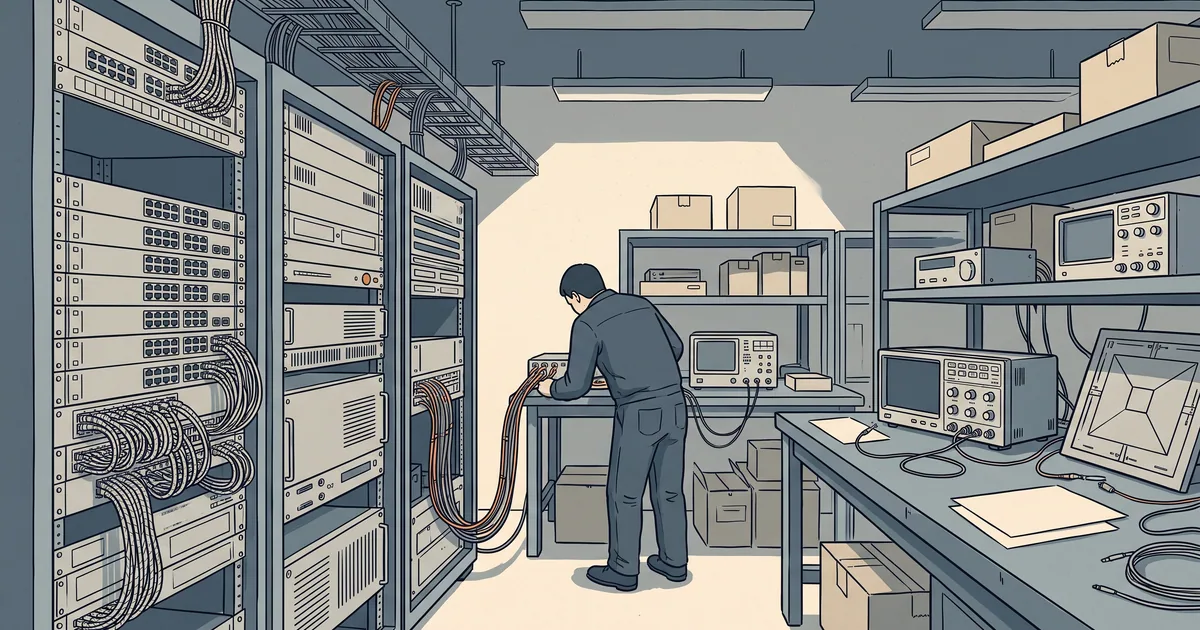
As of June 30, 2023, networked microgrids risk operational divergence when transport delays cause local actuators to operate on stale baselines and initiate cascading failovers.
During June 2023, contemporary distributed systems encountered recurring stability boundaries when high-level control planes outpaced the real-world performance of their underlying communication infrastructure. Industrial consensus, articulated in recent analyses of cyber-physical grid architectures by researchers in (Inventions), underscores that physical reality rejects frictionless coordination models. Software architectures that decouple business logic from transmission fabric frequently mask propagation delays behind logical consensus abstractions. This persistent disconnect between application design and physical network dynamics highlights a critical structural dilemma:
How Do Transport Delays Threaten Networked Microgrids?
The operational reliability of networked microgrids critically depends on communication architectures that can withstand real-world transport delays rather than assuming ideal synchronization (Inventions). Mission-critical architectures such as public safety networks in cellular environments demonstrate that control plane resilience must account directly for underlying physical and transport protocol constraints (DOI Registry). Distributed control architectures in microgrids and public safety networks require tailored protocol stacks to manage communication latencies and ensure consistent system state (ACM International Conference on Distributed and Event-Based ). Event-based systems utilize specialized programming abstractions to bridge messaging protocol guarantees with distributed application requirements (Applied Sciences). Physical layer constraints such as channel estimation errors and hardware limitations directly impact outage performance and achievable transmission rates in wireless relaying channels (Inventions). Treating underlying messaging and transport mechanisms as transparent abstractions leads to operational vulnerabilities when communication channels experience real-world latency and delivery delays (DOI Registry). The breakdown of state synchronization begins when distributed nodes interpret the absence of an immediate message update as proof of an unchanged environment. In cyber-physical infrastructures, the operational reliability of networked microgrids critically depends on communication architectures that can withstand real-world transport delays rather than assuming ideal synchronization (Inventions). When primary generation controllers broadcast frequency adjustment commands, any packet queuing delay across the wide-area transit network causes local actuators to operate on stale operational baselines. Similarly, mission-critical architectures such as public safety networks in cellular environments demonstrate that control plane resilience must account directly for underlying physical and transport protocol constraints (DOI Registry). Without explicit transport-aware design, transient congestion triggers cascading failovers, wherein secondary controllers falsely register parent node dropouts and initiate conflicting corrective routines. Managing this operational divergence requires restructuring how systems conceptualize network boundaries. When generic transport sockets are inserted beneath strict quorum algorithms, variance in jitter fractures consensus rounds, stalling state machines that demand total ordering. contemporary event-based systems utilize specialized programming abstractions to bridge messaging protocol guarantees with distributed application requirements (ACM International Conference on Distributed and Event-Based ). These abstractions prevent control planes from treating asynchronous delivery fabrics as synchronous local function invocations. By explicitly surfacing backpressure, retry budgets, and partition signals into the application domain, the coordination layer avoids issuing invalid lock leases or conflicting transactions during intermediate delivery degradation.
Why Must Architectures Separate Control Signaling From Payload?
At the handoff interface, systems must enforce a strict separation between control signaling and bulk data payload to prevent low-level transit degradation from choking decision channels. In wireless topologies, physical layer constraints such as channel estimation errors and hardware limitations directly impact outage performance and achievable transmission rates in wireless relaying channels (Applied Sciences). When control directives share transit channels with unthrottled state replication traffic, physical transmission errors induce severe retransmission cascades that saturate buffer allocations. Robust architectures establish deterministic validation boundaries where control messages receive priority admission queues and hardware-enforced bandwidth guarantees. Nodes must validate message freshness at the edge before admitting state updates into the core consensus engine, rejecting obsolete frames whose delay exceeds local safety thresholds. This discipline isolates the core coordination state from erratic physical layer behaviors. System operators must constantly navigate trade-offs between consistency strictness, operational latency, and telemetry precision. When engineering teams hide transport vagaries behind opaque remote procedure call wrappers, operational telemetry loses visibility into micro-burst packet loss and socket-level retransmissions. Consequently, interface contracts must mandate explicit error budgets and latency bounds within the protocol definition itself. Exposing transport health metrics directly to the supervisory tier permits nodes to adjust their consensus quorum sizes dynamically, shifting smoothly toward degraded consistency models before network buffers overflow. This structural visibility allows operators to detect transport degradation long before nodes experience complete consensus partition. Long-term structural resilience depends on designing recovery pathways that bypass the standard control plane when transport connectivity fails. Distributed nodes operating in isolated partitions must transition into autonomous, safe-state hold modes rather than continuously flooding the communication fabric with synchronization requests. Such storms of reconnection traffic routinely collapse recovering intermediary relays, prolonging outages across entire network segments. Effective containment strategies establish hierarchical fallback routines where local control agents enforce conservative, safety-rated operating setpoints without remote confirmation. Once the underlying transport layer stabilizes, state reconciliation must proceed through rate-limited, incremental synchronization vectors rather than instantaneous mass ingestion.
Can True Autonomous Decentralization Survive Transport Latency?
As distributed architectures permeate increasingly harsh physical domains, engineering practices must finally reject the illusion of frictionless, instantaneous network transport. While specialized protocol abstractions and prioritized queuing boundaries mitigate baseline transit friction, they cannot abolish propagation delays dictated by physical hardware. The architectural tension exposed in mid-2023 leaves engineers with an enduring design dilemma: Can distributed systems ever achieve true autonomous decentralization without delegating absolute, irrevocable decision-making authority to local edge nodes whenever physical transport fabrics inevitably falter?
Sources
- Inventions: A Comprehensive Review of Architecture, Communication, and Cybersecurity in Networked Microgrid Systems, 2023-06-29
- DOI Registry: Architecture and protocols for public safety users in the 5G cellular networks, 2023-06-30
- ACM International Conference on Distributed and Event-Based : Programming Abstractions for Messaging Protocols in Event-based Systems, 2023-06-26
- Applied Sciences: Ergodic Rate and Outage Performance of Full-Duplex NOMA Relaying with Channel Estimation Errors and Low-Resolution ADCs, 2023-06-08