Dynamic Routing Paths and Pervasive Optical Telemetry
During August 2023, systems engineers evaluated decoupled cloud-distributed system patterns across bounded optical and wireless transport.
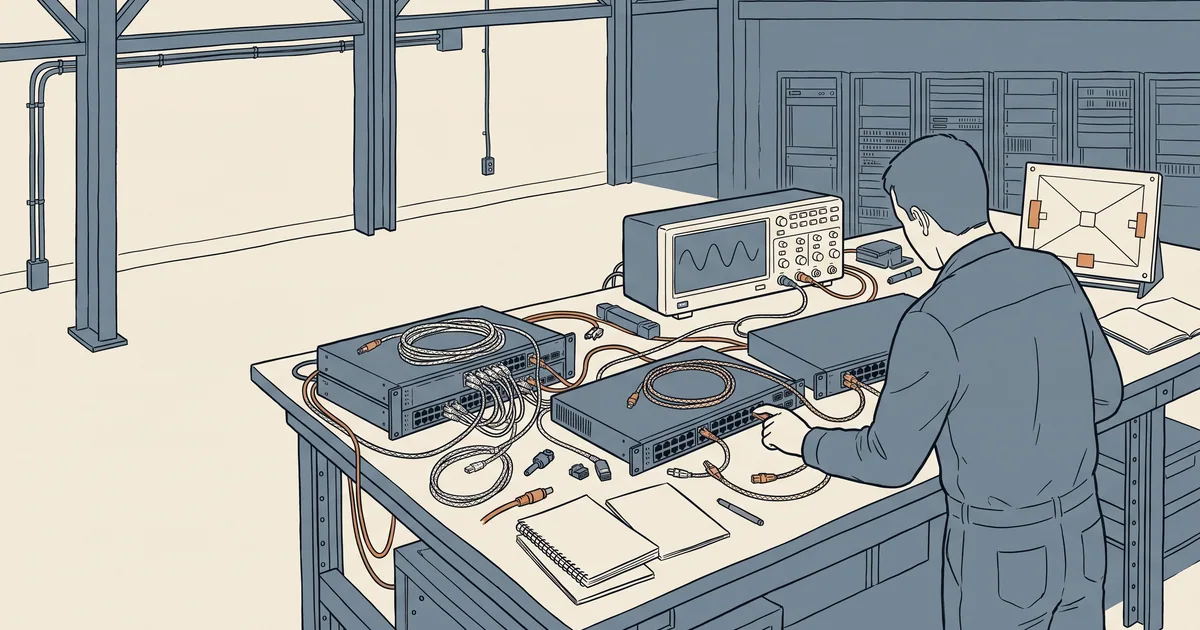
As of August 31, 2023, flooding state mutations creates self-induced telemetry storms that consume bandwidth required for coordination traffic when raw optical metrics choke transit paths.
During August 2023, systems engineers confronted severe stability hazards emerging across enterprise infrastructures where consensus algorithms outpaced physical transmission realities. Work featured in the (International Journal of Research and Applied Innovations) underscored that evaluating architectural design patterns in cloud-distributed environments is critical for building resilient operational systems that do not fail when transport assumptions break down. When operational logic presumes instantaneous propagation, network buffers fill, queueing delays escalate, and consensus timeouts cascade into systemic partition states. This structural friction forces an urgent engineering inquiry:
How Do Redundant State Announcements Choke Physical Transport Networks?
Evaluating architectural design patterns in cloud-distributed environments is critical for building resilient operational systems that do not fail when transport assumptions break down (International Journal of Research and Applied Innovations). Deploying distributed intelligence within pervasive optical network telemetry is vital for ensuring telemetry streams scale alongside distributed control layers without saturating underlying optical channels (Journal of Optical Communications and Networking). Distributed intelligence architectures for pervasive optical telemetry partition monitoring functions across network nodes to mitigate centralized transport bottlenecks (Iraqi Journal for Electrical And Electronic Engineering). The Distributed Dynamic Cooperative Protocol improves packet reliability in sensor network environments by dynamically adapting routing paths to local channel constraints (IEEE Transactions on Communications). Multiple access protocol performance in shared wireless and radar environments depends directly on coordinating transmission mechanisms to prevent signal coexistence degradation (International Journal of Research and Applied Innovations). Cloud-distributed system patterns leverage decoupled components to sustain critical operations during distributed transport delays and intermittent connectivity (Journal of Optical Communications and Networking). The breakdown originates when control planes treat the physical networking fabric as a passive, instantaneous backplane rather than a bounded, lossy transit medium. In physical transport networks, flooding state mutations creates self-induced telemetry storms that consume the very bandwidth required for coordination traffic. As demonstrated by recent investigations in the (Journal of Optical Communications and Networking), deploying distributed intelligence within pervasive optical network telemetry is vital for ensuring telemetry streams scale alongside distributed control layers without saturating underlying optical channels. When control architectures stream raw optical performance metrics to a centralized controller, transit paths quickly choke under redundant state announcements. To prevent these catastrophic stalls, distributed intelligence architectures for pervasive optical telemetry partition monitoring functions across network nodes to mitigate centralized transport bottlenecks. By offloading feature extraction, anomaly filtering, and local state validation directly to the edge forwarding plane, optical switches reduce data transmission volumes before routing decisions enter the shared telemetry bus. Similar dynamic stresses appear in resource-constrained wireless domains where rapid state shifts destabilize fixed routing topologies. As examined in the (Iraqi Journal for Electrical And Electronic Engineering), the Distributed Dynamic Cooperative Protocol improves packet reliability in sensor network environments by dynamically adapting routing paths to local channel constraints. Without such localized adaptive handling, nodes attempting to broadcast synchronization frames across degraded wireless links trigger unceasing retransmission storms. The resulting media contention starves heartbeat mechanisms, causing distributed orchestrators to falsely conclude that responsive peers have suffered catastrophic node crashes. Once an orchestrator diagnoses a false node failure, it triggers automated failover sequences that generate additional topology reconfiguration traffic. This recursive loop drives the transit substrate into thrashing, because control updates consume the exact packet delivery capacity necessary to verify node liveness.
Why Must Software-Defined Control Layers Separate Coordination Signaling?
Mitigating these cascading breakdowns requires a disciplined separation between coordination signaling and data payloads across shared channel media. When disparate operational workflows compete for identical physical channels without strict transmission boundaries, coordination packets inevitably suffer destructive collisions. Research published in the (IEEE Transactions on Communications) confirms that multiple access protocol performance in shared wireless and radar environments depends directly on coordinating transmission mechanisms to prevent signal coexistence degradation. In complex aerial and terrestrial networks, uncontrolled bursts of radar sensing data or control-plane updates create destructive mutual interference, degrading packet delivery for every participating node. Enforcing clean scheduling boundaries, robust channel-access arbitration, and hardware-isolated queues prevents telemetry surges from crushing mission-critical coordination frames. This operational isolation ensures that even during unexpected traffic spikes, control planes retain deterministic access to link-layer communication pathways without corrupting high-volume data transport. Beyond physical channel coordination, software-defined control layers must establish defensive interface contracts that accommodate network partitioning rather than attempting to enforce instantaneous global consistency. As documented in the (International Journal of Research and Applied Innovations), cloud-distributed system patterns leverage decoupled components to sustain critical operations during distributed transport delays and intermittent connectivity. Instead of relying on synchronous remote procedure calls that block threads until remote acknowledgment arrives, contemporary resilient architectures employ asynchronous message brokers, idempotent command interfaces, and local durable write logs. When analyzing local telemetry traces, engineers increasingly embed automated filtering engines; here, machine learning, a statistical subset of AI, differs from broader symbolic AI systems by inferring latent congestion patterns from continuous numerical metric streams rather than executing rigid deterministic rules. Operators balancing availability against strict consistency must accept stale local reads or eventual reconciliation boundaries to prevent control planes from seizing whenever transport latency fluctuates. Establishing clear failure containment boundaries further shields the system against systemic collapses during extended transport degradation.
Can Distributed Control Planes Quantify Transit Latency Limits?
As distributed architectures expand across optical backbones, wireless sensor fabrics, and multi-region cloud infrastructures, the assumption of frictionless, zero-latency transport collapses entirely. Systems designed around synchronous coordination invariants will repeatedly destabilize their underlying physical channels through telemetry amplification and aggressive retransmission cascades. As of August 2023, while decentralized telemetry filtering and decoupled message patterns offer operational mitigation, a broader architectural challenge persists: How can distributed control planes formally quantify transit latency limits before state consensus algorithms initiate self-destructive failure recovery routines?
Sources
- International Journal of Research and Applied Innovations: Robust Supply Chain Systems in Cloud- Distributed Environments: Design Patterns and Insights, 2023-08-15
- Journal of Optical Communications and Networking: Distributed intelligence for pervasive optical network telemetry, 2023-08-10
- Iraqi Journal for Electrical And Electronic Engineering: Enhancing Packet Reliability in Wireless Multimedia Sensor Networks using a Proposed Distributed Dynamic Cooperative Protocol (DDCP) Routing Algorithm, 2023-08-15
- IEEE Transactions on Communications: Analysis of UAV Radar and Communication Network Coexistence With Different Multiple Access Protocols, 2023-08-15