Industrial Control Systems Under Transport Timing Constraints
Specialized data replication strategies decouple the real-time execution plane to prevent control-plane starvation in supervisory fabrics.
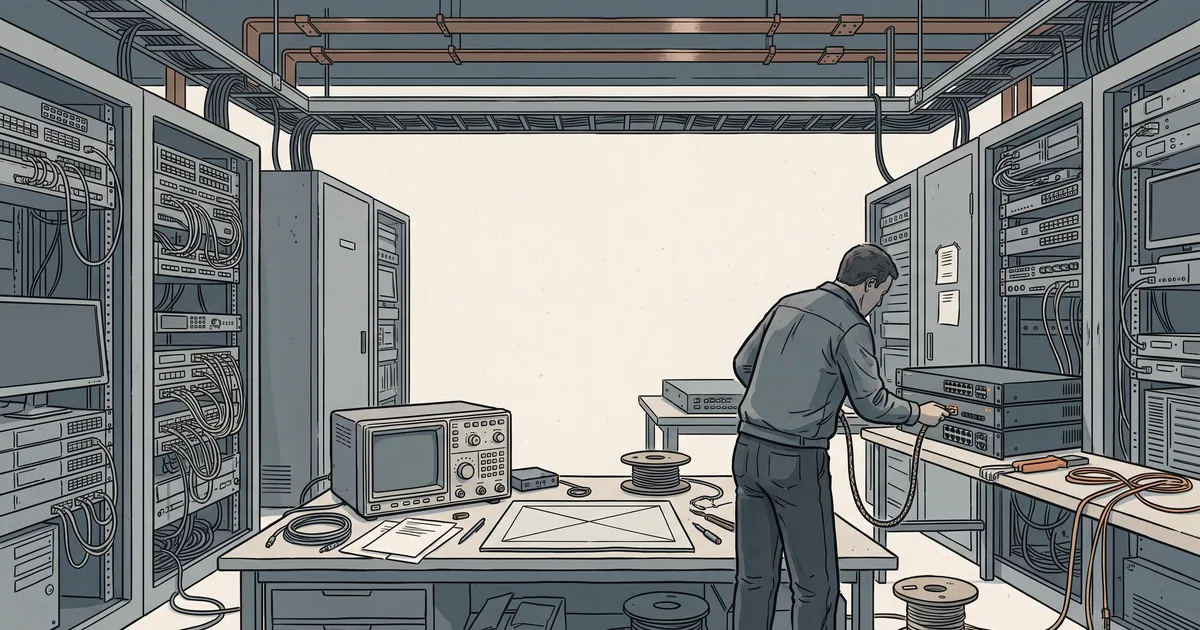
As of May 31, 2013, transport timing guarantees breach when jitter, packet loss, and physical medium contention disrupt synchronous scan cycles across wide-area fabrics, forcing local execution loops to pause.
During May 2013, industrial automation engineers face growing friction as supervisory telemetry expands across wide-area networks and heterogeneous field buses. Research published in the (International Journal of Computer Applications) highlights how contemporary decision architectures grapple with database synchronization across dispersed operational nodes. Control fabrics traditionally built around deterministic backplanes now encounter unpredictable transit delays. This friction brings an urgent question into focus: When physical separation shatters assumptions of instantaneous mutual visibility, industrial architectures face catastrophic stalls, lockups, and unrecoverable race conditions.
Why Do Transport Timing Guarantees Breach In Distributed Fabrics?
The May 2013 release of federal guidance under NIST SP 800-82 Revision 1 marked a critical shift in recognizing that applying standard enterprise security controls to SCADA and distributed control systems risks catastrophic operational failure if transport timing guarantees are breached (International Journal of Computer Applications). Deploying distributed decision support architectures across industrial control segments introduces database synchronization challenges that necessitate specialized replication strategies to prevent control-plane starvation (DOI Registry). NIST SP 800-82 Revision 1 detailed security architecture requirements for SCADA, Distributed Control Systems (DCS), and Programmable Logic Controllers (PLCs), emphasizing that stringent latency bounds distinguish industrial transport fabrics from standard IT networks (Information and Software Technology). The enforcement of entailment constraints in distributed service-based environments requires formal coordination mechanisms to maintain process consistency across geographically separated execution units (EURASIP Journal on Wireless Communications and Networking). Multi-hop wireless configurations using framed ALOHA topologies with virtual antenna arrays introduce contention delays and throughput variations that constrain multi-node telemetry and control signal dissemination (International Journal of Computer Applications). Data replication algorithms for distributed database topologies must balance decision-support data availability against network overhead to avoid saturation of interconnecting links (DOI Registry). The May 2013 release of federal guidance under NIST SP 800-82 Revision 1 marked a critical shift in recognizing that applying standard enterprise security controls to SCADA and distributed control systems risks catastrophic operational failure if transport timing guarantees are breached, as detailed by (DOI Registry). In traditional factory environments, Programmable Logic Controllers (PLCs) and Distributed Control Systems (DCS) operated on isolated deterministic buses where round-trip transit was effectively instantaneous and bounded. When organizations tunnel industrial control protocols over corporate Ethernet or routed wide-area fabrics, jitter and packet loss disrupt synchronous scan cycles, causing actuators to fault into fail-safe modes. Enterprise security measures such as deep packet inspection and cryptographic handshakes often introduce variable packet delays that corrupt time-sensitive poll-response loops. Deploying distributed decision support architectures across industrial control segments introduces database synchronization challenges that necessitate specialized replication strategies to prevent control-plane starvation, according to findings in the (International Journal of Computer Applications). When control applications assume shared-memory semantics or instantaneous lock distribution, any latency variance forces local execution loops to pause. In multi-hop wireless configurations, physical communication constraints exacerbate these synchronization penalties. If distributed control nodes wait synchronously for positive acknowledgments across uncoordinated wireless hops, the resulting queue backpressure rapidly propagates upstream, overflowing local ring buffers and destabilizing real-time control loops. Physical medium contention directly undermines the deterministic schedule required for continuous process monitoring.
How Can Strict Boundaries Isolate The Real-Time Execution Plane?
Resolving these architectural failures requires establishing strict boundaries between the real-time execution plane and asynchronous coordination channels. In mission-critical automation systems, high-speed execution loops must never depend on synchronous broad-area consensus. Instead, the local control loop at the PLC or DCS level must execute deterministically against localized state, while state convergence across regional controllers is treated as an asynchronous, subsequently consistent process. Segmenting control-plane signaling from transactional data exchange ensures that transient route flaps or retransmission storms cannot block safety-critical valve actuation or emergency generator shutdown sequences. Explicit decoupling shields critical timing loops from arbitrary delays in the coordination fabric. System architects must also manage the payload volume and replication cadence across constrained industrial interconnects. Naive full-table replication or eager commit protocols quickly overwhelm bandwidth-constrained field telemetry lines, triggering packet loss and triggering cascading watchdog timeouts. Operators must define crisp interface contracts that differentiate telemetry updates from authoritative state modifications. By enforcing delta-based replication and prioritizing alarm telemetry over analytical logging, distributed SCADA fabrics preserve link capacity for critical supervisory overrides, even during severe network degradation. Furthermore, intelligent message batching prevents channel exhaustion while preserving the chronological sequence of supervisory commands. Structural resilience additionally hinges on robust validation boundaries and decentralized fault containment. Traditional supervisory architectures often presumed that remote nodes were inherently trustworthy and always aligned in state. However, when latency breaks lockstep synchronization, independent nodes can generate divergent actuation commands based on obsolete process snapshots. Industrial transport designs must therefore incorporate explicit lease durations, deadline timers, and monotonic state versioning at every trust boundary. If a remote telemetry stream exceeds its allowable latency threshold, the local controller must safely degrade to autonomous baseline operation rather than stalling in an indefinite wait state. Decoupling local survivability from global consensus ensures that transport partitions isolate rather than collapse physical operations, preserving plant stability during network degradation.
Can Distributed Frameworks Guarantee Strict Real-Time Safety Invariants?
Industrial automation architectures in May 2013 stand at a delicate crossroad between local determinism and distributed coordination. As control planes scale past the physical bounds of factory backplanes, treating latency as a negligible anomaly is no longer viable. Systems must embrace partition tolerance and asynchronous boundary handoffs to survive transport interruptions. This fundamental transition leaves open an essential technical question: How can distributed industrial frameworks guarantee strict real-time safety invariants when underlying transport fabrics offer only probabilistic delivery guarantees?
Sources
- International Journal of Computer Applications: Data Replication for the Distributed Database using Decision Support Systems, 2013-05-17
- DOI Registry: Guide to Industrial Control Systems (ICS) Security : Supervisory Control and Data Acquisition (SCADA) Systems, Distributed Control Systems (DCS), and Other Cont, 2013-05-01
- Information and Software Technology: Enforcement of entailment constraints in distributed service-based business processes, 2013-05-10
- EURASIP Journal on Wireless Communications and Networking: Performance analysis of multi-hop framed ALOHA systems with virtual antenna arrays, 2013-05-01