Cyclic Delay Diversity and Robotic Energy Protocols
engineering resilient multi-agent swarms against wireless channel fading and rapid power depletion.
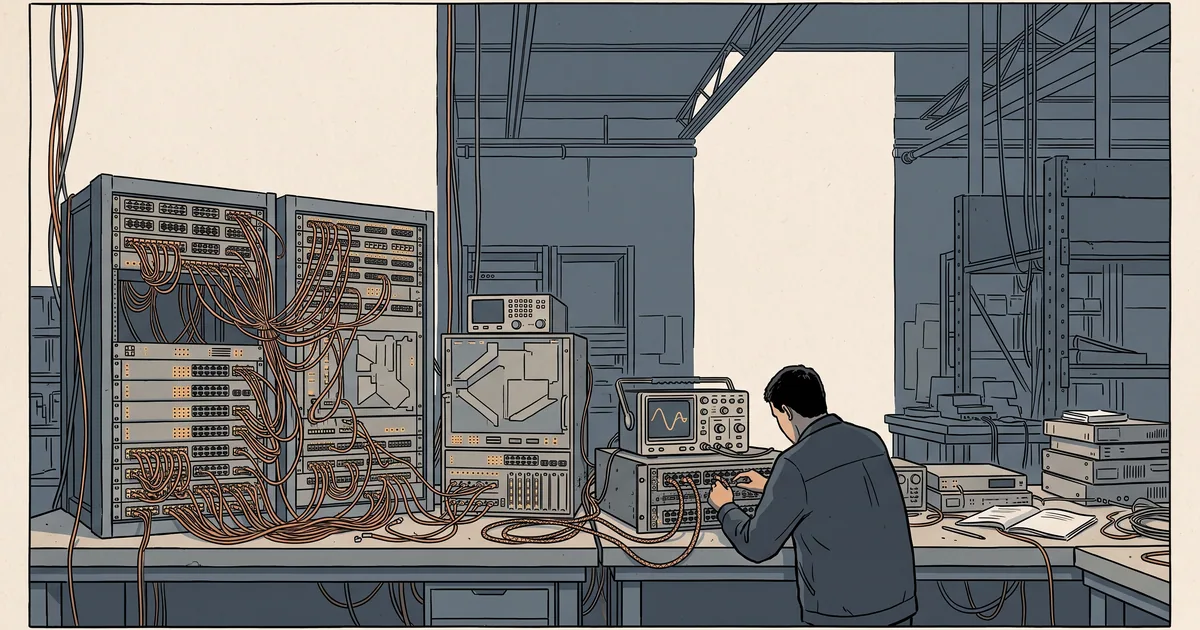
As of May 31, 2019, engineering teams resolve robotic multi-agent coordination failures by combining cyclic delay diversity outage models with energy budget transaction protocols and adaptive channel scheduling.
Autonomous mobile fleets deployed across physical environments encounter persistent synchronization failures when coordination frameworks assume lossless communication channels. Multi-agent spatial algorithms frequently model state propagation as an instantaneous abstraction, yet physical wireless links consistently suffer from channel fading, spatial shadowing, and co-channel interference. Recent investigation into distributed cyclic delay diversity systems shows that spatial transmission diversity cannot fully mitigate link degradation when concurrent transmissions encounter severe mixture interference IEEE. If distributed consensus routines treat physical message loss as immediate node failure rather than expected channel variance, mobile nodes trigger uncoordinated local fail-safe states. These divergent control states desynchronize spatial formations and initiate aggressive packet retransmission loops. Because embedded transceivers consume non-trivial electrical power during repeated transmit phases, excessive retransmission attempts rapidly drain hardware battery cells. Developing robust multi-agent systems therefore requires rigorous cross-layer co-design, directly coupling realistic channel outage statistics with explicit operational energy boundaries across autonomous teams.
How Do Energy Transaction Protocols Prevent Premature Agent Depletion?
Control plane communication overhead in decentralized swarms drains mobile battery reserves when agents execute collaborative tasks without formal cost accounting. To prevent unexpected battery exhaustion, robotic platforms must balance message passing overhead against actuator consumption during path planning and consensus formation. Implementing an energy budget transaction protocol enables distributed robotic systems to treat power expenditures as formal, bounded transaction costs during multi-agent task execution IEEE. By establishing explicit energy caps on consensus exchanges, the transaction mechanism forces peer agents to prioritize safety-critical state vectors over redundant telemetry broadcasts. When an agent approaches its allocated communication threshold, the protocol throttles broadcast frequency, preventing runaway control traffic from starving onboard actuators. This bounded transaction model isolates individual hardware failures, ensuring that degraded agents can complete safe fallback maneuvers before total power loss occurs. Enforcing strict communication budgets shields teams from cascading operational collapses caused by unconstrained control traffic.
Can Adaptive TSCH Scheduling Mitigate Dynamic Contention Storms?
Shared radio channels in dense industrial and autonomous environments experience severe collision bursts when concurrent nodes attempt unscheduled control exchanges. Traditional contention-based medium access control fails under bursty coordination traffic, causing elevated latency and systemic packet drops. Applying adaptive distributed scheduling within the IEEE 802.15.4e time-slotted channel hopping architecture resolves this contention bottleneck by dynamically allocating slotframes according to instantaneous traffic demands IEEE. Rather than relying on rigid, preconfigured communication schedules, individual nodes negotiate hopping sequences and slot offsets based on current channel occupancy and queue depths. This adaptive approach mitigates multi-user interference across overlapping industrial frequency bands, providing deterministic delivery windows for closed-loop coordination loops. Furthermore, decoupling time slots prevents non-critical diagnostic telemetry from delaying high-priority spatial navigation packets. The resulting transport guarantees allow multi-agent systems to preserve monotonic timing sequences without relying on fragile, centralized master clocks.
How Does Intelligent Road Infrastructure Stabilize Cooperative Transport Architectures?
Purely ad-hoc vehicular communication topologies struggle to maintain reliable consensus during high-density transit scenarios due to rapid link churn and line-of-sight obstructions. Cooperative intelligent transport systems resolve these topology limits by embedding fixed roadside units into the overall architectural framework IEEE. These intelligent road units serve as structural mediators that aggregate decentralized vehicular gossip, serialize local message traffic, and balance overall channel utilization across regional corridors. In software architectures, roadside infrastructure cleanly decouples statistical machine learning systems that classify roadside sensor data from symbolic rule-based AI planners that execute deterministic collision-avoidance trajectories. This structural containment prevents raw sensor streams from flooding direct vehicle-to-vehicle links, preserving wireless capacity for critical trajectory negotiations. By combining roadside arbitration with cyclic delay diversity links, transport networks maintain cooperative mobility without requiring completely centralized tracking engines.
Sources
- IEEE: Outage Analysis of Distributed CDD Systems with Mixture Interference, 2019-05-08
- IEEE: Energy Budget Transaction Protocol for Distributed Robotic Systems, 2019-05-11
- IEEE: An Adaptive Distributed Scheduling Algorithm for IEEE 802.15.4e TSCH Protocol, 2019-05-14
- IEEE: Intelligent Roads as Part of the C-ITS Reference Architecture, 2019-05-17