Distributed Fault Tolerance Protocols Under Latency
Benchmarking distributed fault tolerance protocols reveals how transport bottlenecks degrade state consistency across heterogeneous clusters.
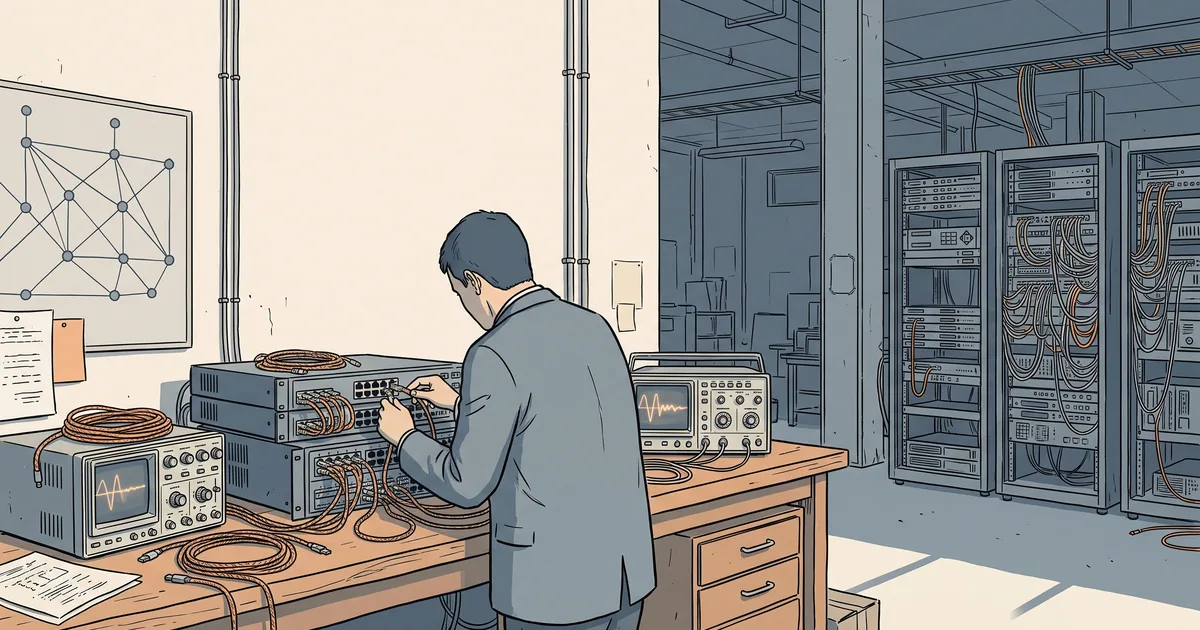
As of March 31, 2016, empirical testing reveals that message delays, packet jitter, and desynchronization trigger premature failovers and consensus divergence.
During March 2016, distributed computing researchers intensified their scrutiny of control plane robustness under unexpected transport bottlenecks, as highlighted by new benchmarks published in (DOI Registry). As systems expand across physical facilities and heterogeneous clusters, software architectures often rely on theoretical synchrony that falters under real-world transit delays. The resulting divergence exposes hidden architectural fragility, transforming minor communication stalls into cascading protocol partitions, split-brain realities, and unrecoverable state corruptions across mission-critical enterprise environments.
How Do Transport Delays Impair Distributed Consensus Convergence?
Benchmarking the performance and dependability of distributed fault tolerance protocols provides essential metrics for evaluating system resilience when transport assumptions degrade under network strain (DOI Registry). Formal digital architecture planning models are vital for structuring distributed computing environments and diagnosing failure modes across complex interconnected systems (DOI Registry). Research into distributed fault tolerance protocols benchmarks dependability by analyzing state consistency and protocol behavior when communication links experience high latency (Journal of contemporary Power Systems and Clean Energy). Distributed resource scheduling approaches utilize decentralized algorithms to optimize node coordination and maintain execution balance under dynamic network constraints (Proceedings - IEEE Aerospace Conference). Multi-center data system prototypes leverage standardized CCSDS communication specifications to maintain synchronization and protocol interoperability across geographically separated sites (DOI Registry). Empirical testing of distributed protocols highlights how message delays and node desynchronization impede distributed scheduling and consensus convergence (DOI Registry). When system designers construct distributed control planes upon the implicit expectation of instant consensus, ordinary packet jitter rapidly manifests as structural instability. Under sustained load or bandwidth saturation, peer discovery mechanisms, membership heartbeats, and leader election primitives misinterpret transmission delays as outright machine crashes. The resulting churn triggers premature failover procedures, forcing nodes to discard authoritative state views and initiate repeated voting cycles. Without explicit latency bounds incorporated into the underlying state machine replication design, the boundary between normal node execution and localized partition becomes dangerously blurred. To counteract this susceptibility, formal digital architecture planning models are vital for structuring distributed computing environments and diagnosing failure modes across complex interconnected systems (DOI Registry). When propagation delays exceed internal timeout thresholds, replicated logs diverge, creating phantom masters and stale snapshot invalidations. Rather than maintaining order, the protocol itself amplifies network congestion by flooding backchannels with lease renewal retransmissions, reconciliation packets, and duplicate broadcast messages that worsen link degradation.
How Can Protocol Isolation Protect Mission-Critical Control Networks?
Preventing these systemic breakdowns requires rigorous separation between the control plane coordination path and user-facing data payload flows. Control plane messages must operate under strict admission limits and dedicated bandwidth guarantees, ensuring that transient volume spikes in operational payloads do not choke heartbeat telemetry. By enforcing clear validation boundaries, intermediate brokers can prevent unverified state mutations from propagating across distributed tiers. This structural containment prevents local queue latency from poisoning broader scheduling decisions or corrupting persistent global registries. Operational trade-offs also dictate how engineering teams specify timeout tolerances, lease durations, and reconciliation intervals within interface contracts. In high-latency topologies, rigid synchronous barriers guarantee safety only at the catastrophic expense of system availability and throughput. Standardized communication wrappers allow operators to decouple remote site telemetry from local state transitions, applying monotonic sequence numbering and bounded gossip models instead of brittle global locks. These architectural concessions ensure that temporary transit lag degrades freshness rather than halting site operations altogether. Comprehensive validation must therefore replace naive local unit testing with rigorous stress evaluations under simulated transport pathology. When distributed fault tolerance mechanisms undergo systematic latency injection and deliberate packet loss, architects uncover the exact boundaries where state reconciliation breaks down. Incorporating these empirical measurements into architectural planning models empowers engineering teams to build resilient recovery paths, allowing partitioned nodes to re-converge safely without triggering global cluster starvation.
Can Consensus Protocols Dynamically Adjust Timeout Invariants Across Networks?
The research established as of March 2016 demonstrates that building distributed systems around assumptions of zero-latency synchronization creates brittle, partition-vulnerable architectures. Real-world networks inherently impose variable propagation delays, packet reordering, and transient loss. System resilience depends not on treating latency as an exceptional outlier, but on formally encoding asynchronous reality directly into control plane protocols. Can engineering teams construct fully autonomous, self-healing consensus frameworks that dynamically adjust timeout invariants across contested networks without sacrificing either absolute consistency or system-wide liveness?
Sources
- DOI Registry: Towards Performance and Dependability Benchmarking of Distributed Fault Tolerance Protocols, 2016-03-18
- DOI Registry: Digital Architecture Planning Model, 2016-03-01
- Journal of Modern Power Systems and Clean Energy: Distributed resource scheduling in smart grid with electric vehicle deployment using fireworks algorithm, 2016-03-25
- Proceedings - IEEE Aerospace Conference: A multi-center space data system prototype based on CCSDS standards, 2016-03-01