RIM NTP Settlement: The Hidden Tax on Hardware Ecosystems
RIM's $612.5 million settlement with NTP reveals how intellectual property disputes scale alongside network success.
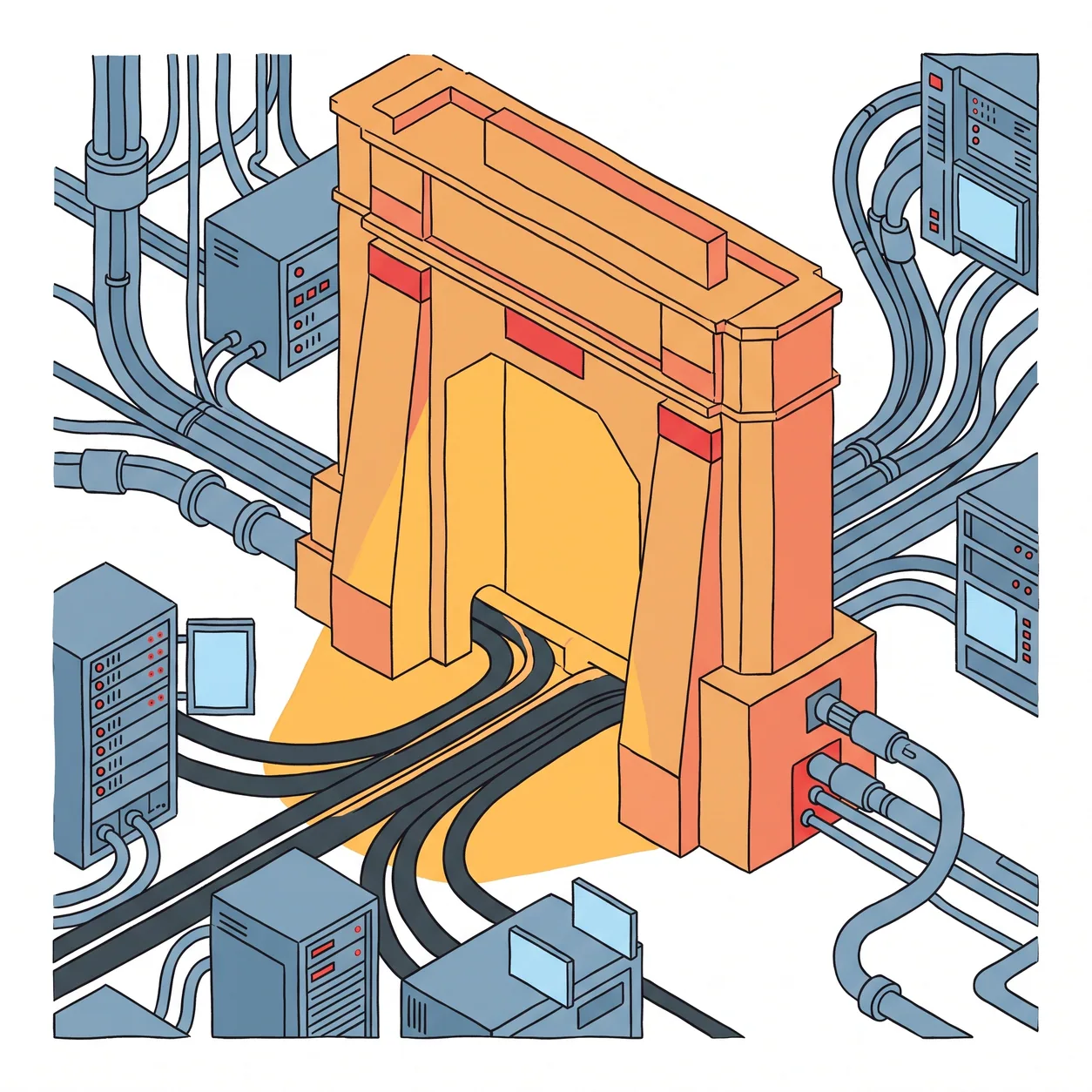
Unresolved intellectual property claims function as a hidden tax on successful hardware ecosystems. As a product gains market dominance, the cost of securing operational continuity against legal threats scales proportionally.
Unresolved intellectual property claims function as a hidden tax on successful hardware ecosystems. As a product gains market dominance, the cost of securing operational continuity against legal threats scales proportionally. When the underlying infrastructure of a popular device is contested, the manufacturer must weigh the price of a settlement against the existential risk of a service shutdown.
On March 3, 2006, Research In Motion, a Waterloo, Ontario-based company, agreed to pay NTP Inc. $612.5 million to settle a patent-infringement suit. NTP had argued that RIM's BlackBerry wireless-communication devices use technology patented by NTP. Following the agreement, the court approved the settlement and dismissed NTP's suit.
How did network dependence drive up the RIM NTP settlement cost?
This final RIM NTP settlement figure of $612.5 million was well above an earlier one, in which RIM had agreed to pay NTP $450 million. The $162.5 million gap between the earlier agreement and the March 3, 2006 court-approved resolution illustrates the acute bargaining power held by entities controlling foundational wireless patents when an active subscriber network is at stake.
Why does patent holdout power grow alongside enterprise network adoption?
For a company managing a critical enterprise communications network, the threat of a court injunction creates an untenable operational risk because enterprise customers rely on continuous, uninterrupted access to their wireless email and messaging infrastructure. Any legal maneuver that threatens to halt that data flow forces the hardware manufacturer into a position where settling - even at a substantially higher cost - becomes the only viable strategy to protect service continuity and preserve customer trust. Once a hardware ecosystem achieves widespread enterprise dependence, bargaining power shifts from the creator of the physical device to the holder of the contested intellectual property, making legal clearance as critical to network reliability as the underlying radio and server infrastructure.
Sources
- Portal:Current events/March 2006 (revision 46387345) - Wikipedia, 2006-03-31T23:55:44Z.
- RIM and NTP settle for $612.5 million - Engadget, 2006-03-03.