Reinforcement Learning Systems Encounter Transport Delays
Reinforcement learning systems operating over distribution network graphs face degradation when telemetry updates encounter unexpected channel fading.
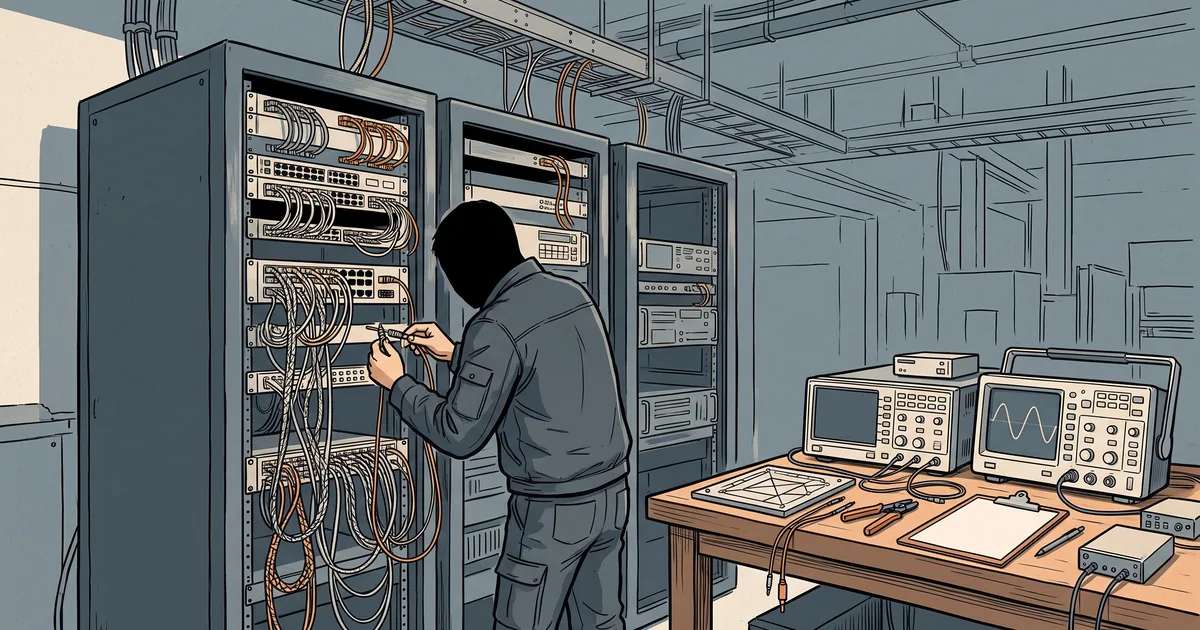
As of June 30, 2024, unexpected channel fading and transmission delays cause performance degradation, state divergence, and outage misclassifications across active distribution networks.
During June 2024, distributed systems engineering confronted a recurring friction where computational control layers decoupled from physical transport realities. Research documented in (Nature Communications) illuminated how automated decision engines struggle when physical network communication deviates from instantaneous synchronization models. contemporary autonomous orchestrators often treat message passing as an invariant primitive, presuming distributed nodes converge instantaneously on a unified world state. However, telemetry jitter and routing variance inevitably undermine this abstraction. The resulting divergence destabilizes both cybernetic controllers and physical operations.
How Do Channel Fading And Transport Delays Impair Control Planes?
The emergence of graph reinforcement models for active distribution networks demonstrates that automated control planes cannot treat underlying transport layers as zero-latency abstractions without jeopardizing physical grid stability (Nature Communications). Characterizing outage probabilities and sum rates in intelligent reflecting surface assisted communication systems establishes that dynamic channel control requires explicit accounting of fading and transport delays (International Journal of Communication Systems). Reinforcement learning systems operating over distribution network graphs face performance degradation and outage misclassifications when telemetry updates experience unexpected channel fading or transport-level transmission delays (International Journal of Technology Management and Humanitie). Centralized access control and single sign-on frameworks in large enterprise architectures create operational bottlenecks when token validation protocols encounter network-induced round-trip delays (Library, Museums and Press - UDSpace (University of Delaware). Resilient redundant routing frameworks for internet architectures incorporate redundant pathing to prevent automated control loops from failing during sudden transport layer packet drops (Nature Communications). Distributed control architectures across both power topologies and access systems require explicit latency budgets to prevent state divergence between control software and underlying physical infrastructure (International Journal of Communication Systems). The emergence of graph reinforcement models for active distribution networks demonstrates that automated control planes cannot treat underlying transport layers as zero-latency abstractions without jeopardizing physical grid stability, as highlighted in (Nature Communications). When control agents rely on machine learning, a statistical subset of AI that differs from broader symbolic AI systems by inferring policies directly from numerical reward gradients, they depend entirely on fresh topological telemetry. In practice, boundary failures manifest when the control plane issues actuation commands based on stale state vectors. Power distribution topologies, which require immediate voltage balancing and phase regulation across interconnected substations, experience severe mechanical and thermal strain when automated switching commands act on network representations that lagged by only a few hundred milliseconds. The transport plane does not fail catastrophically; rather, it introduces subtle queuing delays, packet buffering, and retransmissions that shatter the control layer's idealized mathematical assumptions. Wireless and physical transport conditions exacerbate this decoupling through variable propagation environments. Characterizing outage probabilities and sum rates in intelligent reflecting surface assisted communication systems establishes that dynamic channel control requires explicit accounting of fading and transport delays, according to findings in the (International Journal of Communication Systems). In environments where wireless channels undergo severe multipath interference, the transmission latency of sensor payloads fluctuates unpredictably. Consequently, reinforcement learning systems operating over distribution network graphs face performance degradation and outage misclassifications when telemetry updates experience unexpected channel fading or transport-level transmission delays, as shown by combining insights from (Nature Communications) and the (International Journal of Communication Systems). When an automated controller misclassifies a localized transient drop as a permanent link severance, it triggers unnecessary rerouting commands, compounding network congestion and widening the delta between virtual belief states and physical realities.
Why Do Token Validation Protocols Provoke Wide Area Delays?
The structural separation between control planes and data payloads introduces distinct architectural constraints across contemporary enterprise and infrastructure stacks. Centralized access control and single sign-on frameworks in large enterprise architectures create operational bottlenecks when token validation protocols encounter network-induced round-trip delays, as analyzed in the (International Journal of Technology Management and Humanitie). When validation boundaries enforce synchronous, multi-hop cryptographic handshakes for every transaction, transport-level jitter cascades across dependent microservices and client-facing endpoints. An authentication service may remain computationally sound while effectively stalling application ingress queues simply because wide-area transit latency inflates token exchange and verification times. Containment of such failures requires architects to delineate where synchronous verification must yield to asynchronous, capability-based delegation, preventing a slow transport pipe from paralyzing identity governance and user session handling. To prevent such systemic paralysis, contemporary transport architectures must build deterministic safety margins directly into interface contracts between control logic and data paths. Resilient redundant routing frameworks for internet architectures incorporate redundant pathing to prevent automated control loops from failing during sudden transport layer packet drops, as demonstrated by research published via (Library, Museums and Press - UDSpace (University of Delaware). System operators face an ongoing operational trade-off between strict payload efficiency and telemetry resilience: dedicating additional bandwidth to duplicate state announcements consumes precious channel capacity, yet single-path topologies expose automated supervisors to sudden feedback collapse. When packet loss bursts interrupt telemetry streams, routing protocols that lack multi-path redundancy force automated supervisors into uncoordinated fallback states, triggering cascading reconfigurations and routing flaps across transit nodes. Reconciling these distributed control layers with non-idealized networks demands a complete overhaul of interface assumptions.
Can Self-Stabilizing Control Models Overcome Critical Hardware Latency Envelopes?
As distributed platforms scale, abstracting away the transport layer exposes core systems to devastating synchronization failures. Whether orchestrating physical power distribution or validating federated identities, automated controllers cannot treat communications networks as invisible, zero-cost pipes. If future architectures continue to decouple high-level coordination logic from the physical latency envelopes of underlying hardware, can engineers develop self-stabilizing control models that gracefully degrade under extreme network degradation, or will the growing complexity of automated planes inevitably outstrip the fundamental physical limitations of data transit?
Sources
- Nature Communications: Real-time outage management in active distribution networks using reinforcement learning over graphs, 2024-06-04
- International Journal of Communication Systems: Outage and average sum‐rate analysis of intelligent reflecting surface assisted nonorthogonal multiple access system over η−μ fading channel, 2024-06-19
- International Journal of Technology Management and Humanitie: Scalable Single Sign-On Architecture: Securing Access in Large Enterprise Systems, 2024-06-30
- Library, Museums and Press - UDSpace (University of Delaware: A resilient redundant routing framework for future internet architecture, 2024-06-03