Microservices Resource Allocation Across Heterogeneous Systems
Heterogeneous distributed infrastructure requires unified microservices resource allocation frameworks to resolve synchronization bottlenecks.
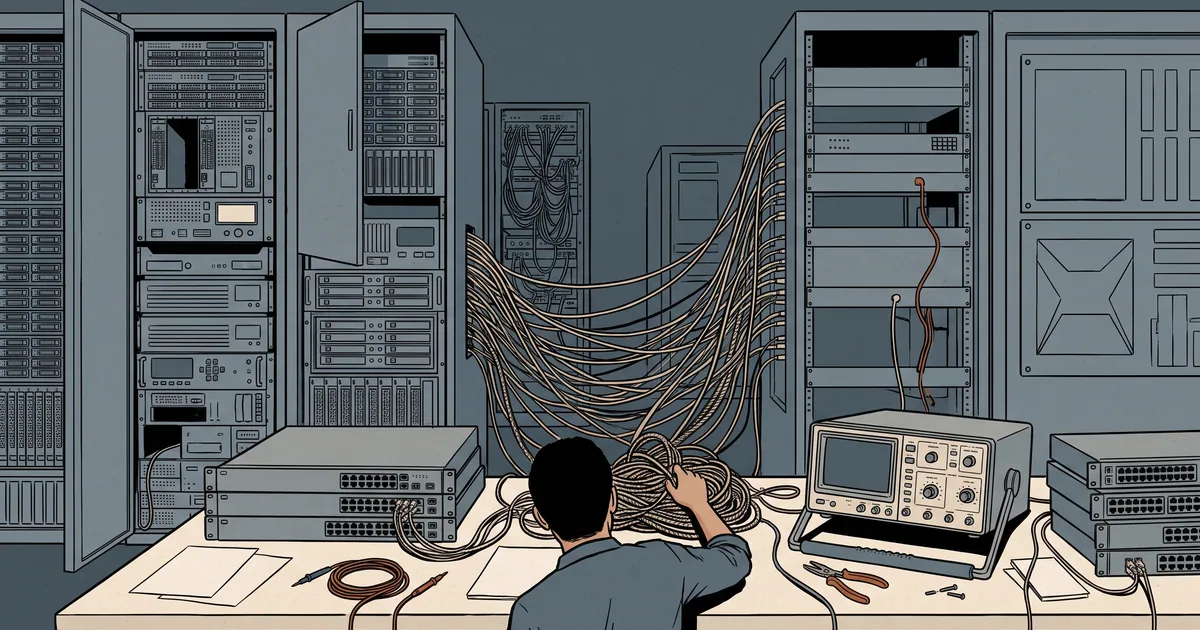
As of July 31, 2024, consensus protocols fail over wide area network latencies when control layer synchronization failures jeopardize transaction consistency across decomposed core banking systems.
During July 2024, contemporary enterprise architectures encountered severe friction as coordination fabrics expanded much faster than physical transport pipes. As documented in the (Journal of Artificial Intelligence Machine Learning and Data), resource management across heterogeneous distributed systems emerged as a critical operational concern in July 2024 as expanding control planes strained underlying coordination capacities. Complex multi-region orchestrators and microservice registries increasingly operate under optimistic assumptions of immediate consensus. This structural tension surfaces a pivotal dilemma:
Why do control layer synchronization failures jeopardize financial transactions?
Resource management across heterogeneous distributed systems emerged as a critical operational concern in July 2024 as expanding control planes strained underlying coordination capacities (Journal of Artificial Intelligence Machine Learning and Data). Enterprise legacy-to-cloud microservices migrations in the financial sector demonstrated that control layer synchronization failures directly jeopardize transaction consistency and system availability (International Journal of Intelligent Systems and Application). Heterogeneous distributed infrastructure requires unified microservices resource allocation frameworks to mitigate operational bottlenecks during legacy enterprise workload migrations (Computers). Enterprise data lake architectures face ingestion overhead and synchronization delays when metadata management layers outpace underlying distributed transport pipelines (Proceedings of the IEEE). Multiple access mechanisms in distributed edge intelligence networks experience throughput bottlenecks when coordination protocols assume instantaneous message delivery across independent nodes (Journal of Artificial Intelligence Machine Learning and Data). Distributed resource scheduling across heterogeneous environments depends on maintaining alignment between control plane state exchanges and centralized data repository capacities (International Journal of Intelligent Systems and Application). Enterprise legacy-to-cloud microservices migrations in the financial sector demonstrated that control layer synchronization failures directly jeopardize transaction consistency and system availability, as detailed by the (International Journal of Intelligent Systems and Application). When monolithic core banking systems are decomposed into distributed microservices, consensus protocols often fail to scale over unpredictable wide area network latencies. State machines begin to diverge when heartbeat intervals, leadership elections, and distributed locking mechanisms compete with transactional payloads for network bandwidth. Heterogeneous distributed infrastructure requires unified microservices resource allocation frameworks to mitigate operational bottlenecks during legacy enterprise workload migrations, bridging the gap between legacy transaction monitors and contemporary orchestration layers (Journal of Artificial Intelligence Machine Learning and Data; International Journal of Intelligent Systems and Application). Without unified scheduling, split-brain conditions emerge, forcing partitions and inducing stale reads across edge replicas. This degradation is not confined to financial transactions alone; it permeates big data platforms and edge fabrics. Contemporaneous studies in (Computers) demonstrate that enterprise data lake architectures face ingestion overhead and synchronization delays when metadata management layers outpace underlying distributed transport pipelines. Catalogs attempting real-time schema validation and snapshot isolation flood control channels with coordination overhead, stalling raw parquet streams. Similarly, multiple access mechanisms in distributed edge intelligence networks experience throughput bottlenecks when coordination protocols assume instantaneous message delivery across independent nodes, as established in the (Proceedings of the IEEE). In wireless edge clusters, control traffic contention starves data channels, leading to cascading retransmissions. These edge deployments frequently utilize machine learning, a statistical subset of AI, which differs from broader symbolic AI systems by demanding massive, synchronous parameter updates that choke under real-world propagation delays.
How does isolating consensus communication prevent systemic reconfiguration storms?
Architectural stability requires a strict boundary between control-plane signalling and user-plane transport. Distributed resource scheduling across heterogeneous environments depends on maintaining alignment between control plane state exchanges and centralized data repository capacities, preventing metadata starvation (Journal of Artificial Intelligence Machine Learning and Data; Computers). When control frames share raw transport queues with bulk payloads, transient bandwidth saturation translates directly into missed gossip beacons and premature node evictions. contemporary ingress controllers and service meshes must enforce physical or logical isolation between control traffic and business data. Establishing hard validation boundaries at cluster perimeters ensures that invalid node states or serialization errors cannot propagate into centralized metadata stores. By isolating consensus communication onto dedicated virtual circuits, systems contain failure domains and prevent localized transport lag from triggering systemic reconfiguration storms. System operators inevitably face trade-offs between consistency guarantees and operational resilience. When transport latencies fluctuate, distributed systems cannot simultaneously achieve linearizable consistency and continuous availability across partitioned zones. Telemetry pipelines must therefore expose real-time synchronization lag, transport jitter, and queue occupancy rather than relying on binary health checks. If an interface contract assumes synchronous remote procedure calls for state propagation, transport degradation cascades upstream as client connection pools become exhausted. Designing interface contracts around idempotent, asynchronous reconciliation messages allows distributed nodes to decouple local decision making from immediate peer verification. Instead of halting processing during transient network degradation, nodes operate in bounded autonomous modes, reconciling their internal states once backpressure metrics indicate that synchronization capacities have recovered. Structural recovery paths dictate how gracefully an architecture returns to equilibrium after severe control-plane backlog. When coordination channels experience packet loss, naive exponential backoff algorithms often synchronize in lockstep, resulting in destructive retry storms against metadata repositories. Effective recovery designs introduce randomized jitter, priority-queued message draining, and degraded operational fallbacks. In high-density heterogeneous topologies, nodes must gracefully downgrade transactional isolation levels or switch to optimistic concurrency control until queue depths normalize. Decoupling the rate of control updates from payload throughput prevents the orchestration tier from overwhelming underlying network fabric.
Can distributed architectures maintain transactional determinism across partitioned zones?
As distributed systems expand across hybrid clouds, data lakes, and decentralized edge topologies, the fantasy of frictionless, zero-latency state coordination is systematically collapsing. While decoupling control signalling from data transport offers an immediate operational buffer, it exposes a deeper systemic tension. Can distributed architectures maintain enterprise-grade transactional determinism without relying on centralized synchronization bottlenecks, or will distributed computing inevitably fracture into isolated, subsequently consistent autonomous cells whose states can never be fully unified in real time?
Sources
- Journal of Artificial Intelligence Machine Learning and Data: Resource Management Strategies in Heterogeneous Distributed Systems, 2024-07-20
- International Journal of Intelligent Systems and Application: Unified Architecture for Legacy-to-Cloud Migration Using Microservices in Enterprise Financial Systems, 2024-07-31
- Computers: Data Lakes: A Survey of Concepts and Architectures, 2024-07-22
- Proceedings of the IEEE: Multiple Access in the Era of Distributed Computing and Edge Intelligence, 2024-07-01