Inter-Cloud Architectures and Coordination Protocols
Inter-cloud application brokering reveals severe bottlenecks when coordination protocols assume uniform transport across boundaries.
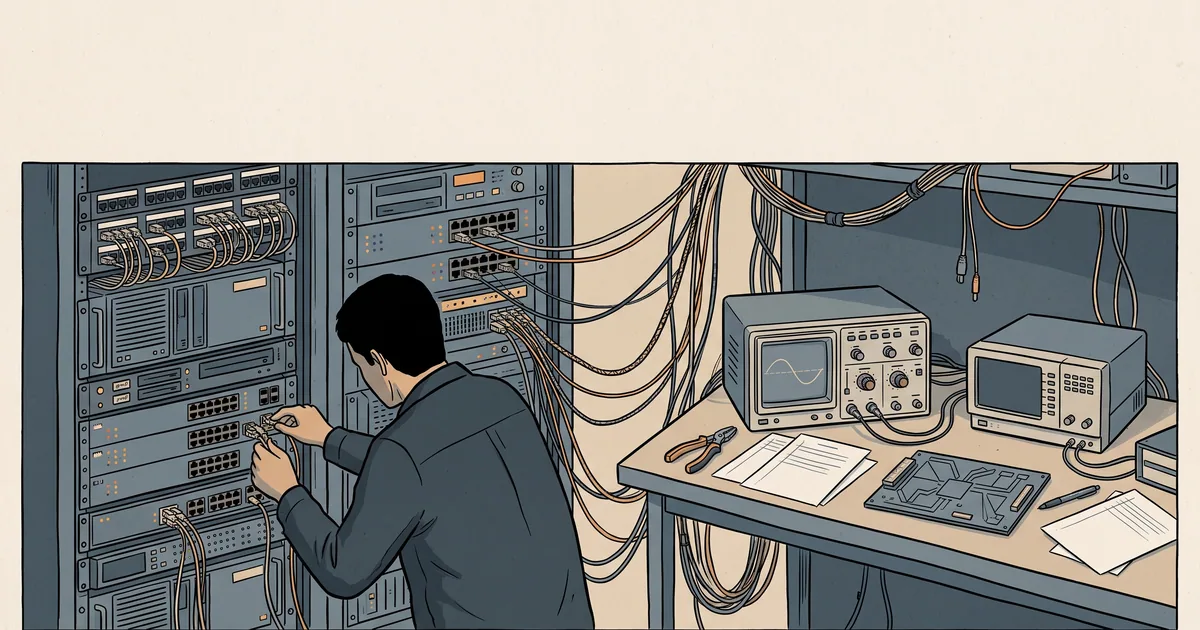
As of December 31, 2012, distributed coordination protocols suffer operational delays across wide-area transport networks when cross-boundary workflows assume near-instantaneous state synchronization.
During December 2012, distributed system architects are increasingly confronting the limits of multi-tier abstractions as software infrastructure scales across administrative and geographic perimeters. The December 2012 taxonomic classification of inter-cloud architectures highlights that application brokering across disparate cloud boundaries requires re-evaluating underlying transport assumptions to prevent control-plane bottlenecks, as documented in (Software Practice and Experience). When protocols treat remote fabrics as uniform local buses, coordinating elements experience cascading queues, lock starvation, and partitioning anomalies.
Why Do Wide-Area Networks Disrupt Cross-Boundary Process Synchronization?
The December 2012 taxonomic classification of inter-cloud architectures highlights that application brokering across disparate cloud boundaries requires re-evaluating underlying transport assumptions to prevent control-plane bottlenecks (Software Practice and Experience). Research into distributed business process coordination in late 2012 demonstrates that cross-boundary workflows suffer operational delays when control protocols assume near-instantaneous state synchronization across organizational domains (Lirias). Inter-cloud application brokers and decentralized business process coordinators face performance degradation when distributed coordination protocols exchange synchronization messages over high-latency wide-area transport networks (International Conference on High Performance Computing (HiPC). Optimistic parallel simulation architectures on multi-core systems employ load-sharing mechanisms to balance execution queues and mitigate rollback penalties caused by asynchronous state divergence (DOI Registry). Network coding-aided MAC protocols in cooperative wireless networks provide coordination strategies at the link layer to reduce contention and transport overhead across shared transmission channels (Software Practice and Experience). Systems spanning inter-cloud application brokering and parallel multi-core simulations both require dynamic workload rebalancing to overcome transport latency and state synchronization overhead (Lirias). When control protocols are engineered with implicit assumptions of uniform memory access or sub-millisecond local-area fabric latencies, their migration to geographically dispersed environments exposes severe architectural vulnerabilities. Research into distributed business process coordination in late 2012 demonstrates that cross-boundary workflows suffer operational delays when control protocols assume near-instantaneous state synchronization across organizational domains, according to findings in (Lirias). Both inter-cloud application brokers and decentralized business process coordinators face performance degradation when distributed coordination protocols exchange synchronization messages over high-latency wide-area transport networks, as verified by comparative investigations in (Software Practice and Experience) and (Lirias). Under these conditions, the handoff between autonomous services degenerates into synchronous waiting loops, where lock acquisitions, distributed consensus rounds, and state reconciliation cycles block operational throughput. The pathology of latent transport assumptions is not restricted to wide-area cloud federations; it manifests symmetrically within shared-memory hardware when logical concurrency exceeds bus performance. Parallel execution environments running across multiple CPU sockets experience analogous bottlenecks whenever core synchronization relies on optimistic event processing without accounting for memory bus contention. Optimistic parallel simulation architectures on multi-core systems employ load-sharing mechanisms to balance execution queues and mitigate rollback penalties caused by asynchronous state divergence, as reported in the (International Conference on High Performance Computing (HiPC). Systems spanning inter-cloud application brokering and parallel multi-core simulations both require dynamic workload rebalancing to overcome transport latency and state synchronization overhead, bridging high-level brokering layers analyzed in (Software Practice and Experience) with low-level execution models detailed in (International Conference on High Performance Computing (HiPC). Without dynamic rebalancing, speculative execution paths in optimistic engines constantly drift apart, triggering cascading rollbacks that consume computational budgets.
How Can Network Coding Separate Telemetry From Operational Payloads?
The most critical design boundary requires the complete architectural separation of control-plane telemetry from operational payload routing. When metadata validation, routing directives, and node state heartbeats compete for identical channel capacity as bulk user payloads, transport congestion induces control-plane starvation. This principle is apparent even in physical wireless topologies, where channel contention disrupts coordination signals. Network coding-aided MAC protocols in cooperative wireless networks provide coordination strategies at the link layer to reduce contention and transport overhead across shared transmission channels, as presented in (DOI Registry). By embedding structural coordination primitives directly into link-layer mechanisms, wireless nodes prevent state signaling packets from saturating shared media, establishing isolated boundaries that shield consensus logic from bulk transfer volatility. At the architectural boundary between distinct administrative realms, engineering teams face sharp trade-offs between consistency guarantees and system autonomy. When distributed brokers enforce synchronous two-phase commit protocols across wide-area links, any intermittent packet delay or transit routing flutter causes end-to-end transaction latency to spike by orders of magnitude. Systems must therefore redefine interface contracts around asynchronous state dissemination, event-driven messaging pipelines, and bounded staleness thresholds. Operators must balance strict consistency against fault isolation: relying on strong serialized state requires backpressure mechanisms that throttle ingress traffic whenever remote telemetry indicates synchronization queue buildup. Conversely, adopting eventual consistency mandates that the validation boundary verify invariants locally before committing state, thereby preventing partial node failures from contaminating the global control graph. Structural failure containment further dictates that transport recovery paths remain entirely decoupled from control-plane decision trees. If a control plane interprets transient transport jitter as a node failure, it triggers premature leader elections, service re-registrations, and unnecessary state migrations, generating self-reinforcing packet storms that further paralyze the underlying network fabric. Robust distributed architectures isolate transient transport degradation by implementing adaptive heartbeat windows, localized circuit breakers, and lease-based coordination primitives that tolerate bounded asynchronous delays without triggering failover protocols.
Can Distributed Architectures Formally Certify Convergence Across Multi-Tier Boundaries?
As distributed architectures expand beyond single data centers into complex federations and multi-core fabrics, engineers must abandon the assumption that transport fabrics provide instantaneous state clarity. Reconciling distributed process coordination with physical transport realities demands protocols that treat propagation delay, link unreliability, and queue divergence as foundational operational parameters rather than exceptional errors. How systems can formally certify convergence guarantees across heterogeneous, multi-tier boundaries without compromising decentralized operational sovereignty remains an open challenge for distributed system designers.
Sources
- Software Practice and Experience: Inter‐Cloud architectures and application brokering: taxonomy and survey, 2012-12-12
- Lirias: Distributed business process coordination., 2012-12-11
- International Conference on High Performance Computing (HiPC: A load-sharing architecture for high performance optimistic simulations on multi-core machines, 2012-12-01
- DOI Registry: Network coding-aided MAC protocols for cooperative wireless networks, 2012-12-17