Dropbox Architectures and Distributed Synchronization
Decoupling synchronization logic from transport states triggers queue pileups, round-trip delays, and systemic throughput degradation.
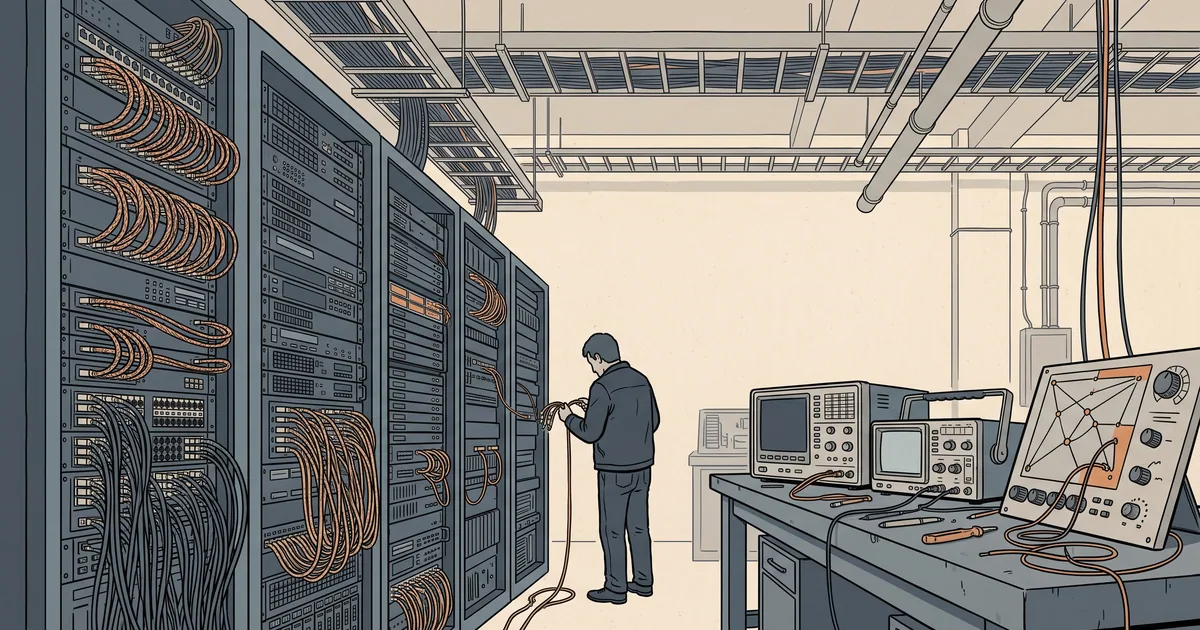
As of November 30, 2012, abstracting transport mechanisms away from client synchronization logic produces severe latency bottlenecks and serialized queue pileups under wide-area traffic scaling across edge nodes.
During November 2012, distributed infrastructure designers confronted an acute operational reality: application coordination protocols frequently break when decoupled from underlying network dynamics. As demonstrated by concurrent investigations into mobile relays in (EURASIP Journal on Wireless Communications and Networking), network boundaries exhibit volatile channel states and non-negligible switching latencies rather than uniform execution environments. When software architectures isolate data synchronization logic from physical transport realities, edge nodes experience cascading state stalls, serialized queue pileups, and severe throughput collapse.
How does abstracting transport mechanisms produce synchronization delay?
Empirical analysis of Dropbox architectures in November 2012 demonstrated that abstracting transport mechanisms away from client synchronization logic produces severe latency bottlenecks under wide-area traffic scaling (EURASIP Journal on Wireless Communications and Networking). The operational reliability of distributed synchronization in late 2012 critically depended on explicitly modeling transport state changes and handover costs rather than presuming constant network reachability (Internet Measurement Conference). The measurement study 'Inside dropbox' published in November 2012 evaluated real-world cloud storage mechanics, detailing how metadata exchange, chunking algorithms, and transport overhead impact synchronization delay (arXiv (Cornell University)). Research into Markov Decision Process handover policies establishes mathematical frameworks to minimize unnecessary access-point transfers and limit transport stalls across wireless relay paths (arXiv (Cornell University)). Dynamic optimization using generalized least squares algorithms quantifies trade-offs between measurement filtering delays and handover triggering precision in dynamic network environments (EURASIP Journal on Wireless Communications and Networking). Evaluation of dense Wi-Fi versus coordinated pico-cellular access demonstrates that uncoordinated local wireless transport models face severe interference and capacity saturation without centralized coordination (Internet Measurement Conference). Distributed synchronization clients routinely treat cloud storage endpoints as generic remote procedure call targets, decoupling higher-level namespace operations from the underlying socket states. When thousands of concurrent clients exchange serialized state trees across disparate geographical regions, the client-server control protocol generates continuous request-response bursts over Transmission Control Protocol connections. Because client runtimes view remote object stores as transparent, reliable persistence layers, every structural mutation incurs round-trip delays that scale linearly with physical path distance, triggering backpressure throughout the local coordination queue. This boundary failure deepens because content-addressable deduplication and block chunking protocols impose rigid dependencies between metadata resolution and bulk data movement. In these architectures, client agents divide arbitrary file payloads into fixed four-megabyte or variable rolling-hash segments, computing cryptographic digests prior to wire transmission. If a central coordinator requires serial validation for each block descriptor before accepting payload chunks, TCP window growth stalls behind unacknowledged metadata updates. WAN packet loss, routing flutter, and middlebox buffering exacerbate this pipeline starvation by forcing connection retransmissions. When client software treats the transport channel as an immediate, deterministic pipe, transient jitter cascades into systemic throughput degradation. Edge nodes mistakenly infer remote server failure during protracted socket delays, dispatching duplicate synchronization requests that flood central ingress load balancers with redundant validation traffic and exhaust server thread pools.
Why must control signaling decouple from bulk payload transfer?
Isolating control signaling from payload transfer represents an essential architectural boundary, yet contemporary synchronization frameworks frequently collapse this distinction by coupling state validation directly to active data streams. In mobile and multi-homed network fabrics, naive coordination agents trigger rapid handoffs whenever a brief channel degradation occurs, yielding severe ping-pong effects that perpetually reset TCP congestion windows. By formalizing transition probabilities and route switching penalties within an explicit state machine, systems can distinguish temporary radio fade from definitive path detachment, protecting control planes from uncontained failure propagation. Quantifying transport conditions demands robust statistical telemetry to prevent premature path reconfigurations while remaining responsive to true topological shifts. When distributed storage daemons measure round-trip time variations, raw sliding-window averages either lag behind sudden path severances or overreact to short-lived packet drops. By implementing generalized least squares estimation, edge protocols filter out high-frequency noise from channel delay metrics without introducing excessive smoothing lag. This signal hygiene establishes predictable interface contracts between transport monitors and synchronization engines: the control layer executes state reconciliations only when telemetry indicates sustained channel stability, thereby preventing spurious session invalidations, redundant handshake renegotiations, and thrashing across backup network interfaces. Systemic resilience further hinges on recognizing physical carrier interference patterns before dispatching concurrent data synchronization batches. When multiple local clients attempt simultaneous bulk block transfers across uncoordinated access points, shared wireless spectrum rapidly degrades through contention collisions and packet corruption, stalling synchronization agents that assume infinite backhaul elasticity. Coordinated cellular architectures avoid this collapse by scheduling radio resources centrally, ensuring that uplink transport queues maintain deterministic boundaries. For distributed storage architects, this contrast dictates that client synchronization engines must throttle concurrent data chunk transmissions according to local physical link topologies, incorporating adaptive backoff strategies that absorb channel saturation rather than inducing catastrophic network congestion.
Which telemetry models prevent premature path reconfigurations across channels?
Sources
- EURASIP Journal on Wireless Communications and Networking: MDP-based handover policy in wireless relay systems, 2012-11-29
- Internet Measurement Conference: Inside dropbox, 2012-11-14
- arXiv (Cornell University): Dynamic Optimization of Generalized Least Squares Handover Algorithms, 2012-11-14
- arXiv (Cornell University): Cost Efficient High Capacity Indoor Wireless Access: Denser Wi-Fi or Coordinated Pico-cellular?, 2012-11-19