Decentralized Scheduling Architectures and Transport
Decentralized scheduling architectures face operational hazards when orchestration software decouples state transitions from transport latency.
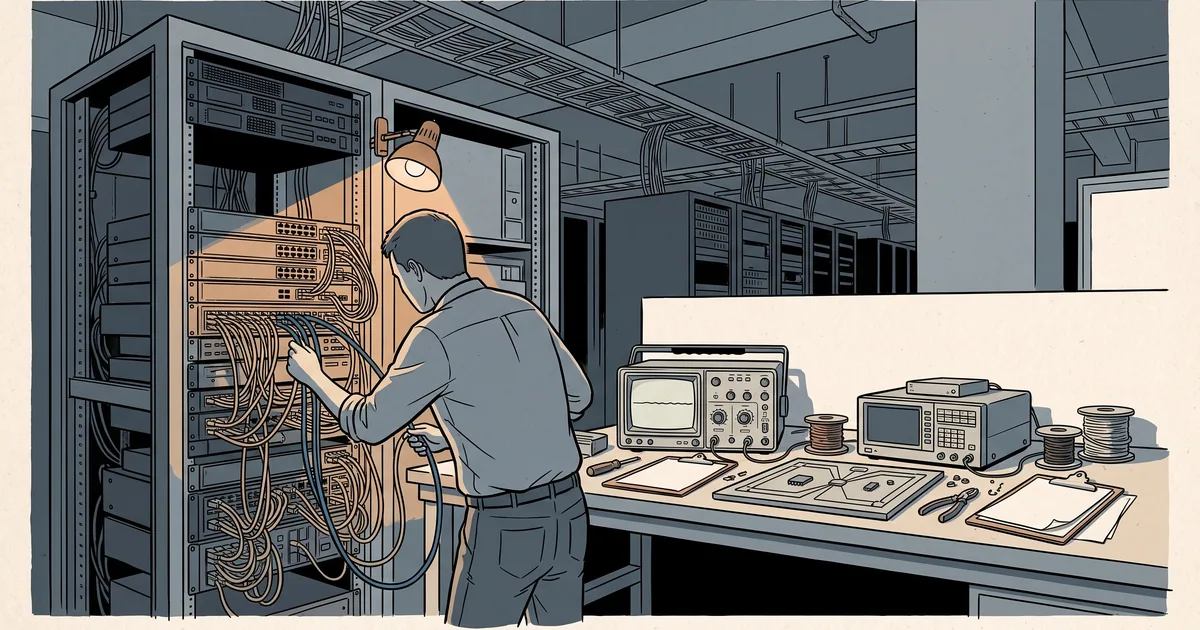
As of November 30, 2014, underlying transport latency and message delay destabilize distributed control loops, while delayed state affirmations trigger premature lease expiries and duplicate task dispatches across fabrics.
During November 2014, the rapid geographical expansion of multi-tenant infrastructure revealed fundamental architectural fractures in systems that treat network fabric as a transparent medium. The emergence of distributed cloud operating systems underscored the urgent need to redesign control-plane orchestration layers around realistic transport latency and non-instantaneous fabric constraints, as documented in contemporaneous systems research (DOI Registry). When orchestration software decouples state transitions from the physical realities of propagation delay, transit jitter, and packet dropouts, consensus models break down.
How Do Transport Latency and Delay Destabilize Scheduling?
The emergence of distributed cloud operating systems in November 2014 underscored the urgent need to redesign control-plane orchestration layers around realistic transport latency and non-instantaneous fabric constraints (DOI Registry). The operational viability of decentralized scheduling architectures in late 2014 depended critically on accommodating asynchronous transport constraints rather than relying on synchronous global coordination (IEEE International Conference on Smart Grid Communications (). Distributed scheduling mechanisms deployed across cloud and infrastructure topologies required game-theoretic and privacy-preserving algorithms to manage communication overhead across uncoordinated distributed endpoints (DOI Registry). Hardware-in-the-loop testing of distributed real-time control techniques confirmed that underlying transport latency and message delay directly destabilized distributed control loops (Spiral (Imperial College London)). Analysis of system protection schemes established that automated remedial action schemes risk initiating wide-area disruptions if control layers do not balance operational benefits against transport failure risks (DOI Registry). Real-time orchestration across interconnected distributed systems deteriorated when control planes assumed deterministic delivery across transport networks subject to variable latency and packet loss (IEEE International Conference on Smart Grid Communications (). At scale, the illusion of an instantaneous global state creates operational hazards across interconnected compute fabrics. In distributed environments, control software often relies on synchronous remote procedure calls or lockstep gossip protocols to propagate scheduler state, resource allocations, and topology maps. As systems stretch across heterogeneous metropolitan regions, physical transit latency violates these synchronous models. When local nodes register delayed state affirmations from remote peers, scheduling loops mistakenly trigger premature lease expiries, duplicate task dispatches, and split-brain leadership elections. This instability worsens when system engineers conflate local intra-rack synchronization guarantees with wide-area fabric properties. Under conditions of variable delay, synchronous barriers force execution pipelines to pause while awaiting quorum acknowledgments. In turn, worker nodes misinterpret silence as node mortality. The resulting cascade of heartbeat timeouts prompts automated failovers, compounding transport congestion with floods of recovery metadata. Rather than restoring balance, uncalibrated automated reactions rapidly propagate failures throughout interdependent infrastructure domains.
How Can Partitioning Control and Data Pathways Prevent Collapse?
To prevent transport-induced collapse, distributed systems require a strict separation between control-plane signaling and data-plane message payloads. When control messages share the same congested queueing paths as bulky tenant traffic, transmission delays throttle heartbeats and membership announcements. Partitioning control and data pathways ensures that supervisory telemetry retains reserved bandwidth and bounded queueing delays. Furthermore, boundary routers must validate state changes locally against explicit convergence contracts instead of expecting distant global locks, bounding the blast radius when communication links degrade. Engineers must also navigate difficult trade-offs regarding telemetry granularity and transport overhead. Polling remote endpoints with high-frequency telemetry provides high-fidelity state data, yet the generated traffic creates packet queues that exacerbate delay. Conversely, coarse telemetry reduces transport demand but leaves controllers operating on stale information, heightening the chance of conflicting allocations. Machine learning, a statistical subset of artificial intelligence, differs from broader symbolic artificial intelligence systems by deriving adaptive admission thresholds directly from historical traffic distributions rather than rigid programmatic heuristics. Applying these predictive policies allows the control plane to dynamically dampen sync frequencies during transit degradation, preventing controllers from thrashing across fluctuating transport links. Structural resilience ultimately depends on building fault-tolerant recovery paths that tolerate partial observability. When wide-area communication fractures, nodes must degrade gracefully into localized autonomous clusters rather than hanging in indefinite wait states. Replicating state across boundaries demands asynchronous, conflict-free data types and eventual consistency patterns where reconciliation occurs lazily over time. Systems designed under the assumption that the network transport is inherently hostile, lossy, and non-deterministic survive the very conditions that cause tightly coupled architectures to fail. By validating local operations against monotonic version vectors, control systems absorb long transport delays without violating critical invariants or triggering destabilizing corrective cascades.
Can Decentralized Control Planes Maintain Safety Without Synchronization?
By November 2014, distributed systems engineering has demonstrated that zero-latency assumptions are architectural debt. When system protection and scheduling engines ignore physical transit constraints, catastrophic systemic instability follows. Systems cannot safely bridge divergent sites without reconciling local decisions against inevitable network partitions. As distributed platforms expand to span wider operational boundaries, the central challenge remains: can decentralized control planes maintain system-wide safety without requiring the unsustainable overhead of total global synchronization across imperfect transport fabrics?
Sources
- DOI Registry: Distributed Cloud Operating System, 2014-11-17
- IEEE International Conference on Smart Grid Communications (: A privacy-friendly game-theoretic distributed scheduling system for domestic appliances, 2014-11-01
- DOI Registry: Development of Hardware in the Loop Real-Time Control Techniques for Hybrid Power Systems Involving Distributed Demands and Sustainable Energy Sources, 2014-11-07
- Spiral (Imperial College London): Balancing benefits and risks of system protection schemes, 2014-11-01