IPv6 Home Network Architectures and RFC 7368
Evaluations show that multi-router IPv6 home network architectures face control-plane failures without deterministic validation timers.
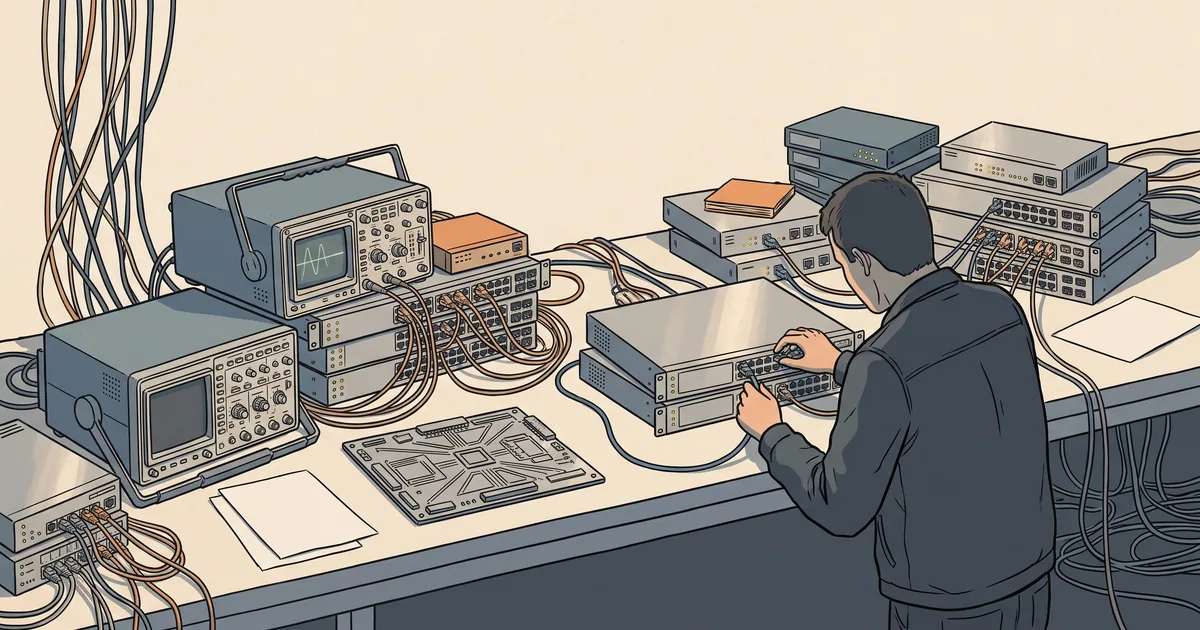
As of October 31, 2014, automated Prefix Delegation over DHCPv6 experiences finite transit intervals, causing asymmetric boundary discovery and splitting ingress forwarding state across cascaded domestic routers.
During October 2014, network engineers face an expanding challenge as autonomous edge nodes proliferate without unified administrative orchestration across domestic infrastructures. From physical layer relay optimizations detailed in (KSII Transactions on Internet and Information Systems) to multi-hop home networks, decentralized systems consistently struggle when internal propagation delays collide with state updates. At the heart of this operational friction lies an unexamined premise regarding distributed consensus and timing across uncoordinated customer devices. The resulting behavioral anomalies destabilize network boundaries, routing topologies, and resource allocations.
How does automated prefix delegation create routing conflicts?
The formalization of IPv6 home networking architecture principles in RFC 7368 marks a foundational milestone by addressing how residential networks can operate autonomously across multi-router topologies without requiring manual consumer network administration (KSII Transactions on Internet and Information Systems). Standardizing routing and boundary discovery principles for domestic environments directly addresses the systemic risk of control-plane failures and address assignment conflicts across decentralized residential gateway devices (DOI Registry). RFC 7368 specifies that IPv6 home network architectures must accommodate multiple routers and arbitrary internal topologies through automated prefix delegation, self-configuration, and boundary discovery mechanisms (ResearchWorks at the University of Washington (University of). Distributed multiple access protocols for OFDMA femtocell environments examine the coordination challenges and interference dynamics arising among autonomous wireless nodes deployed within residential settings (arXiv (Cornell University)). Evaluations of decoupled uplink and downlink access architectures reveal how independent node association rules alter system capacity and boundary interference across heterogeneous distributed networks (KSII Transactions on Internet and Information Systems). Analytical models of four-phase two-way transmission systems with energy-harvesting relays evaluate outage probabilities and operational optimization parameters under decentralized relay constraints (DOI Registry). In typical residential deployments, consumers connect cascaded commercial routers, wireless range extenders, and dual-stack bridges in arbitrary physical layouts without understanding subnetting or prefix delegation boundaries. When autonomous discovery daemons operate under the premise that peering state transitions occur instantaneously across every interior segment, race conditions emerge immediately. Boundary discovery algorithms send broadcast probes to deduce internal versus external interfaces, yet delay skews cause adjacent nodes to construct asymmetric views of the perimeter, fragmenting routing paths before basic traffic flows begin. These coordination challenges extend directly to heterogeneous wireless topologies coexisting within the same domestic footprint. When femtocell base stations and home IPv6 routers allocate subchannels or link-local subnets independently, uncoordinated convergence periods create transient packet collisions and silent black holes. However, because automated Prefix Delegation exchanges over DHCPv6 take finite non-zero intervals to traverse cascaded links, an upstream router may assign an internal delegating prefix while a downstream peer simultaneously announces an unrouted fallback prefix, splitting ingress forwarding state.
Why must multi-router IPv6 home architectures pace transitions?
The core structural defect originates from conflating physical connectivity with control-plane agreement. Evaluated models demonstrate that separating uplink and downlink paths exposes hidden coordination costs across autonomous nodes. In home IPv6 routing, this failure pattern appears when downstream devices make unilateral forwarding decisions before upstream routing convergence finishes. The routing control plane relies on distance-vector or link-state routing exchanges such as Babel or OSPFv3 running over local links, while client autoconfiguration relies on ICMPv6 Router Advertisements. If a border router changes its egress connectivity state, downstream routers continue emitting stale default route announcements, trapping payload packets inside routing loops until time-to-live expiration. To mitigate these handoff dilemmas, distributed protocols must enforce rigid state machines that treat peer convergence as fundamentally asynchronous. Just as physical relay nodes must schedule time slots and harvest energy across discrete operational phases to avoid transmission outage, multi-router IPv6 home architectures must pace their operational transitions through deterministic validation timers. Operators cannot expect consumer electronics to share synchronized global state without explicit distributed consensus protocols. When border gateways encounter ambiguous edge conditions, fail-safe mechanisms must isolate local traffic within scoped site boundaries rather than emitting conflicting global routing announcements across arbitrary mesh connections. Furthermore, robust self-healing requires decoupling validation boundaries from transient neighbor discovery. When a residential gateway boots or disconnects, interior routing nodes must maintain local reachability without prematurely discarding assigned delegated prefixes. If an intermediate router drops its prefix cache every time an upstream boundary heartbeat misses a single beacon cycle, cascading teardowns disrupt ongoing intra-home sessions. Incorporating hysteresis timers and speculative boundary leases gives distributed nodes the temporal buffer required to absorb packet transit latencies. The interface contracts between discovery modules, routing engines, and address assignment servers must tolerate temporary state divergence, treating peer updates as provisional until bidirectional acknowledgement confirms consensus across the residential core.
Can distributed protocol state machines achieve deterministic fault tolerance?
By October 2014, the consensus among networking engineers confirms that autonomous control planes cannot function reliably when software architectures assume zero-latency state synchronization across decentralized edge nodes. While RFC 7368 lays crucial architectural groundwork for multi-router home environments, protocol designers must still solve how to achieve predictable convergence without heavy manual administration. As home networks incorporate denser meshes of heterogeneous gateways and wireless cells, how can distributed protocol state machines achieve deterministic fault tolerance when communication latencies between sovereign home nodes remain completely unconstrained?
Sources
- KSII Transactions on Internet and Information Systems: Outage Analysis and Optimization for Four-Phase Two-Way Transmission with Energy Harvesting Relay, 2014-10-31
- DOI Registry: IPv6 Home Networking Architecture Principles, 2014-10-01
- ResearchWorks at the University of Washington (University of: Distributed Multiple Access for OFDMA Femtocells, 2014-10-20
- arXiv (Cornell University): Capacity Analysis of Decoupled Downlink and Uplink Access in 5G Heterogeneous Systems, 2014-10-27