Consensus Protocols for Distributed Control Topologies
Accelerated consensus protocols and hybrid network architectures maintain agreement across distributed control topologies.
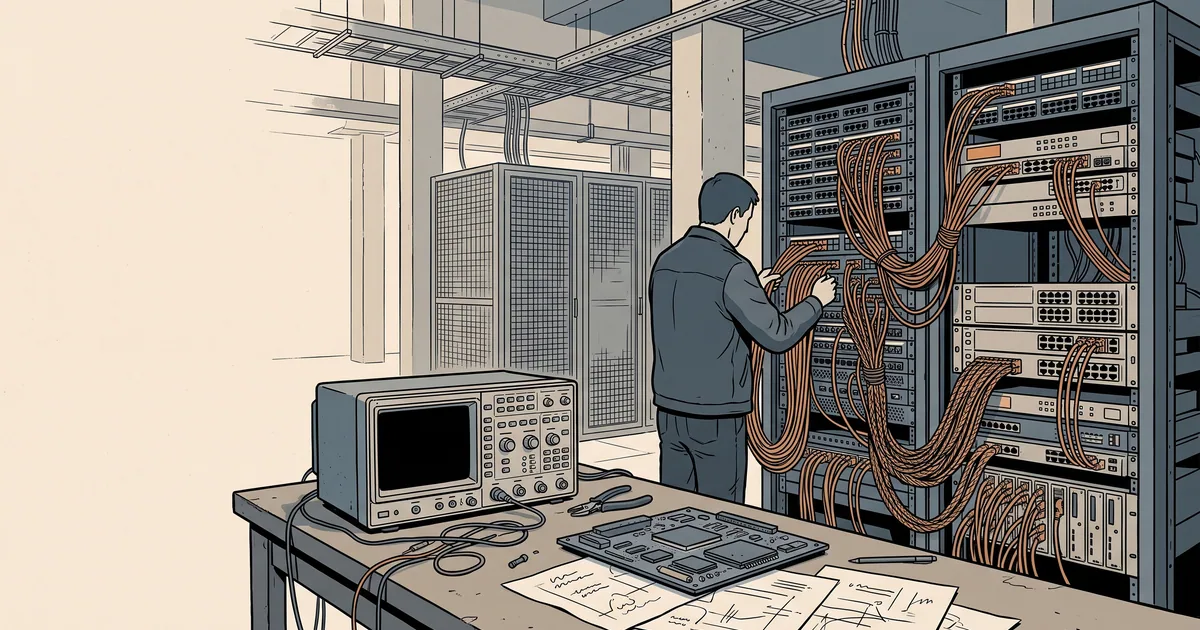
As of December 31, 2009, distributed multi-agent systems suffer synchronization thrashing when control frames share interfaces with data payloads, causing bufferbloat, false node failure diagnoses, and message storms.
During December 2009, distributed computing architectures faced escalating strain as coordination algorithms outgrew the assumptions baked into physical network fabrics. Classical distributed designs frequently treated transport networks as transparent conduits possessing negligible propagation delay and infinite transit capacity. However, as documented in new investigations of multi-agent topologies (IEEE), when topologies scale across heterogeneous physical links, messaging delays destabilize mutual state updates. This structural tension exposes an essential question for contemporary system designers:
Why Do Distributed Multi-Agent Systems Experience Synchronization Thrashing?
Accelerated consensus protocols designed for interconnected topologies addressed critical synchronization bottlenecks in distributed networked multi-agent systems where classical message-passing models suffered severe convergence delays (IEEE). Formal architectural patterns for real-time distributed systems provided predictable execution guarantees, ensuring that time-critical control layers maintained stability even under fluctuating transport delays (IEEE). Researchers combined accelerated multi-agent consensus protocols with formal real-time architectural patterns to mitigate latency and maintain agreement across distributed control topologies (Institute of Electrical and Electronics Engineers (IEEE)). Hybrid network architectures were deployed to optimize file transfer workflows by balancing traffic distribution across heterogeneous underlying communication paths (Institute of Electrical and Electronics Engineers (IEEE)). Adaptive gravitational gossip protocols incorporated user-selectable rates into communication schemes to regulate peer-to-peer message dissemination across large networks (IEEE). Interconnected topology architectures and hybrid network transport strategies addressed the mismatch between distributed coordination protocols and underlying data transfer constraints (IEEE). When distributed control planes decouple state management from transport reality, the breakdown manifests as severe synchronization thrashing. In distributed networked multi-agent deployments, nodes exchange status vectors to reach agreement on shared resource allocation, scheduling intervals, or routing paths. In traditional unaccelerated regimes, each round of coordination awaits state vectors from neighboring peers. When propagation jitter or cross-switch contention delays these messages, control threads block or operate on stale assumptions, triggering cascaded retransmissions. To counter these systemic delays, formal architectural patterns for real-time distributed systems provided predictable execution guarantees, ensuring that time-critical control layers maintained stability even under fluctuating transport delays (IEEE). Through disciplined separation of execution phases, these patterns isolate timing-sensitive control loops from transport variances. Building on these complementary foundations, researchers combined accelerated multi-agent consensus protocols with formal real-time architectural patterns to mitigate latency and maintain agreement across distributed control topologies (IEEE; IEEE). The primary operational failure occurs when state propagation loops overlap with bulk transport queues. If control frames share identical network interfaces and switch buffers with high-volume data payloads, heavy traffic bursts introduce bufferbloat and queueing latency. As control plane heartbeats stall behind data frames, distributed lease managers prematurely diagnose peer nodes as dead. This false positive triggers costly partition-healing routines, leader re-elections, and cluster membership reshuffling. When surviving nodes initiate topology recovery, they broadcast flood waves of synchronization descriptors across the already congested fabric, compounding queue exhaustion. Under these pathological conditions, software layers enter a metastasizing failure cycle: control mechanisms create more telemetry and consensus traffic precisely when the underlying physical links possess the least capability to deliver them. Systems that assume near-instantaneous convergence find their consensus state perpetually lagging behind physical reality, stranding compute resources in continuous renegotiation.
How Do Hybrid Network Architectures Resolve Transport Bottlenecks?
Resolving this architectural mismatch requires strict structural boundaries between the control plane and data transport facilities. Control systems must no longer treat the underlying physical network as a homogeneous, delay-free fabric. Instead, contemporary infrastructure segregates operational signaling into deterministic communication channels while delegating heavy payload movement to specialized sub-networks. For instance, hybrid network architectures were deployed to optimize file transfer workflows by balancing traffic distribution across heterogeneous underlying communication paths (Institute of Electrical and Electronics Engineers (IEEE)). By directing bulk file data across high-throughput paths and isolating latency-sensitive transactions, systems prevent payload bursts from degrading coordination responsiveness. Furthermore, interconnected topology architectures and hybrid network transport strategies addressed the mismatch between distributed coordination protocols and underlying data transfer constraints (IEEE; Institute of Electrical and Electronics Engineers (IEEE)). This co-design of overlay topology and transport mechanics ensures that consensus algorithms account for the physical constraints of link bandwidth, cross-rack switches, and asymmetric network paths. In peer-to-peer and wide-area environments, coordination architectures must reject naive broadcast assumptions in favor of rate-regulated dissemination. Uncontrolled flooding creates severe network storms that overwhelm transit links and bridge queues. To manage large-scale information diffusion without overwhelming transport buffers, adaptive gravitational gossip protocols incorporated user-selectable rates into communication schemes to regulate peer-to-peer message dissemination across large networks (Institute of Electrical and Electronics Engineers (IEEE)). By introducing gravitational weighting and tunable dissemination parameters, these gossip frameworks permit system operators to balance message propagation speed against available network capacity. In high-density server clusters, such mechanisms prevent metadata propagation from saturating shared switching backplanes. Network telemetry interfaces must actively expose round-trip variance and packet loss to the coordination engine. When coordination protocols possess real-time visibility into link health, they can dynamically throttle synchronization frequency, avoiding the trap of flooding an impaired transit medium with urgent status queries. Beyond rate control, distributed coordination layers require explicit interface contracts that tolerate bounded desynchronization. Early distributed software patterns often mandated strict serializability across every node update, an approach that inevitably breaks down when geographical separation or link degradation introduces multi-millisecond transit latencies. To preserve operational continuity, resilient architectures establish hierarchical control boundaries: local clusters maintain rapid, tight consensus over localized domains using bounded real-time patterns, while inter-cluster coordination relies on asynchronous, loosely coupled state exchange. When transient network partitions occur, distributed nodes must enter bounded autonomous modes rather than blocking indefinitely for remote authorization. Recovery routines must exchange state delta summaries rather than full log replays, minimizing the wire footprint required to reconcile divergence.
What Interface Contracts Prevent Large-Scale Failure Cycles?
Sources
- IEEE: Accelerated Consensus Protocol for Distributed Networked Multi-Agent System with Interconnected Topology: A Specific Architecture, 2009-12-08
- IEEE: A Formal Architecture Pattern for Real-Time Distributed Systems, 2009-12-11
- Institute of Electrical and Electronics Engineers (IEEE): A Hybrid Network Architecture for File Transfers, 2009-12-14
- Institute of Electrical and Electronics Engineers (IEEE): Adaptive Gravitational Gossip: A Gossip-Based Communication Protocol with User-Selectable Rates, 2009-12-17