Distributed Motion Coordination Protocols and Mobile Nodes
Distributed protocols face physical transport bounds, propagation delay, and fading that destabilize mobile consensus and state consistency.
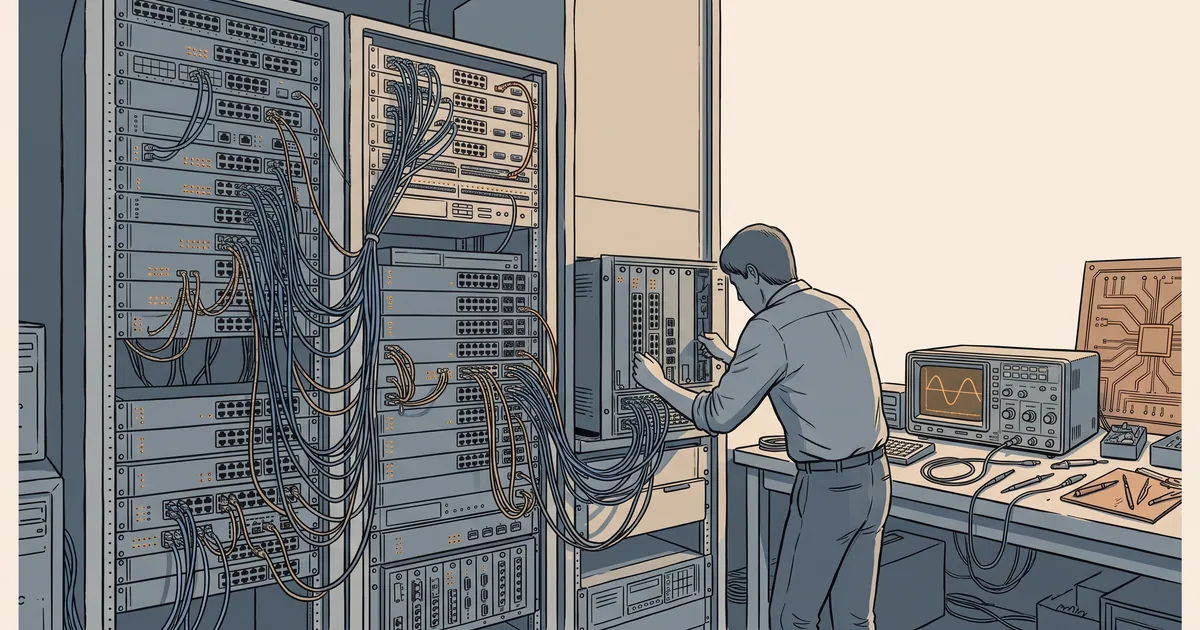
As of January 31, 2011, propagation delay and multipath fading widen state divergence, causing retransmission buffers to overflow while concurrent state assertions trigger cascading races across mobile nodes.
During January 2011, system architects faced mounting operational friction as distributed control planes outpaced the physical realities of contemporary packet-switched networks. When infrastructure designers construct consensus and topology management protocols, they frequently lean on simplifying abstractions that treat link delays as negligible. However, as documented by (IGI Global Scientific Publishing), real-world communications across mobile and fixed environments impose severe bandwidth constraints and latency bounds. The resulting degradation exposes deep structural vulnerabilities across transport, routing, and consensus layers.
How Do Propagation Delay and Fading Impair Distributed Protocols?
Designing hybrid synchronous checkpointing architectures that utilize soft checkpoints is essential for preserving state consistency in mobile distributed systems without overburdening constrained wireless channels with synchronization overhead (IGI Global Scientific Publishing). Establishing distributed motion coordination protocols addresses a fundamental operational barrier in autonomous multi-vehicle systems by preventing spatial conflicts without relying on fragile centralized arbiters (Elsevier BV). Distributed mobile protocols mitigate coordination divergence by combining local state verification with selective message exchanges across mobile nodes subject to variable transport delays (Institute of Electrical and Electronics Engineers (IEEE)). Closed-form approximations of outage probability in distributed MIMO systems characterize how physical channel fading and path loss directly bound the reliability of distributed wireless links (ASME Press). Comparative evaluations between centralized routing protocols and distributed routing protocols highlight structural trade-offs between global route optimality and localized control traffic overhead (IGI Global Scientific Publishing). Transport-layer degradation and wireless link outages constrain the frequency at which distributed checkpointing and synchronization control frames can be reliably delivered across mobile nodes (Elsevier BV). The operational breakdown begins when control engines issue state transitions faster than physical networks can propagate updates. In multi-node kinetic environments, establishing distributed motion coordination protocols addresses a fundamental operational barrier in autonomous multi-vehicle systems by preventing spatial conflicts without relying on fragile centralized arbiters (Elsevier BV). Yet, when underlying propagation delay widens, concurrent state assertions overlap uncontrollably, transforming deterministic coordination routines into cascading races where outdated state vectors trigger conflicting local actions. This coordination breakdown manifests directly at the physical and transport interface. However, physical transmission media impose strict statistical limits on message completion. When packet error rates surge due to multipath fading or shadowing, retransmission buffers overflow, stalling control-plane execution threads that expect instantaneous confirmation.
How Can Interface Contracts Decouple Control Signaling From Payloads?
To prevent systemic stalls, architects must enforce a rigorous decoupling between control-plane signaling and data payloads. Without explicit backpressure boundaries, unacknowledged control frames monopolize transmission queues, choking payload throughput and inflating end-to-end jitter. Rigorous interface contracts must partition control signaling into isolated, prioritized virtual channels while defining deterministic timeout behaviors for in-flight state mutations. The structural choice between centralized oversight and distributed autonomy introduces critical operational trade-offs. Centralized topologies offer coherent global visibility but require high-capacity, low-latency uplinks that collapse during link outages. Conversely, distributed routing schemes reduce single points of failure and localize control traffic, but they require robust validation mechanisms to prevent stale routing tables from generating forwarding loops during dynamic topology shifts. Maintaining structural resilience requires engineering explicit degradation paths when physical link telemetry signals impending transport failure. Operators cannot rely on simple round-trip time averages: they must monitor loss gradients, signal-to-noise ratios, and retransmission variance across all member nodes. If transport channels degrade past acceptable thresholds, the coordination plane must automatically drop into an asynchronous, safe-mode posture. By reverting to local dead-reckoning or soft-checkpoint baselines, individual nodes preserve safe physical boundaries, preventing transient network partitions from escalating into catastrophic cluster-wide lockups.
How Can Systems Balance Convergence Against Operational Autonomy?
By January 31, 2011, systems engineering established that zero-latency assumptions are fundamentally incompatible with real-world wireless and packet topologies. Resilient architectures must acknowledge transport unreliability at every layer, treating latency variance as an intrinsic system constraint. As distributed topologies scale across wider geographical domains and dynamic physical networks, how can engineers mathematically balance strict state convergence against local operational autonomy without inducing crippling control-plane overhead?
Sources
- IGI Global Scientific Publishing: Soft-Checkpointing Based Hybrid Synchronous Checkpointing Protocol for Mobile Distributed Systems, 2011-01-01
- Elsevier BV: A Distributed Protocol for Motion Coordination in Free-Range Vehicular Systems, 2011-01-31
- Institute of Electrical and Electronics Engineers (IEEE): An Accurate Closed-Form Approximation of the Distributed MIMO Outage Probability, 2011-01-31
- ASME Press: Centralized Routing Protocol and Distributed Routing Protocol, 2011-01-01