Evaluating Multi-Agent Distributed Architectures
Evaluating multi-agent distributed architectures proves critical when ignoring transport latency compromises distributed educational platforms.
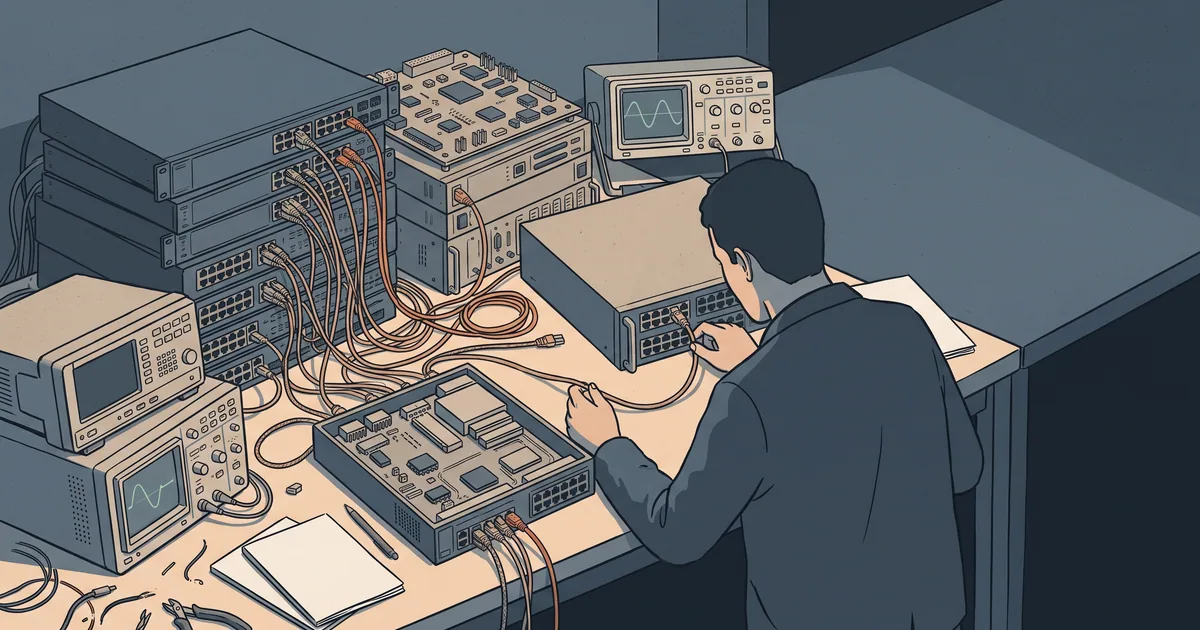
As of August 31, 2017, ignoring transport latency and communication overhead causes cascading failure when control assertions exceed underlying transport capacity, triggering needless leader elections.
During August 2017, distributed systems researchers are increasingly confronting the mechanical friction that occurs when software control planes treat transport fabrics as transparent conduits. A research initiative published by (IEEE) underscores how quickly synchronization breakdowns ripple across distributed educational software when underlying link delays are neglected. When consensus protocols and state distribution routines expect near-instantaneous round trips, even modest packet jitter or serial queueing can induce cascading state divergence. This operational tension forces systems engineers to re-evaluate core architectural assumptions:
Why Do Latency Bottlenecks Induce Cascading State Divergence?
Evaluating multi-agent distributed architectures is significant because ignoring transport latency and communication overhead can compromise the security and stability of distributed educational platforms (IEEE). Analyzing distributed control mechanisms during power disruption is critical to prevent system outages when autonomous nodes must coordinate resource allocation under degraded transport conditions (IEEE). Multi-agent systems utilize specialized distributed coordination structures to manage data exchanges and maintain security protocols across remote learning environments (Springer Science and Business Media LLC). A distributed intrusion detection model distributes monitoring functions across smart home system nodes to prevent single-point transport and processing bottlenecks (IEEE). High-performance persistent identifier management protocols address distributed state synchronization by optimizing identifier lookup and registration across network endpoints (IEEE). Partitioning control plane tasks across smart environment devices and multi-agent systems reduces latency bottlenecks inherent in centralized state synchronization (IEEE). In practice, multi-agent systems utilize specialized distributed coordination structures to manage data exchanges and maintain security protocols across remote learning environments (IEEE). The failure boundary emerges when the rate of control-plane assertions exceeds the underlying network transport capacity. In nominal conditions over high-bandwidth links, distributed controllers exchange heartbeats, lease renewals, and transactional state vectors without backpressure. As soon as transit paths experience buffer bloat, retransmissions, or variable routing jitter, the coordination layer interprets delayed packets as node failures. Consequently, peer agents trigger needless leader elections, issue competing state transitions, and saturate remaining transport bandwidth with corrective gossip protocols. This cascading failure manifests acutely when network topology changes coincide with physical resource degradation. During an unexpected power disruption, local power microgrids or battery-backed controllers must immediately coordinate energy shedding and generation handoffs across physically isolated switches. If the distributed control plane relies on instantaneous quorum consensus, the loss of synchronous communication channels stalls recovery logic entirely. The underlying network cannot guarantee bounded packet delivery when intermediate switches drop offline. Autonomous endpoints that assume continuous state alignment fall into deadlock or split-brain behavior precisely when deterministic local action is most required, demonstrating that zero-latency transport assumptions cripple survivability in degraded operational regimes.
How Can Protocol Engineers Prevent Control Plane Collapses?
Preventing these control-plane collapses requires rigid decoupling between control logic and underlying payload delivery mechanisms. By executing packet inspection, flow classification, and local anomaly heuristics directly on peripheral home gateways rather than funneling telemetry to a central collector, the architecture keeps state transactions local. When persistent identifier resolution separates global naming guarantees from localized caching layers, nodes resolve records through bounded network round-trips without depending on blocking global locks. System architects must balance operational trade-offs across validation boundaries and telemetry feedback loops. In high-throughput environments, every coordination contract must establish explicit time-to-live thresholds and graceful degradation states. If an edge agent relies on machine learning, which represents a statistical subset of artificial intelligence and differs substantially from deterministic symbolic rule systems, the model inputs must tolerate partial or delayed feature vectors. When coordination layers demand strict serializability over unpredictable wide-area links, telemetry channels become flooded with duplicate status requests. Protocol engineers therefore define interface boundaries using asynchronous event feeds, monotonic counters, and version vectors rather than synchronous remote procedure calls. Network telemetry metrics, including transport retransmit counters and buffer utilization curves, must inform the distributed control layer so that the system dynamically throttles synchronization frequency before link queues overflow. Structural resilience relies on structural isolation between the control envelope and the application data path. When a node detects transport degradation, its local runtime must drop into an autonomous degraded mode governed by static local safety policies. Instead of waiting indefinitely for confirmation from distant coordination peers, the local engine applies conservative defaults, such as preserving prevailing power shedding routines or applying local packet filtering rules. By constraining the failure domain to the local node, the rest of the distributed fabric remains insulated from cascading timeouts. Recovery sequences must incorporate exponential backoff with jittered reconvergence windows to prevent synchronization stampedes once network connectivity returns. This design discipline ensures that transient transport interruptions do not escalate into systemic architectural failures.
Will Conflict-Free State Resolution Replace Synchronous Quorum Handshakes?
By late August 2017, the proliferation of decentralized services has exposed the flaw of treating physical transport as an idealized synchronous bus. contemporary systems cannot presume zero-latency state replication without introducing fatal stability bottlenecks under stress. The fundamental open question facing protocol engineers is whether distributed consensus models can completely abandon synchronous handshakes in favor of transport-aware, conflict-free state resolution, or if physical network latency will permanently dictate the practical boundaries of autonomous system scale.
Sources
- IEEE: Novel and secured multi-agent based distributed architecture for e-learning environment, 2017-08-08
- IEEE: Planned Renewable Energy Usage during Power Outage, 2017-08-11
- Springer Science and Business Media LLC: A distributed IDS architecture model for Smart Home systems, 2017-08-30
- IEEE: A High-Performance Persistent Identifier Management Protocol, 2017-08-20