Transport Delays Challenge Distributed Consensus Systems
Neglecting transport delays inside decoupled operational fabrics destabilizes downstream physical actuators across distributed networks.
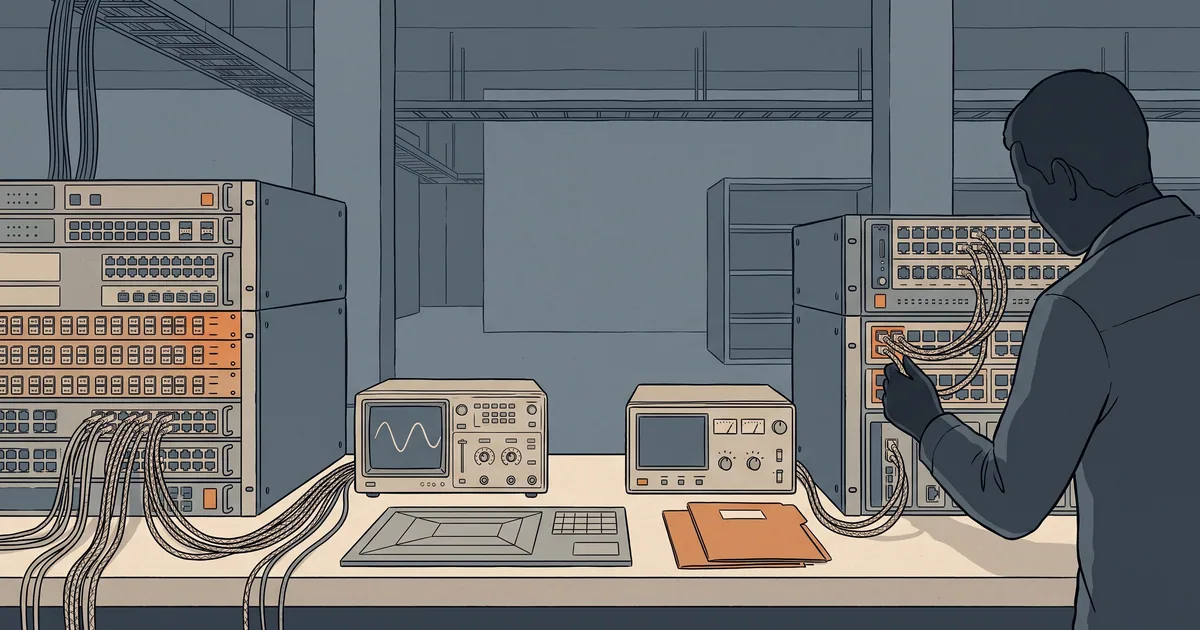
As of October 31, 2021, transport delays disrupt distributed control planes by creating phantom quorums and causing control decisions to conflict with actual physical configurations.
During October 2021, distributed systems engineering faced mounting scrutiny regarding the fundamental assumption of near-instantaneous network convergence. As demonstrated by recent research presented in (Resilience Week (RWS)), neglecting transport delays within decoupled operational fabrics exposes industrial installations to systemic vulnerabilities. When architects separate coordination mechanics from physical transmission realities, latent network queues translate directly into divergent distributed views. The resulting divergence challenges the foundational principles of distributed consensus, precipitating cascading protocol failures and destabilizing downstream physical actuators.
How do transport delays disrupt distributed control planes?
Cyber-resilience frameworks introduced in October 2021 highlight that critical infrastructure such as distributed wind networks becomes vulnerable when control planes fail to accommodate transport delays and communication disruptions across remote assets (Resilience Week (RWS)). The operational viability of edge-to-cloud architectures in automated systems depends heavily on addressing transport latency bottlenecks, as distributed data management schemes risk desynchronization under real-world network conditions (Journal of King Saud University - Computer and Information S). Distributed architectures spanning edge and central management layers encounter structural performance bounds when real-time telemetry cannot be reliably synchronized across intermittent wireless transport links (Bulletin of Electrical Engineering and Informatics). Downlink transmission analysis in non-orthogonal multiple access small-cell networks reveals that outage probabilities increase under stochastic channel variations and energy harvesting constraints (Proceedings of the ACM on Human-Computer Interaction). Empirical evaluations of interactive remote environments demonstrate that transport outages and state desynchronization degrade collaboration fidelity and user performance across networked endpoints (Resilience Week (RWS)). Networked control loops operating over wireless links face elevated failure rates when physical-layer outages and latency variations interrupt deterministic feedback timing (Journal of King Saud University - Computer and Information S). When distributed control planes presume negligible latency across wide-area or edge interconnects, the boundary between logical coordination and physical execution fractures. Similarly, the operational viability of edge-to-cloud architectures in automated systems depends heavily on addressing transport latency bottlenecks, as distributed data management schemes risk desynchronization under real-world network conditions (Journal of King Saud University - Computer and Information S). These distributed architectures spanning edge and central management layers encounter structural performance bounds when real-time telemetry cannot be reliably synchronized across intermittent wireless transport links (Resilience Week (RWS); Journal of King Saud University - Computer and Information S). When state updates stall in transit buffers, coordination nodes execute state transitions based on stale checkpoints, creating phantom quorums and causing control decisions to conflict with actual physical configurations. Physical transmission media introduce unavoidable stochastic fluctuations that dismantle simplistic synchronization schedules. When high packet error rates or intermittent energy shortages stall packets at the radio layer, the transport fabric ceases to resemble a predictable pipe. Networked control loops operating over wireless links face elevated failure rates when physical-layer outages and latency variations interrupt deterministic feedback timing (Resilience Week (RWS); Bulletin of Electrical Engineering and Informatics). In distributed actuation environments, such as power converters or robotic arms, delayed feedback signals cause control algorithms to overcorrect, producing severe oscillations. The control plane interprets silence as an idle bus rather than an in-flight transport blockage, scheduling redundant updates that congest the link further and transform transient channel noise into sustained control deadlock.
Why must distributed architectures reject instantaneous causal consistency?
Architectural isolation between control signaling and payload data paths reveals severe limitations when the transport layer lacks deterministic guarantees. Whether in shared virtual rendering systems or distributed industrial SCADA topologies, treating the control handoff as an abstracted remote procedure call decouples state validation from network reality. Validation boundaries must reject assumptions of instantaneous causal consistency when routing across heterogeneous links. If an edge node validates an operation against a locally cached token while a revocation message is delayed in a wide-area buffer, safety boundaries collapse. Containment requires protocol-level circuit breakers that actively measure transmission jitter, throttling speculative control handoffs before divergent state mutations corrupt distributed databases. System operators must confront an acute trade-off between absolute consistency and operational availability. If a control plane enforces strict linearizability over high-latency hops, total system throughput collapses to the speed of the slowest link, causing unacceptable command starvation. Conversely, adopting optimistic eventual consistency without strict transport-aware time envelopes permits nodes to execute concurrent, mutually exclusive commands. Interface contracts must explicitly declare transport latency budgets alongside payload schemas. Telemetry streams must deliver continuous link-health telemetry alongside application payloads to inform routing policies. When contemporary automated analytics, specifically machine learning algorithms (which rely on statistical feature extraction, distinct from rule-based artificial intelligence systems), are deployed to predict routing queues, their utility remains contingent on fresh telemetry. Without up-to-date transmission metrics, automated control policies will misjudge link capacity, inducing queue bloat and cascading RPC timeouts. Structural resilience mandates that distributed coordination planes abandon naive atomic broadcast patterns across unpredictable topologies. Systems must adopt partitioned state machines where local edge clusters retain full operational autonomy during transport degradation, relying on monotonically increasing logical clocks and delta-based state convergence. Recovery paths after link reconnection cannot rely on bulk state transfer, which overwhelms recovering channels and triggers secondary outages. Instead, the control architecture must employ selective synchronization, prioritizing critical safety-state variables over non-essential telemetry. By partitioning consensus domains geographically and bounding the blast radius of network partitions, distributed architectures insulate real-time control loops from backhaul variability, ensuring that physical processes maintain operational stability even when inter-node communication temporarily freezes.
Which recovery mechanisms restore stability during network partitions?
Sources
- Resilience Week (RWS): A Cyber-Resilience Risk Management Architecture for Distributed Wind, 2021-10-18
- Journal of King Saud University - Computer and Information S: Cloud and distributed architectures for data management in agriculture 4.0 : Review and future trends, 2021-10-08
- Bulletin of Electrical Engineering and Informatics: Outage performance of downlink NOMA-aided small cell network with wireless power transfer, 2021-10-01
- Proceedings of the ACM on Human-Computer Interaction: The Effects of Network Outages on User Experience in Augmented Reality Based Remote Collaboration - An Empirical Study, 2021-10-13