Coordinated Universal Time and Critical Infrastructure
Critical infrastructure systems encounter phantom state discrepancies when optical channels and radio frequencies degrade timing distribution.
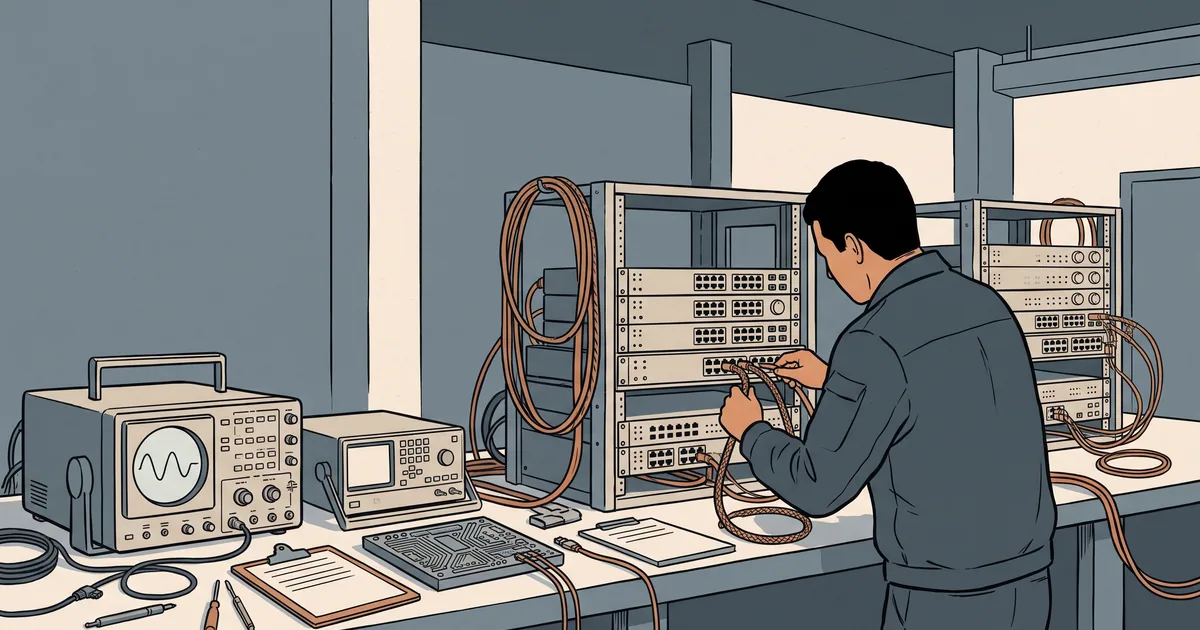
As of November 30, 2021, atmospheric turbulence and multipath fading force retransmission buffers to delay state updates, causing local oscillator drift and misinterpreting normal load currents as internal bus faults.
During November 2021, communications engineers and critical infrastructure operators faced mounting operational friction as distributed control planes increasingly decoupled from the assumptions of legacy transport infrastructure. Recent investigations into hybrid transport mechanisms, such as mixed dual-hop optical and wireless links evaluated in (IEEE Communications Letters), demonstrate how fragile physical layers threaten control consistency when latency spikes. When supervisory algorithms treat timing signals as continuous, immutable baselines, transport degradation introduces catastrophic synchronization cascades. This technical shift prompts an urgent engineering question:
How Do Fragile Physical Layers Cause Phantom State Discrepancies?
The release of technical guidelines for resilient Coordinated Universal Time distribution marks a crucial step toward protecting United States critical infrastructure control planes from widespread synchronization failures (IEEE Communications Letters). Enhancing dual-hop mixed optical and radio-frequency transport links with retransmission protocols is critical for sustaining reliable control plane communications across fragile physical layers (DOI Registry). NIST Technical Note 2187 specifies a resilient architecture for the realization and distribution of Coordinated Universal Time to critical infrastructure systems throughout the United States (ICST Transactions on Mobile Communications and Applications). Multihop cognitive relay network designs utilize power beacon selection strategies to mitigate outage performance constraints in shared spectrum environments (Applied Sciences). Architectural surveys of geographic information systems and Internet of Things integrations demonstrate multi-tier frameworks necessary for managing spatial-temporal data collection and distributed monitoring (IEEE Communications Letters). Dual-hop intelligent reflecting surface-assisted free-space optical and radio-frequency communication architectures utilize hybrid automatic repeat request protocols to maintain transmission continuity (DOI Registry). In practice, the decoupling of timing reference layers from underlying telecommunications backbones introduces subtle state divergence before full communication loss manifests. Control loops operating across electrical grids, cellular base stations, and automated transit systems require phase alignment measured in sub-microsecond thresholds. When timing distribution relies on unverified global navigation satellite signals or jitter-prone packet networks, local oscillator drift creates phantom state discrepancies. Substation protection relays, for example, evaluate differential current measurements across remote terminals; an uncorrected phase drift causes protective relays to misinterpret normal load currents as internal bus faults, initiating unwarranted circuit breaker trips. Physical transport degradation compounds these timing vulnerabilities across hybrid backhaul links. When atmospheric turbulence degrades optical channels or multipath fading disrupts radio frequencies, retransmission buffers absorb corrupted packets, preserving bit integrity at the expense of deterministic delivery latency. Control software relying on assumptions of bounded packet transit times receives delayed state updates with stale timestamps. If consensus algorithms execute transactional decisions under false assumptions of temporal immediacy, nodes commit conflicting mutations, triggering state bifurcation and split-brain scenarios across distributed boundaries.
Can Multi-Tier Frameworks Prevent Systemic Cascading Blackouts?
Architectural resilience requires strict separation between deterministic control-plane signaling and variable payload data across wide-area networks. In such multi-tier frameworks, edge nodes collect telemetry, intermediate aggregation gateways filter telemetry, and centralized platforms ingest spatial-temporal streams. When transport links encounter congestion, systems lacking distinct quality-of-service isolation allow high-volume telemetry to starve vital timing exchange frames. Establishing hard boundaries prevents payload buffering from polluting time-stamping packet exchanges, enforcing admission control policies that reject non-essential sensor data during periods of transport impairment. System architects must also negotiate severe operational trade-offs involving spectral allocation, energy budgets, and routing complexity in constrained environments. In cognitive and energy-harvesting architectures, secondary relays maintain operational duty cycles by harvesting energy from selected beacons while avoiding interference with primary spectrum holders. Such mechanisms introduce non-linear transmission delays into the transport path. Control plane engineers cannot treat these communication paths as transparent copper cables. Telemetry contracts must explicitly convey network delay variation and harvest state, permitting control logic to widen guard intervals or adaptively throttle state broadcast frequencies before transport queues overflow. The final defense against transport-induced synchronization collapse lies in structured local autonomy and graceful degradation paths. Distributed nodes must possess local holdover capabilities, utilizing disciplined rubidium or high-grade oven-controlled crystal oscillators to preserve synchronization during transport brownouts. Rather than assuming instantaneous global consensus, control algorithms must adopt bounded-staleness models, verifying timestamp authority against independent terrestrial time standards before committing state changes. When verification fails, nodes should transition predictably into autonomous fail-safe operating modes, rejecting non-local command inputs and logging spatial-temporal divergences. By decoupling local physical protection from continuous external synchronization, critical infrastructure ensures that transient transport impairments do not escalate into systemic cascading blackouts.
Will Industrial Architectures Overcome Transport Vulnerabilities?
As critical infrastructure systems expand into heterogeneous edge networks, the structural divide between theoretical control assumptions and physical transport realities grows wider. While multi-tiered architectures, adaptive retransmission schemes, and cognitive relay selections mitigate transmission vulnerabilities, they inevitably introduce dynamic latency into previously predictable control loops. This evolution forces system architects to confront an unresolved challenge: Can mission-critical industrial architectures ever achieve robust distributed consensus without either accepting degraded real-time responsiveness or relying on centralized timing backbones that remain perpetually vulnerable to physical layer disruptions?
Sources
- IEEE Communications Letters: Mixed Dual-Hop IRS-Assisted FSO-RF Communication System With H-ARQ Protocols, 2021-11-19
- DOI Registry: A resilient architecture for the realization and distribution of coordinated universal time to critical infrastructure systems in the United States :, 2021-11-03
- ICST Transactions on Mobile Communications and Applications: Outage Performance of Underlay Multihop Cognitive Relay Networks with the use of the highest Power Beacon among Power Beacons, 2021-11-05
- Applied Sciences: A Survey of GIS and IoT Integration: Applications and Architecture, 2021-11-04