Coordinated Transmission Schemes Fail Across Wide Domains
Transport delay and link dynamics trigger cascading desynchronization across distributed control architectures.
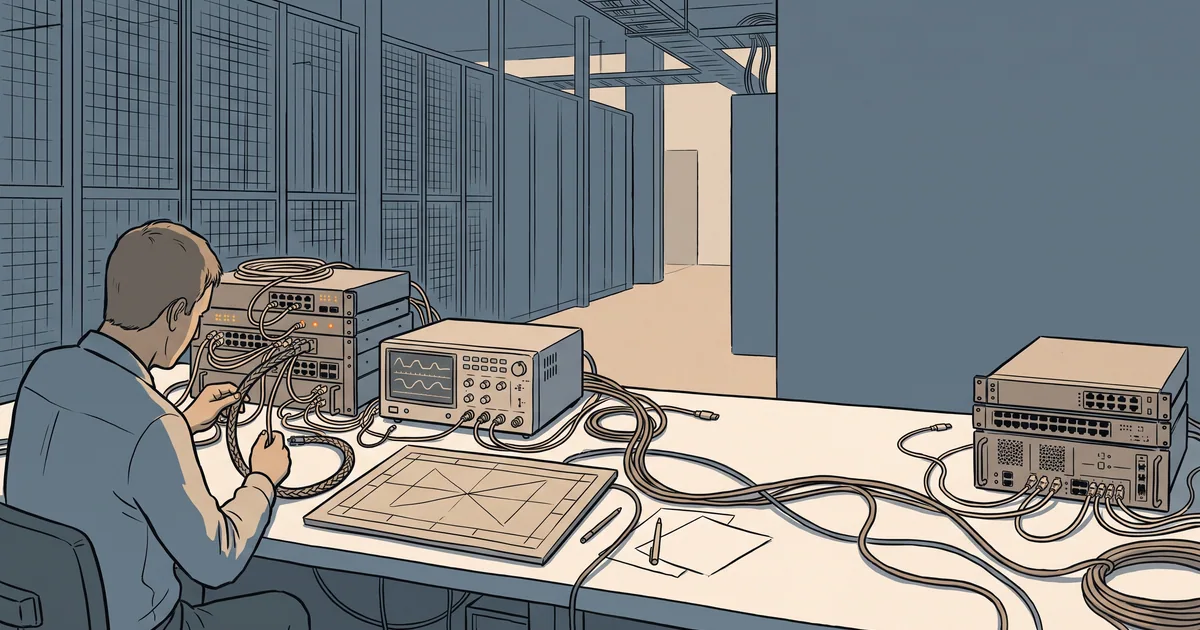
As of January 31, 2022, propagation delay impairs multi-node state synchronization when coordination routines neglect physical transport latency, causing concurrent operations on contradictory telemetry across wide domains.
During January 2022, infrastructure architects confronted persistent structural failures arising from distributed control designs that decoupled high-level coordination logic from physical network topologies. Theoretical frameworks often presume instant consensus, yet real-world implementations struggle against the physics of packet transmission across non-uniform fabrics. Emerging research published in the (IEEE Open Journal of the Communications Society) reveals how synchronization fragility degrades operations when coordinating spatial multi-point transmissions. This divergence exposes an urgent question for distributed systems engineering:
How does propagation delay impair multi-node state synchronization?
The operational reliability of coordinated transmission schemes across wide domains highlights that distributed control assumptions must directly reflect physical transport delay and link dynamics (IEEE Open Journal of the Communications Society). Integrating large-scale grid management systems demonstrates that distributed energy control architectures fail to scale reliably without explicit transport-aware coordination layers (Journal of contemporary Power Systems and Clean Energy). Coordinated non-orthogonal multiple access protocols in LEO satellite constellations encounter measurable outage limits governed by propagation delay and synchronization constraints (International Journal of Science and Research (IJSR)). Distributed data architectures in cloud environments encounter severe state synchronization and operational bottlenecks when data planes expand across distributed network links (DOI Registry). The FAST-DERMS design utilizes federated management structures to coordinate transactive distributed energy resources across hierarchical distribution boundaries (IEEE Open Journal of the Communications Society). Wide-area coordination layers face degraded control stability when non-negligible transport latency and link variability impair multi-node state synchronization (Journal of contemporary Power Systems and Clean Energy). The operational reliability of coordinated transmission schemes across wide domains highlights that distributed control assumptions must directly reflect physical transport delay and link dynamics, as noted in the (IEEE Open Journal of the Communications Society). In high-speed orbital topologies, coordinated non-orthogonal multiple access protocols in LEO satellite constellations encounter measurable outage limits governed by propagation delay and synchronization constraints, an operational reality corroborated by findings in the (Journal of contemporary Power Systems and Clean Energy). When coordination routines neglect the time intervals necessary to distribute scheduling vectors, nodes execute concurrent operations on contradictory telemetry. Similarly, integrating large-scale grid management systems demonstrates that distributed energy control architectures fail to scale reliably without explicit transport-aware coordination layers, according to the (Journal of contemporary Power Systems and Clean Energy). In these environments, synchronization divergence triggers cascading control desynchronization, transforming nominal scheduling efficiencies into unrecoverable regional contention. At the protocol layer, this misalignment stems from treating remote consensus as an instantaneous primitive. Analyses in the (International Journal of Science and Research (IJSR)) demonstrate that distributed data architectures in cloud environments encounter severe state synchronization and operational bottlenecks when data planes expand across distributed network links. When state broadcast periods overlap with propagation shifts, the coordination protocol attempts to enforce total order through iterative backoffs and blocking synchronization locks. Consequently, wide-area coordination layers face degraded control stability when non-negligible transport latency and link variability impair multi-node state synchronization, as highlighted by parallel insights from the (IEEE Open Journal of the Communications Society) and the (International Journal of Science and Research (IJSR)). Instead of converging, distributed workers spend disproportionate processor cycles arbitrating stale state snapshots, yielding severe queue accumulation and protocol timeouts across asynchronous interconnects.
Can bounded sub-domains isolate localized fast-path actuation?
To mitigate these systemic breakdowns, resilient designs partition macroscopic system management into bounded sub-domains. In critical utility infrastructure, the FAST-DERMS design utilizes federated management structures to coordinate transactive distributed energy resources across hierarchical distribution boundaries, as documented in (DOI Registry). By establishing distinct regional governance rings, systems decouple localized fast-path actuation from inter-domain consensus. The control plane isolates its validation boundaries, restricting instantaneous operational mandates to low-latency local links while relegating broad network updates to asynchronous batch digests. If an inter-regional link encounters severe jitter or packet drops, the localized failure containment mechanics isolate the affected node group. This defensive boundary separation prevents transit delays from corrupting the core routing tables or stalling real-time control routines. Implementing strict isolation boundaries forces system operators to negotiate difficult architectural compromises between state consistency and dispatch throughput. System architects must design rigid interface contracts that specify maximum allowable synchronization lag before an operational node falls back into autonomous degradation modes. Telemetry collectors must not overload transport channels with excessive heartbeat packets, yet sparse telemetry blinds the central observer to impending phase deviations. When statistical machine learning methods are deployed for dynamic resource balancing, their lightweight predictive inference differs from broader symbolic AI systems that require heavy semantic rule validation. These statistical models must operate within local cache envelopes rather than relying on round-trip queries to remote coordinator clusters. Clear interface contracts ensure that edge nodes drop unverified coordination leases before divergence produces physical or logical resource collisions. Structural recovery from prolonged partition events presents an equally demanding engineering obstacle. When partition boundaries heal, the burst of accumulated state reconciliation packets frequently saturates the transport medium, inducing secondary cascading outages. Resilient architectures mitigate this synchronization storm through rate-limited reconciliation vectors and monotonic vector clocks. Control layers cannot safely resume synchronous inter-node handoffs until telemetry pipelines verify that channel jitter and round-trip delays have fallen below pre-configured stability thresholds. By enforcing bounded reconciliation windows and deterministic state compaction, the architecture prevents historical replay floods from overwhelming active transport buffers. Systematic recovery paths prioritize essential health beacons over bulky state snapshots, enabling distributed control planes to re-establish verified operational baselines smoothly without destabilizing underlying network pipes.
Why do partition recovery storms overwhelm active transport buffers?
Sources
- IEEE Open Journal of the Communications Society: Outage Analysis of Coordinated NOMA Transmission for LEO Satellite Constellations, 2022-01-01
- Journal of Modern Power Systems and Clean Energy: Integrated Distribution Management System: Architecture, Functions, and Application in China, 2022-01-01
- International Journal of Science and Research (IJSR): The Shift Towards Distributed Data Architectures in Cloud Environments, 2022-01-05
- DOI Registry: Federated Architecture for Secure and Transactive Distributed Energy Resource Management Solutions (FAST-DERMS), 2022-01-06