Distributed Voltage Regulation Faces Channel Contention
Active distribution networks face control divergence when wireless channel contention destabilizes distributed voltage regulation.
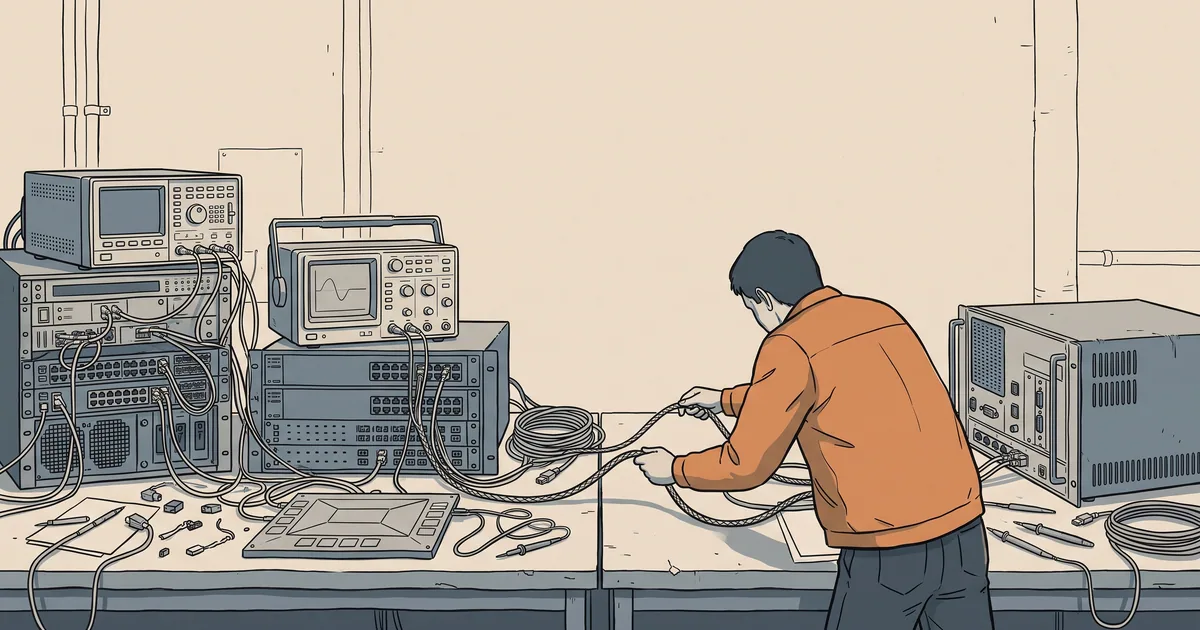
As of May 31, 2018, channel contention and mutual interference increase signal outage probabilities across wireless communication channels, inducing exponential backoffs and control divergence in active power distribution nodes.
During May 2018, contemporary power systems and smart-grid infrastructures face a pressing physical reality as active distribution architectures scale out across volatile wireless links. Theoretical control frameworks often rely upon idealized communication assumptions, yet practical deployments expose severe behavioral fractures when channel contention spikes. Recent investigations into distributed voltage regulation, documented in research from (YorkSpace (York University)), underscore that coordination algorithms cannot operate in mathematical isolation from the lower transport stack. This systemic tension highlights a critical structural question:
How Does Wireless Channel Contention Degrade Cooperative Voltage Control?
As active distribution networks deploy distributed cooperative protocols for voltage regulation, stability becomes intimately coupled to the performance limits of underlying wireless communication channels (YorkSpace (York University)). The operational reliability of shared-spectrum industrial and smart-grid control architectures is constrained by channel contention and signal outages as wireless access point density increases (Sustainability). In CSMA/CA-based wireless networks, high access point densities generate mutual interference that increases signal outage probabilities and undermines communication links needed for cooperative grid control (IEEE Transactions on Smart Grid). Distributed secondary voltage and frequency control in islanded microgrids requires noise-resilient algorithmic designs to compensate for communication uncertainties and channel perturbations (IEEE Transactions on Wireless Communications). Device-to-device wireless communication protocols provide deterministic scheduling frameworks to meet ultra-reliable low-latency demands in automated industrial environments facing contention (YorkSpace (York University)). Implementing distributed cooperative voltage control without accounting for transport-layer signal degradation risks control divergence across active power distribution nodes (Sustainability). When nodes exchange state updates to balance voltages and react to distributed energy generation, algorithms presuppose that neighboring consensus vectors arrive within deterministic sampling periods. In shared-spectrum physical layers, however, packet exchanges must compete against unbounded channel access delays. In CSMA/CA-based wireless networks, high access point densities generate mutual interference that increases signal outage probabilities and undermines communication links needed for cooperative grid control (YorkSpace (York University); Sustainability). When transmission collisions force repeated exponential backoffs, the latency distribution exhibits fat-tailed jitter rather than bounded delays. The resulting divergence breaks the core assumption of continuous, instantaneous state visibility. Implementing distributed cooperative voltage control without accounting for transport-layer signal degradation risks control divergence across active power distribution nodes (YorkSpace (York University); IEEE Transactions on Smart Grid). In islanded topologies where inertial stability is limited, uncoordinated reactive power adjustments cause localized voltage swings, hunting behaviors, and oscillatory instabilities. Nodes that fail to receive timely consensus beacons recalculate local actuation based on stale state estimates. Instead of dampening physical fluctuations, asynchronous control steps inject phantom variance into inverter firing angles. Without resilient observers, stochastic drops in the transport layer translate directly into destabilizing physical power surges.
How Can Dynamic Channel State Estimates Prevent Control Divergence?
Architectural safety hinges on decoupling the control plane from variable transport latencies through explicit boundary contracts. In a resilient cyber-physical topology, consensus coordination messages must not share unmanaged queues with bulk telemetry payloads. The transport interface must enforce strict payload segregation, rate-limiting control telemetry and rejecting unbounded packet accumulation. By moving away from random-access contention loops toward scheduled peer-to-peer allocations, systems isolate critical actuation signals from high-density interference. Protocol validation filters must also verify packet freshness at the transport ingress, discarding delayed updates that would otherwise feed antiquated state estimates into active control loops. Operational trade-offs require engineering teams to balance system responsiveness against fail-safe stability defaults. When transport degradation crosses predetermined threshold limits, the coordination layer must transition nodes into autonomous droop-control regimes rather than continually chasing missing consensus packets. This fail-operational handoff prevents cascading dropouts across interdependent feeders. Telemetry pipelines must simultaneously track radio-frequency link metrics, such as signal-to-interference-plus-noise ratio and packet retry counts, treating these transport indicators as primary control inputs rather than secondary diagnostic logs. If algorithmic layers incorporate dynamic channel state estimates, secondary voltage loops can adjust consensus convergence gains dynamically to reflect actual channel capacities, suppressing control divergence before line voltage thresholds trip protection relays. Systemic recovery demands that reconnection protocols re-synchronize state without inducing synchronized channel contention storms. If a cluster of nodes recovers from a transient fade simultaneously, indiscriminate broadcast flooding can trigger an avalanche of channel collisions that re-breaks the link. Hierarchical backoff schemes, paired with partitioned consensus neighborhoods, ensure that state convergence occurs in phased, orderly stages. Industrial networks that isolate coordination logic from contention-prone medium access layers protect active microgrids from self-inflicted control starvation. Designing robust interfaces across the physical and cyber boundary ensures that distributed automation survives real-world channel degradation rather than faltering under idealized mathematical expectations.
Can Distributed Coordination Algorithms Maintain Deterministic Physical Stability?
By May 2018, the operational reality of active microgrids proves that mathematical consensus models fail whenever physical medium access limits are treated as transparent abstractions. As radio densities climb and contention degrades link predictability, control systems must treat wireless transport as an inherently bounded, stochastic resource. Can distributed coordination algorithms achieve deterministic physical stability over uncoordinated spectrum, or must industrial automation mandate reserved, scheduled wireless access for every safety-critical control loop?
Sources
- YorkSpace (York University): Implementation Of A Novel Cooperative Protocol for Distributed Voltage Control in Active Distribution Networks, 2018-05-14
- Sustainability: Signal Outages of CSMA/CA-Based Wireless Networks with Different AP Densities, 2018-05-08
- IEEE Transactions on Smart Grid: Distributed Noise-Resilient Secondary Voltage and Frequency Control for Islanded Microgrids, 2018-05-10
- IEEE Transactions on Wireless Communications: A D2D-Based Protocol for Ultra-Reliable Wireless Communications for Industrial Automation, 2018-05-22