Adaptive BFT Protocols and Multi-Relay Networks
Engineers evaluate multi-relay channels and adaptive BFT protocols to sustain consensus over impaired links.
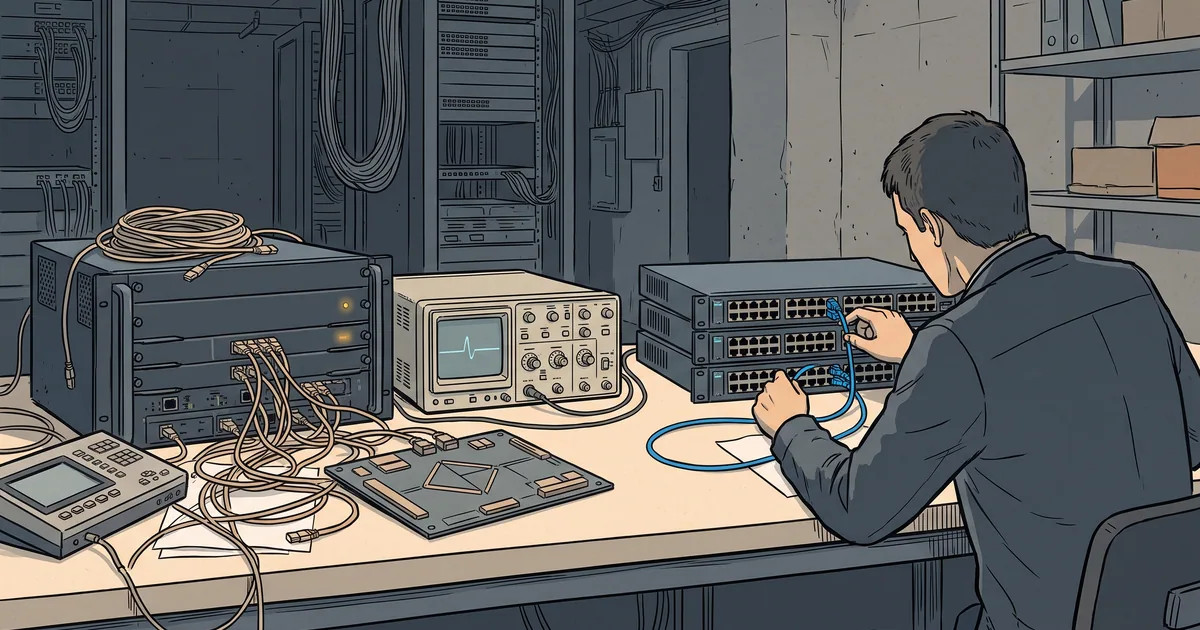
As of May 31, 2015, researchers show that combining adaptive BFT protocols with receiver-triggered handshakes mitigates consensus stalls caused by multi-relay hardware impairments.
During May 2015, distributed systems research increasingly confronts physical channel degradation and transmission delays that shatter classic synchronous abstractions. Recent theoretical evaluations published in IEEE Transactions on Wireless Communications reveal how non-ideal amplification and transmission impairments induce compounding throughput ceilings across multi-hop communication topologies. When network partitions and unpredictable propagation delays interrupt state updates, distributed consensus mechanisms face cascading stall events or divergence. This operational vulnerability exposes a fundamental architectural challenge for designers attempting to deploy adaptive bft protocols across volatile intermediate topologies. System engineers recognize that physical impairments, such as non-linear radio distortion and relay outages, invalidate the simplistic assumption that link latency remains bounded or uniform across all cluster participants. Characterizing outage probabilities and throughput limitations across multi-relay networks provides essential baseline models for maintaining distributed connectivity over impaired wireless transport channels. Distributed platforms operating in unpredictable deployment environments must therefore adopt coordinated resilience mechanisms to reconcile rigorous safety guarantees with real-world communication channel realities.
How Do Hardware Non-Idealities Disrupt Distributed Consensus?
Analysis of multi-relay wireless channels establishes mathematical bounds on system throughput when imperfect power amplifiers introduce nonlinear distortions into distributed relay nodes, as documented in IEEE Transactions on Wireless Communications. In synchronous or weakly partially synchronous designs, coordinating nodes often interpret severe latency spikes as non-responsive hardware failures. This misclassification triggers uncoordinated leader elections, spurious view changes, and quorum thrashing. Physical hardware limitations exacerbate these coordination breakdowns at the transport tier. When hardware non-idealities degrade signal-to-noise ratios, frame retransmissions surge exponentially across multi-relay networks. Distributed consensus algorithms that expect timely acknowledgment packets subsequently stall on locked memory buffers, leading to head-of-line blocking across the entire cluster. Characterizing outage probabilities across these multi-relay networks provides essential baseline models for understanding when transport paths can no longer sustain traditional round-based agreement steps. Without dynamic adjustments, classic state machines become paralyzed because nodes continually reset timers before consensus rounds terminate, leaving transactional engines incapable of distinguishing network attenuation from node crashes.
Can Dynamic Mode Transitions Prevent Consensus Stalls?
Research presented at the IEEE International Parallel and Distributed Processing Symposium in May 2015 addresses critical efficiency and resilience bottlenecks by exploring how Byzantine fault-tolerant protocols can adapt dynamically to operational variations. Specifically, the IPDPS 2015 paper 'Making BFT Protocols Really Adaptive' formalizes mechanisms for state-machine replication protocols to alter operational modes under changing execution and latency environments, as detailed in Proceedings - IEEE International Parallel and Distributed Pr. When telemetry monitors detect sustained round-trip time expansion or amplifier distortion across intermediate hops, the consensus engine demotes active consensus requirements to optimistic logging or asynchronous gossip regimes. By executing systematic mode transitions, systems avoid paying the high computational and messaging costs of multi-phase commit algorithms over degraded lines. Nodes preserve local deterministic progress, queuing non-critical global reconciliation until transport telemetry confirms the restoration of acceptable channel margins. This modular reconfiguration capability prevents transient network bottlenecks from triggering cascading protocol aborts, establishing sustainable throughput despite shifting physical latency boundaries.
How Does Local Autonomous Infrastructure Isolate Channel Failures?
To survive acute transport degradation, system architects also enforce structural separation between control signaling and state synchronization payloads. The movable and deployable ICT resource unit architecture published by NTT in May 2015 packages computing, storage, and communication resources to restore isolated local network services after infrastructure damage, as detailed in NTT technical review. Establishing bounded local autonomy shields transactional commit pipelines from intermittent wide-area propagation delays. Operational resilience under high latency also requires shifting from sender-driven broadcast flooding to receiver-governed exchange contracts. The receiver-triggered handshake protocol developed for delay-tolerant networks initiates transfer phases based on receiving node availability to mitigate message loss in disaster recovery regions, as shown in Future Internet. This handoff discipline ensures that consensus nodes exchange validation data only when internal buffers and physical channels can support complete state transfers, preventing buffer saturation and isolating transient channel drops from global quorum state tracking.
Sources
- IEEE Transactions on Wireless Communications: On the Throughput and Outage Probability of Multi-Relay Networks With Imperfect Power Amplifiers, 2015-05-08
- Proceedings - IEEE International Parallel and Distributed Pr: Making BFT Protocols Really Adaptive, 2015-05-01
- NTT technical review: Overview of Movable and Deployable ICT Resource Unit Architecture, 2015-05-01
- Future Internet: Receiver-Triggered Handshake Protocol for DTN in Disaster Area, 2015-05-27