Verdi Proves Distributed Software Verification
The introduction of Verdi in June 2015 bridges distributed algorithmic proofs and runnable system code using the Coq proof assistant.
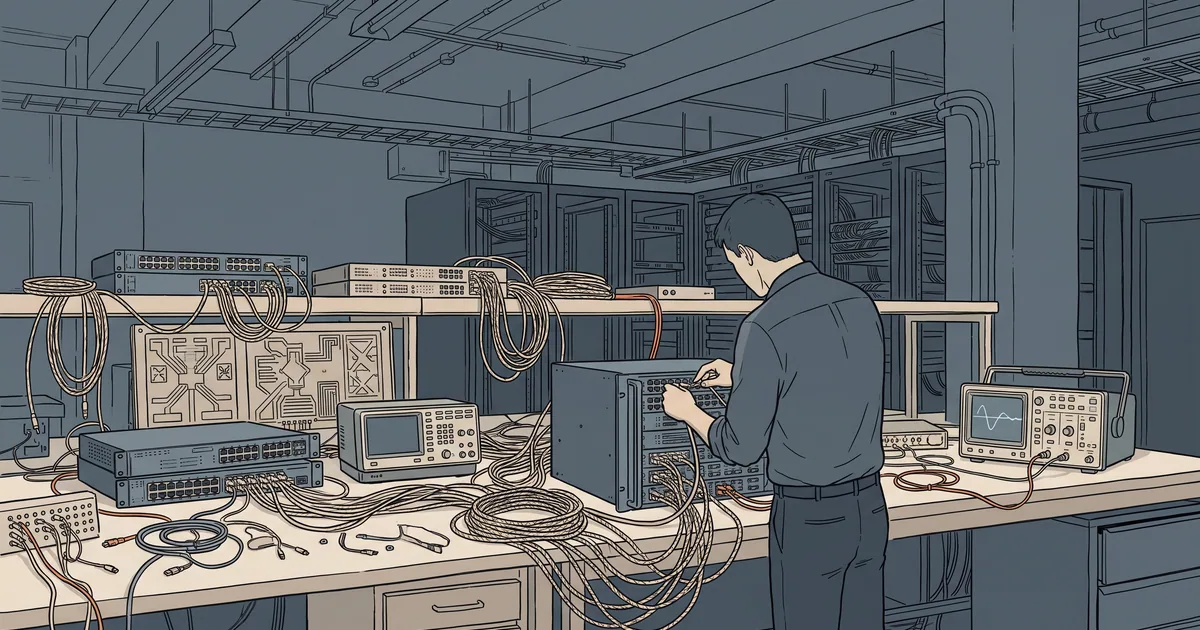
As of June 30, 2015, Verdi provides an end-to-end framework built in the Coq proof assistant for implementing distributed systems and formally proving implementations correct under realistic network fault models.
During June 2015, researchers presented transformative evidence that traditional engineering practices in distributed infrastructure frequently rest on unverified, fragile premises. The introduction of Verdi represents a major advance in distributed software verification by formally proving that system implementations remain correct under realistic fault models, including packet drops and reordering, as detailed in the (Proceedings of the ACM SIGPLAN Conference on Programming Lan). As system designers increasingly deploy decentralized state machines across complex backplanes, serious operational discrepancies surface.
How does Verdi verify runnable distributed code?
The introduction of Verdi represents a major advance in distributed software verification by formally proving that system implementations remain correct under realistic fault models, including packet drops and reordering (Proceedings of the ACM SIGPLAN Conference on Programming Lan). The publication of Verdi at PLDI in June 2015 demonstrated that formal verification could bridge the longstanding divide between abstract distributed algorithmic proofs and runnable system code (ACM SIGPLAN Notices). Verdi provides an end-to-end framework built in the Coq proof assistant for implementing distributed systems and verifying them against realistic network semantics (UNMs Digital Repository (University of New Mexico)). Distributed system reliability analysis in June 2015 also focused on evaluating vulnerabilities that arise when distributed nodes exhibit selfish or malicious behavior rather than standard benign crash failures (Calhoun The Naval Postgraduate School Institutional Archive ). Evaluations of distributed architecture models in mid-2015 explored the structural benefits of space-based group systems for handling distributed communications and coordinating system state across nodes (Proceedings of the ACM SIGPLAN Conference on Programming Lan). Formal and empirical analyses in June 2015 demonstrated that real-world distributed protocols often fail when low-level network operations violate idealized assumptions regarding node reliability or packet delivery (ACM SIGPLAN Notices). The publication of Verdi at PLDI in June 2015 demonstrated that formal verification could bridge the longstanding divide between abstract distributed algorithmic proofs and runnable system code, according to findings in (ACM SIGPLAN Notices). In standard protocol designs, engineers routinely rely on pen-and-paper models that presuppose orderly packet delivery or instantaneous gossip dissemination. Verdi provides an end-to-end framework built in the Coq proof assistant for implementing distributed systems and verifying them against realistic network semantics, as documented in both the primary conference proceedings (Proceedings of the ACM SIGPLAN Conference on Programming Lan) and (ACM SIGPLAN Notices). When an orchestration framework presumes instantaneous convergence, even brief serialization pauses or transient buffer queues break the safety invariants of consensus state machines, turning subtle race conditions into systemic partition events. Formal and empirical analyses in June 2015 demonstrated that real-world distributed protocols often fail when low-level network operations violate idealized assumptions regarding node reliability or packet delivery, an outcome underscored across concurrent verification and fault studies (Proceedings of the ACM SIGPLAN Conference on Programming Lan, UNMs Digital Repository (University of New Mexico)). If a coordination layer treats communication delays as mathematically negligible, local nodes inevitably commit transactions against stale configuration views. Once physical transport mechanisms introduce reordering or asymmetric drops, election quorums bifurcate into conflicting majorities. Mechanized proofs clarify that without explicit verification of reordered and delayed message streams, software artifacts derived from clean high-level logic remain deeply vulnerable to silent corruption, deadlock loops, and cascading failovers during routine routing jitter.
Can decoupled control boundaries prevent cascading failures?
To constrain these hazards, system architects must strictly decouple control-plane coordination from high-throughput payload routing. Distributed system reliability analysis in June 2015 also focused on evaluating vulnerabilities that arise when distributed nodes exhibit selfish or malicious behavior rather than standard benign crash failures, as examined in research from (UNMs Digital Repository (University of New Mexico)). When node participants deviate from programmed coordination duties by withholding updates or dropping transit packets, unhardened control boundaries crumble rapidly. Enforcing rigorous message validation at protocol boundaries guarantees that nodes verify causal delivery invariants before applying updates to local stores. A disciplined boundary prevents corrupted consensus packets from spilling over into data-plane pathways, establishing definitive firewalls against Byzantine aberrations and cascading timing discrepancies across uncoupled nodes. Managing these operational boundaries requires explicit trade-offs between update latency, strong consistency, and system observability. Evaluations of distributed architecture models in mid-2015 explored the structural benefits of space-based group systems for handling distributed communications and coordinating system state across nodes, showing how decoupled tuple-space architectures absorb transit volatility (Calhoun The Naval Postgraduate School Institutional Archive ). Instead of enforcing rigid peer-to-peer point synchronous links, space-based paradigms utilize shared associative memory spaces that buffer transient delivery variations without halting progress. Engineers must calibrate monitoring telemetry to differentiate true host failures from delayed heartbeat transmissions, ensuring that threshold alarms do not trigger premature node ejections. Concrete interface contracts must explicitly reflect network asynchrony, rejecting the naive fantasy that remote updates occur instantaneously. Resilience ultimately depends on the structural containment of synchronization anomalies and deterministic recovery paths. When network partitions or packet floods stall state handoffs, coordination engines must enter defined fallback regimes rather than attempting uncoordinated rollbacks. Incorporating verified transformations, such as those made possible by mechanized proof environments, allows systems to establish verifiable recovery loops where delayed state envelopes are rejected safely upon receipt.
Will mechanized proof assistants scale across topologies?
The developments of June 2015 confirm that assuming zero-latency state synchronization across independent machines inevitably invites state divergence, phantom leaders, and catastrophic network partition splits. Mechanized verification frameworks like Verdi expose the peril of trusting unverified algorithmic abstractions over dirty network reality. Can formal proof assistants scale to verify massive, heterogeneous topologies where unpredictable network partitions combine with adversarial node behaviors without imposing unacceptable development overhead on production systems?
Sources
- Proceedings of the ACM SIGPLAN Conference on Programming Lan: Verdi: a framework for implementing and formally verifying distributed systems, 2015-06-03
- ACM SIGPLAN Notices: Verdi: a framework for implementing and formally verifying distributed systems, 2015-06-03
- UNMs Digital Repository (University of New Mexico): Selfishness and Malice in Distributed Systems, 2015-06-26
- Calhoun The Naval Postgraduate School Institutional Archive : Benefits of a Space-Based Group System Architecture, 2015-06-01