Decoupling Control Logic in Distributed Robotics
Decoupling control logic from transport mechanisms maintains consensus across modular distributed robotics under network constraints.
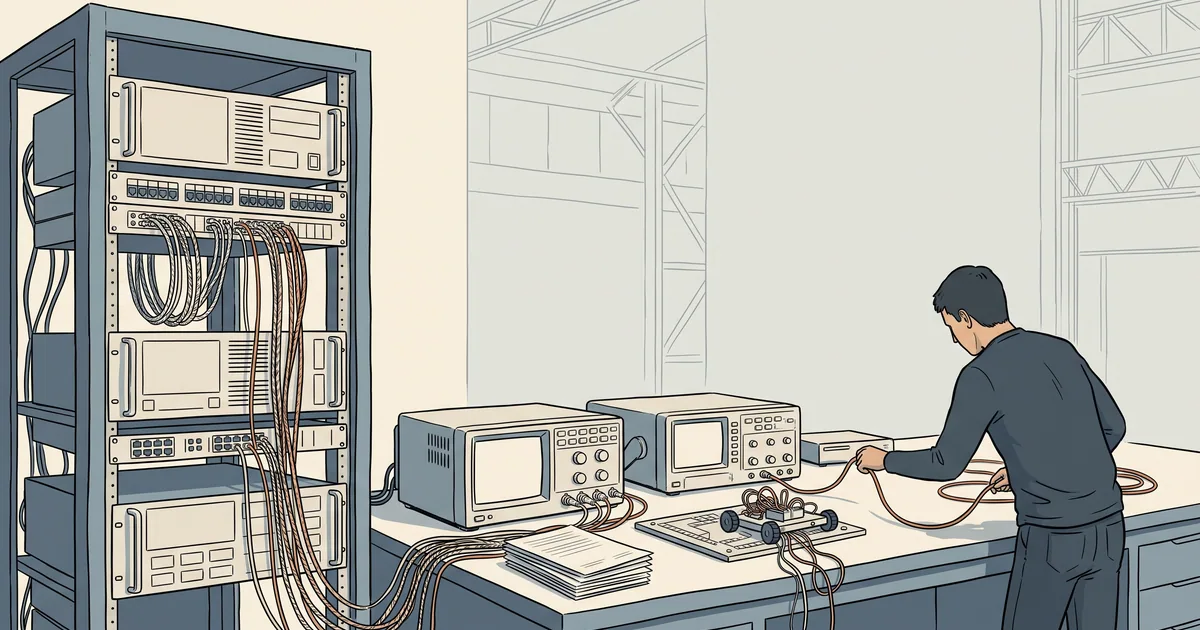
As of March 31, 2019, transmission constraints like variable propagation delay and queuing fluctuations trigger cascading consensus stalls across distributed nodes unless control logic decouples from transport.
During March 2019, contemporary industrial automation and multi-robot fleet architectures encountered structural friction as distributed coordination platforms scaled across wireless environments. Investigations into modular system frameworks documented by (MDPI AG) highlighted how software abstraction layers frequently obscure underlying physical communication channels. When high-level planners assume that local state vectors can propagate instantaneously across interconnected nodes, spatial coordination degrades as network physical constraints manifest. Engineers and distributed system designers face a recurring foundational question:
How do transmission constraints disrupt distributed consensus?
The integration of modular system architectures in distributed robotics underscores the necessity of decoupling control logic from transport mechanisms to prevent synchronization breakdown across heterogeneous nodes (MDPI AG). Refining communication-induced checkpointing protocols is critical in broadcast-oriented distributed systems to bound rollback propagation and maintain consistent global state under realistic transmission constraints (World Scientific Pub Co Pte Ltd). Coordinating distributed control states over broadcast network architectures requires selective checkpoint triggering to mitigate the overhead of non-instantaneous message delivery across networked nodes (SAGE Publications). Autonomous underwater vehicle formations utilize memorized protocols to maintain distributed consensus and synchronization in communication environments characterized by transmission delay and intermittency (Elsevier BV). Co-designing high-level controllers alongside the underlying wireless cyber-physical architecture aligns operational timing assumptions with actual network latency profiles and bandwidth limitations (MDPI AG). Modular distributed robotic platforms deployed in decentralized operational scenarios rely on historical state memory and structured communication boundaries to stabilize multi-agent coordination (World Scientific Pub Co Pte Ltd). When physical robotics platforms scale from isolated testbenches to complex multi-agent environments, the integration of modular system architectures in distributed robotics underscores the necessity of decoupling control logic from transport mechanisms to prevent synchronization breakdown across heterogeneous nodes (MDPI AG). In conventional centralized architectures, control planes operate on the premise of deterministic bus arbitration and infinitesimal clock skew. In contrast, distributed nodes operating over real-world radio frequency or acoustic links experience asymmetric throughput, queuing fluctuations, and variable propagation delay. Without intentional architectural isolation, high-frequency synchronization heartbeats saturate shared broadcast domains, transforming transient link congestion into cascading consensus stalls across the entire swarm. The operational fallout becomes acute during concurrent state transitions where nodes attempt to negotiate spatial boundaries or collective task scheduling. When individual kinematic controllers evaluate collision avoidance models against out-of-order state telemetry, the temporal divergence between local belief and true peer positioning generates erratic trajectory corrections. When coordination mechanisms lack historical state memory, nodes treat delayed packets as novel events, causing destabilizing control oscillations and triggering safety rollbacks that degrade overall system throughput.
How does separating control signalling protect payload telemetry?
Bridging the divide between coordination logic and transport reality necessitates strict separation between control-plane signalling and runtime payload data. In distributed cyber-physical deployments, control layers cannot treat the communications medium as an idealized, transparent pipe. Systems must introduce routing boundaries that validate message freshness before control actions are committed to mechanical actuators. These validation boundaries reject expired telemetry frames, preventing stale commands from corrupting contemporary feedback loops and bounding fault domains within localized subsystems. System operators must confront explicit engineering trade-offs between coordination fidelity and transport bandwidth. If an interface contract demands continuous, fine-grained state broadcasts, physical medium contention elevates jitter and dropped packet rates. As a consequence, telemetry pipelines require adaptive rate-limiting and event-driven publishing policies rather than rigid, unthrottled periodic polling loops. Control software must be configured with explicit knowledge of transport timeouts and jitter distributions, adjusting consensus convergence thresholds dynamically when channel conditions deteriorate. Separating control-plane commands from voluminous sensor payloads ensures that safety-critical heartbeats maintain priority queue placement over heavy sensory payloads like point clouds or video streams. This separation prevents bulk data transfers from choking essential control telemetry across the shared physical interface. Structural resilience in multi-agent environments depends fundamentally on formal recovery paths and fault-tolerant state reconstruction. When network partitions or interference bursts isolate an agent from the collective swarm, the node cannot pause indefinitely or assume that adjacent nodes remain stationary. Decentralized recovery contracts compel each isolated unit to drop to degraded autonomy profiles, synthesizing recent historical observations to predict peer trajectories safely. By coupling selective checkpointing mechanisms with bounded rollback policies, the architecture protects non-faulty nodes from being dragged into cascading restart sequences. The handoff between transport protocol drivers and control execution loops must therefore encapsulate temporal uncertainty, ensuring that physical actuators only execute state transitions that have verifiable timing guarantees regardless of packet arrival variance.
What engineering trade-offs govern decentralized recovery contracts?
Sources
- MDPI AG: Concepts of a Modular System Architecture for Distributed Robotic Systems, 2019-03-14
- World Scientific Pub Co Pte Ltd: Efficient Communication Induced Checkpointing Protocol for Broadcast Network-based Distributed Systems, 2019-03-11
- SAGE Publications: Distributed synchronization of autonomous underwater vehicles with memorized protocol, 2019-03-01
- Elsevier BV: Controller and architecture co-design of wireless cyber-physical systems, 2019-03-17