Distributed Observer Protocols Counter Network Delays
Distributed observer frameworks and adaptive relative output feedback counter transit latency and phase lag across asymmetric directed graphs.
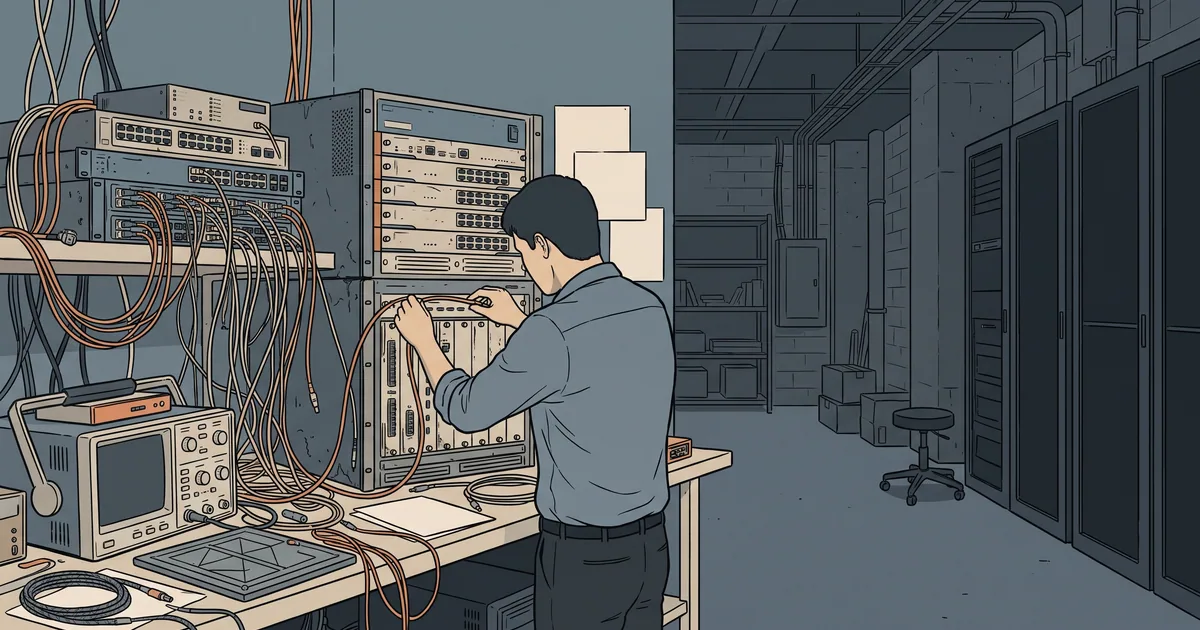
As of February 28, 2019, boundary failures develop when transmission latency exceeds control loop periods, causing state estimators to reconstruct stale data and push non-linear plants outside stable sector-bounded regions.
During February 2019, distributed systems engineering confronted persistent design flaws arising from idealized network abstractions in physical control loops. Theoretical consensus models often assumed instantaneous communication graphs, yet deployments across real transit paths encountered physical transport delays, asynchronous message deliveries, and dropped packets. Research published in (ASME International) illustrated that coordinated multi-agent stability collapses unless protocols explicitly counter external disturbances and transit gaps. The resulting divergence between perceived peer state and physical reality transforms cooperative convergence into unstable hunting oscillations and cascading systemic partitions.
How Do Boundary Failures Develop in Practice?
The establishment of distributed observer-type protocols for second-order multi-agent flocking addressed critical vulnerabilities in autonomous multi-agent coordination by formalizing how systems counter persistent external disturbances (ASME International). Developing distributed adaptive relative output feedback protocols for multiple Lur'e systems established theoretical foundations for stabilizing non-linear agent interactions across asymmetric directed communication graphs (IEEE). Autonomous multi-agent control designs utilized distributed observer frameworks and adaptive relative output feedback to reconstruct internal states and enforce consensus over directed communication topologies subject to external disturbances (ASTM International). Digital architectures designed for distributed CNC machine health monitoring enabled multi-sensor telemetry collection and real-time operational status tracking across networked industrial machine units (IEEE). The Error and Flow Control Protocol within the Recursive InterNetwork Architecture implemented explicit separation between transmission mechanisms and control policies to manage data transfer and flow across distributed networks (ASME International). Distributed industrial and multi-agent systems integrated localized observer protocols and distributed telemetry architectures to maintain machine coordination in the presence of dynamic operational disturbances (IEEE). How boundary failures develop in practice begins with the mathematical friction between continuous physical dynamics and discrete network transfers. Under zero-latency assumptions, each node models its neighbors using algebraic adjacency matrices, calculating consensus trajectories from instantaneous state differentials. In physical deployments, however, transmission latency injects phase lag into relative velocity and position measurements. When transport latency exceeds the control loop sample period, state estimators reconstruct historical rather than instantaneous conditions, causing local controllers to apply aggressive corrections against phantom tracking errors. This instability deepens across asymmetric directed graphs where nodes lack uniform feedback visibility. When communication edges are directed and non-reciprocal, delayed telemetry propagates unevenly through the topology. An upstream node executes state adjustments without sensing the delayed reactions of downstream peers, while downstream observers synthesize control inputs from stale boundary estimates. In non-linear plants, such phase displacement pushes agent dynamics outside the sector-bounded regions required for stability. As a consequence, control commands designed to maintain cohesion instead amplify kinematic deviations, driving physical actuators to saturation limits.
Which Architectural Constraints Govern State Handoffs?
Architectural constraints governing state handoffs require explicit decoupling of data transfer mechanisms from higher-level consensus policies. Classical stacks conflate packet sequencing, retransmission triggers, and flow policing inside rigid transport structures like TCP. When distributed control planes run over such monolithic layers, head-of-line blocking creates erratic latency spikes that destroy observer convergence. By isolating the transfer mechanism (the timed delivery and delimiting of packets) from executive control policies (the dynamic sizing of transmission windows and retransmission pacing), networks preserve bounded jitter boundaries essential for observer reconstruction filters. Industrial edge environments demonstrate the necessity of this architectural separation during multi-node telemetry exchange. In high-speed machining cells, vibration, spindle load, and thermal telemetry generate continuous data streams that must be correlated across local and remote monitoring nodes. If telemetry ingestion pipelines experience unmanaged queuing delays, supervisory control algorithms diagnose stale tool wear telemetry as instantaneous structural faults, initiating unnecessary emergency halts. To contain these failures, system architects must enforce strict interface contracts that incorporate freshness budgets into every telemetry handoff. Control planes cannot treat remote network reads as synchronous memory access; instead, each state vector must carry an explicit generation timestamp and confidence decay factor. When message latency exceeds the stability margins established by the observer protocol, nodes must transition to degraded autonomous operation rather than continuing to execute outdated consensus directives. Structural resilience depends on local dead-reckoning mechanisms that extrapolate peer positions while damping control gains, avoiding the destructive feedback spikes caused by sudden, batch-processed packet arrivals.
Can Localized State Estimators Guarantee Global Consensus?
By late February 2019, distributed multi-agent systems confirmed that zero-latency assumptions are architectural debt that guarantees operational failure. Systems achieve coordination robustness only when observer-based state estimators explicitly model network delays, and underlying transport fabrics isolate transfer mechanisms from flow policies. As distributed multi-agent fabrics scale across wider, increasingly heterogeneous edge topologies, engineers must determine whether localized state estimators can reliably guarantee global consensus without requiring synchronous coordination barriers that throttle overall system throughput.
Sources
- ASME International: Distributed Observer Type Protocol for Flocking of Linear Second-Order Multi-Agent Systems Subject to External Disturbance, 2019-02-21
- IEEE: Consensus of Multiple Lur’e Systems for Directed Communication Graphs with Distributed Adaptive Relative Output Feedback Protocol, 2019-02-11
- ASTM International: Development of a Digital Architecture for Distributed CNC Machine Health Monitoring, 2019-02-01
- IEEE: Error and Flow Control Protocol (EFCP) Design and Implementation: A Data Transfer Protocol for the Recursive InterNetwork Architecture, 2019-02-20