Evaluating Multi-Agent Control Coordination
Physical transport constraints introduce phase lag and hunting behavior into multi-agent control schemes across dense microgrid clusters.
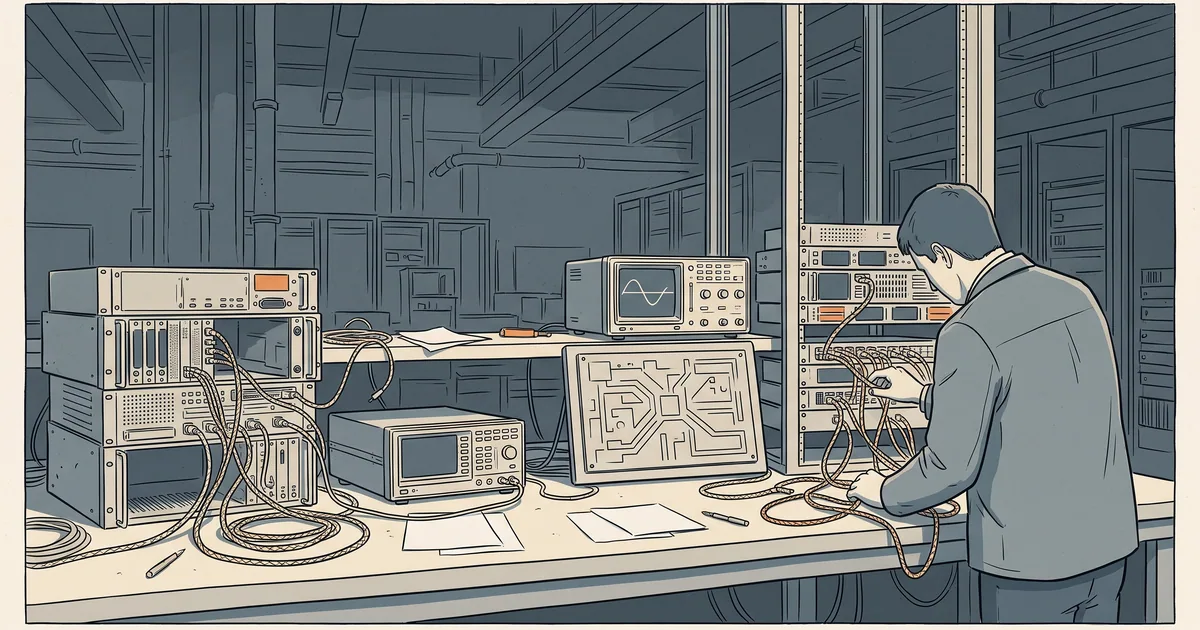
As of October 31, 2017, transport channel delays and packet loss introduce phase lag into closed feedback loops, causing desynchronization, hunting behavior, and rapid relay chattering across multi-agent systems.
During October 2017, distributed systems engineering confronted a persistent operational vulnerability: the decoupling of control plane logic from physical transmission realities. As detailed in contemporaneous wireless studies in (Elektronika ir Elektrotechnika), the expansion of dense node topologies severely impacts medium access reliability. When software architects design multi-agent control schemes, they routinely assume instantaneous consensus updates across participants. Reality quickly intervenes when radio channels congest or backhaul links jitter. This architectural divergence raises a decisive engineering inquiry:
Why Do Latency Variance and Channel Congestion Cause Instability?
Evaluating multi-agent control coordination alongside physical transport constraints gained critical importance in October 2017 as dense distributed deployments began exposing severe operational risks from channel interference and communication delays (Elektronika ir Elektrotechnika). Comprehensive overviews of multi-agent systems in microgrid clusters highlight that control plane decentralization cannot succeed without matching low-latency, reliable transport guarantees across interconnected nodes (IEEE Transactions on Power Electronics). Multi-agent distributed control and optimization architectures in microgrid clusters rely on consensus protocols that degrade when underlying communication networks experience packet loss, interference, or latency spikes (DOI Registry). Co-tier interference models in heterogeneous network topologies demonstrate that increasing node density elevates outage probabilities, directly impairing reliable data exchange among distributed control agents (Energies). Distributed storage and computing architectures designed for fog environments require localized consensus mechanisms to mitigate network partitioning and bandwidth constraints across edge tiers (Elektronika ir Elektrotechnika). Implementing the IEC 61850 GOOSE messaging service for adaptive ANSI 67/67N protection in ring main distribution systems requires deterministic network delivery to avoid protection coordination failures amid distributed energy resource integration (IEEE Transactions on Power Electronics). contemporary literature shows that co-tier interference models in heterogeneous network topologies demonstrate that increasing node density elevates outage probabilities, directly impairing reliable data exchange among distributed control agents, as established by investigations in (Elektronika ir Elektrotechnika). In electrical utility networks and industrial plants, designers frequently deploy multi-agent automation to balance dynamic generation against instantaneous consumption. However, comprehensive overviews of multi-agent systems in microgrid clusters highlight that control plane decentralization cannot succeed without matching low-latency, reliable transport guarantees across interconnected nodes, a point reinforced by findings in (IEEE Transactions on Power Electronics). When physical links degrade, the coordination layer fails to observe state changes in real time, leading to desynchronization between physical plant status and software consensus state. This breakdown manifests through specific control theoretic failures. Under ideal propagation assumptions, iterative agreement algorithms converge asymptotically toward global optimization targets such as voltage regulation or economic load dispatch. When transport channels encounter latency variance, the message exchange cycles stretch across uneven intervals. Independent nodes calculate actuation parameters using stale state vectors from delayed peers. This mismatch introduces phase lag into closed feedback loops, converting stabilizing damping commands into amplifying oscillations. Rather than balancing the physical network, the desynchronized agents produce hunting behavior, rapid relay chattering, and local circuit trips as individual controllers react aggressively to phantom disturbances caused solely by transport buffering.
How Can Localized Failure Boundaries Prevent Catastrophic System Trips?
Preventing these systemic failures requires rigorous architectural separation between fast autonomous protective loops and slower distributed consensus schemes. In mission-critical automation, safety functions cannot depend on unbounded multi-hop negotiation. Implementing the IEC 61850 GOOSE messaging service for adaptive ANSI 67/67N protection in ring main distribution systems requires deterministic network delivery to avoid protection coordination failures amid distributed energy resource integration, as documented in (Energies). When protective relays must dynamically modify trip curves to handle bidirectional power flows from local generators, GOOSE multicast frames must traverse deterministic Ethernet backbones with microsecond-level timing budgets. If protection agents treat best-effort routing as equivalent to bounded sub-millisecond signaling, directional overcurrent coordination breaks down, causing upstream breakers to isolate entire substations during minor downstream faults. Similar constraints govern distributed data platforms operating across heterogeneous network edges. Distributed storage and computing architectures designed for fog environments require localized consensus mechanisms to mitigate network partitioning and bandwidth constraints across edge tiers, as shown in research on the FogStore model (DOI Registry). Edge processing engines cannot maintain global replication via synchronous commits without suffering massive write stalls across high-latency wireless links. Architects must partition state domains into localized failure boundaries where quorum systems execute over reliable short-range paths, while global coordination proceeds asynchronously. By decoupling local high-frequency state enforcement from eventual cross-tier consistency, the control topology remains resilient against backhaul outages and packet loss events. System telemetry and runtime interface contracts must therefore expose underlying transport performance directly to the coordination algorithms. Distributed controllers should incorporate explicit transport metrics, such as round-trip jitter, channel outage probability, and packet loss ratios, into their convergence criteria. When network instrumentation indicates escalating packet collisions or co-tier interference, the control agents must gracefully fall back to autonomous decentralized operation modes, such as frequency droop control or local setpoint clipping. Treating the physical communication layer as a transparent, perfect pipe invites catastrophic cascading failures. A resilient control plane assumes that latency is dynamic, bandwidth is finite, and packet arrival is probabilistic, embedding fail-safe isolation boundaries within every distributed software contract.
Why Must Multi-Agent Architectures Mirror Physical Communication Boundaries?
By October 2017, empirical analyses across microgrids, edge data storage, and substation protection demonstrated that multi-agent architectures must mirror their physical communication environments. Assuming zero-latency synchronization produces destabilizing control divergence, hunting oscillations, and cascading protective trips under channel congestion. High-integrity distributed systems must maintain strict operational boundaries, isolating deterministic protective reflexes from slower multi-agent negotiation. The enduring design imperative requires control planes to treat underlying transport constraints not as secondary implementation details, but as non-negotiable boundaries of system stability.
Sources
- Elektronika ir Elektrotechnika: Outage Probability Analysis of Co-Tier Interference in Heterogeneous Network, 2017-10-11
- IEEE Transactions on Power Electronics: MAS-Based Distributed Coordinated Control and Optimization in Microgrid and Microgrid Clusters: A Comprehensive Overview, 2017-10-09
- DOI Registry: FogStore: Toward a distributed data store for Fog computing, 2017-10-01
- Energies: Using IEC 61850 GOOSE Service for Adaptive ANSI 67/67N Protection in Ring Main Systems with Distributed Energy Resources, 2017-10-25